HORN INTERNATIONAL RELIEF AND DEVELOPMENT ORGANIZATION
Afghan Civilian Assistance Program II – Final Performance Evaluation
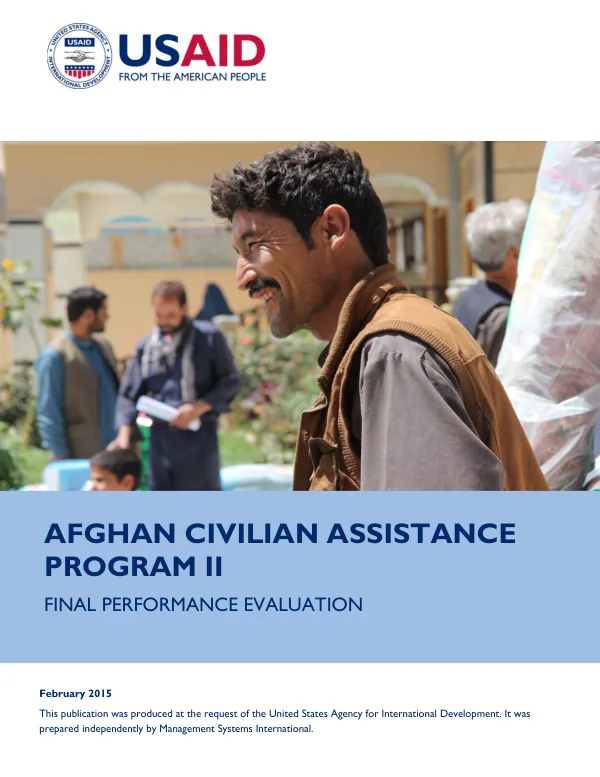
The Afghan Civilian Assistance Program II (ACAP II) provides humanitarian relief to families that have suffered losses as a result of conflict between US/coalition military forces and the Taliban or other insurgents.
2015 · 79 pages
Sign in to readA free account is required to download.
Abstract
The $64 million project is funded by the United States Agency for International Development (USAID) and implemented by International Relief and Development (IRD). Afghan civilians who are victims of the conflict are eligible for assistance, with the project not assigning fault, but rather requiring the incident to meet ACAP II eligibility criteria before any assistance is received. ACAP II partners with the Ministry of Labor, Social Affairs, Martyrs, and Disabled (MoLSAMD), designated as the lead ministry for ACAP II's National Skills Development Program, which provides educational and vocational training to affected families. This report evaluates the performance of ACAP II activities from September 2011 to September 2014, addressing ten key areas, including the effectiveness of ACAP II support in establishing small business opportunities, utilization of the capabilities and resources of stakeholders, and improvement of program effectiveness due to such collaboration. The evaluation found that ACAP II accomplished its stated goals and objectives, with survey and focus group results showing that tailored assistance (TA) helped people rebuild their lives. ACAP II coordinates with other organizations and uses numerous resources to provide appropriate and effective assistance, including local government entities at every stage of the verification and distribution process. However, there remain opportunities to improve programming should ACAP be extended into the future. One key recommendation is to change the incident eligibility criteria to reflect the changing security environment, with USAID incorporating a broader eligibility criteria to account for Afghan-led operations. Additionally, the evaluation suggests that ACAP II should prioritize the development of a more comprehensive results framework, including indicators that measure the impact of the program on the lives of affected individuals and communities. The evaluation also highlights the importance of continued collaboration and coordination between ACAP II and other organizations, including the Ministry of Labor, Social Affairs, Martyrs, and Disabled, to ensure that assistance is provided in a timely and effective manner. Furthermore, the evaluation recommends that ACAP II prioritize the development of a more robust monitoring and evaluation system, including regular surveys and focus groups to assess the impact of the program and identify areas for improvement. Overall, the evaluation suggests that ACAP II has made significant progress in providing humanitarian relief to affected families, but that there are opportunities for improvement and growth in the future. By addressing these recommendations, ACAP II can continue to provide effective and efficient assistance to those in need, and contribute to the stabilization and development of Afghanistan.