USAID DEC
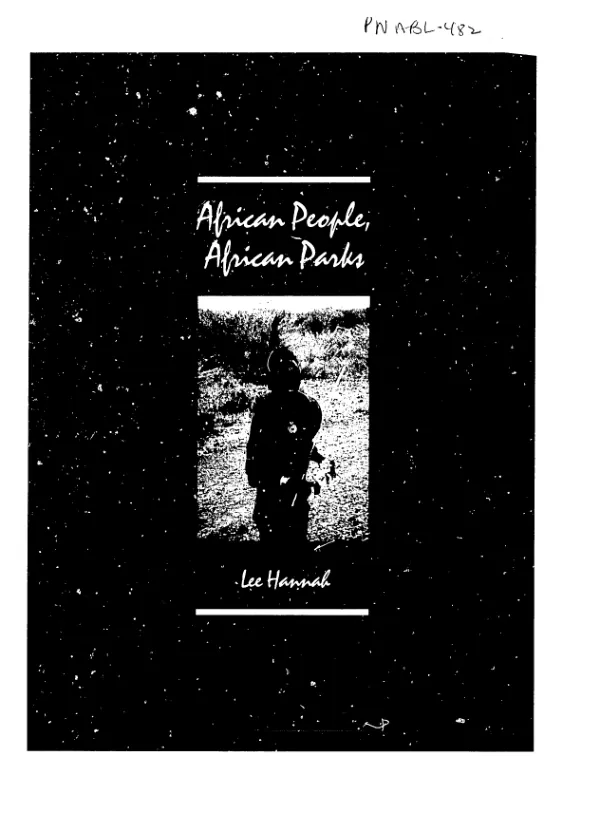
African people, African parks : an evaluation of development initiatives as a means of improving protected area conservation in Africa
Sign inTHE NATURE CONSERVANCY (TNC)
African people, African parks : an evaluation of development initiatives as a means of improving protected area conservation in Africa
In the early 1980"s, a handful of internationally financed projects pioneered practical application of the idea that the long-term existence of Africa"s parks depends on revitalizing traditional relationships between local people and wildlife.
Hannah, Lee · 1970
Sign in to readA free account is required to download.
Abstract
However, many of current parks projects in Africa have been designed with no knowledge of the successes and failures of these pioneering efforts. This study reviews the implementation of 10 such projects and makes suggestions for future project design. The report begins by presenting brief profiles of the 10 projects, namely: Amboseli National Park Plan in southeastern Kenya, the Mountain Gorilla Project in Rwanda, the Bururi Forest Project in Burundi, the Air-Tenere Project in Niger, the Wildlife Extension Project in Kenya, the Rumonge Agroforestry Project near Lake Tanganyika, the Nyungwe Forest Project in Rwanda, the Beza Mahafaly and Andohahela Projects in Madagascar, and the Kafue Flats Project in Zambia. Next, more detailed case studies are presented of the Amboseli and Wildlife Extension projects in Kenya, the Bururi Forest Project, and the Mountain Gorilla Project. Lessons learned from these projects are discussed in conclusion. A major lesson is that a good "people and parks" project must address an entire protected area with adequate resources; projects which address only a portion of an area cannot ensure its integrity. Also essential to success is the need to respect traditional community structures, even when these seem less individualistic and democratic than those in the west.
Connected topics