USAID
Agricultural Development and Value Chain Extension Project in Tunisia
The agricultural development initiative in Tunisia began in 2012 with funding from the United States Agency for International Development (USAID).
2012 · 5 pages
Sign in to readA free account is required to download.
Abstract
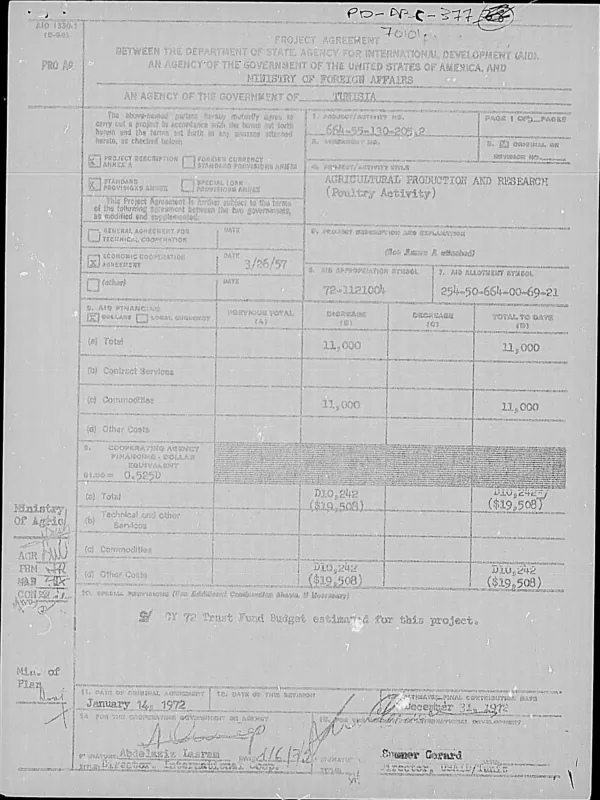
The project's primary objective is to improve the productivity and competitiveness of the Tunisian poultry sector. The initiative focuses on three key areas: (1) improving the quality and availability of poultry feed, (2) enhancing the efficiency of poultry production, and (3) promoting the export of Tunisian poultry products. The project aims to increase the production of broiler chickens and eggs, with a target of 100,000 tons of poultry meat and 50,000 tons of eggs per year. To achieve this goal, the project will provide technical assistance to poultry farmers, including training on improved production techniques and access to high-quality feed. The project will also establish a network of poultry extension services to provide ongoing support to farmers. The project will be implemented in six governorates in Tunisia, including Bizerte, Jendouba, Nabeul, Sfax, Sousse, and Monastir. The project will work closely with the Tunisian Ministry of Agriculture and the poultry industry to ensure the success of the initiative. The project will also provide training and capacity-building activities for poultry farmers, including workshops, seminars, and on-farm demonstrations. The project will be implemented over a period of five years, with a total budget of $24.21 million. The project will be funded by USAID and will be implemented in collaboration with the Tunisian Ministry of Agriculture and the poultry industry. The project will also receive technical assistance from the United States Department of Agriculture (USDA) and the Food and Agriculture Organization (FAO). The project's expected outcomes include an increase in poultry production, improved quality and safety of poultry products, and enhanced competitiveness of the Tunisian poultry sector. The project will also contribute to the development of the Tunisian economy and improve the livelihoods of poultry farmers and their families. The project will also promote the use of best practices in poultry production, including improved animal health and welfare, and environmental sustainability. The project will be monitored and evaluated regularly to ensure its success and to identify areas for improvement. The project will also provide regular reports to USAID and the Tunisian Ministry of Agriculture on its progress and achievements. The project's success will depend on the effective collaboration and coordination among all stakeholders, including the Tunisian government, the poultry industry, and USAID.
Related documents