CNFA, INC.
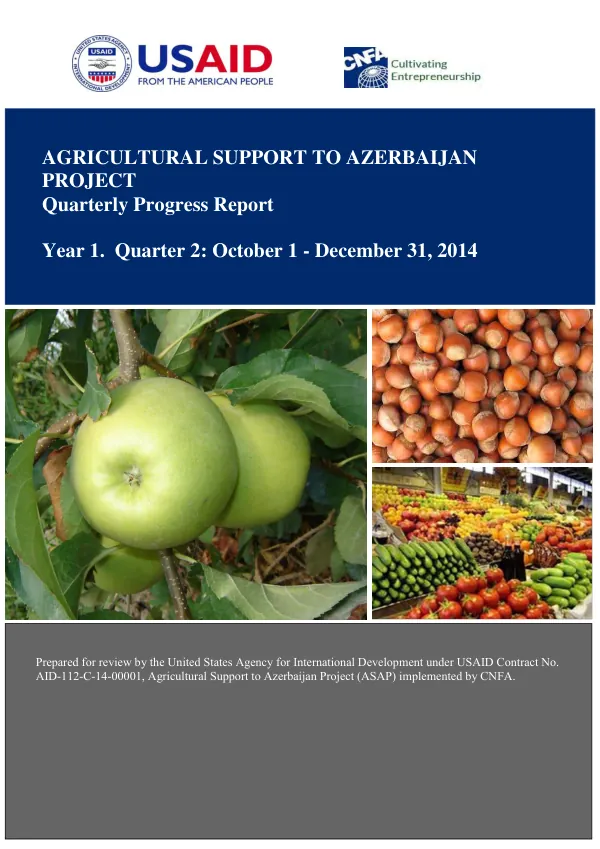
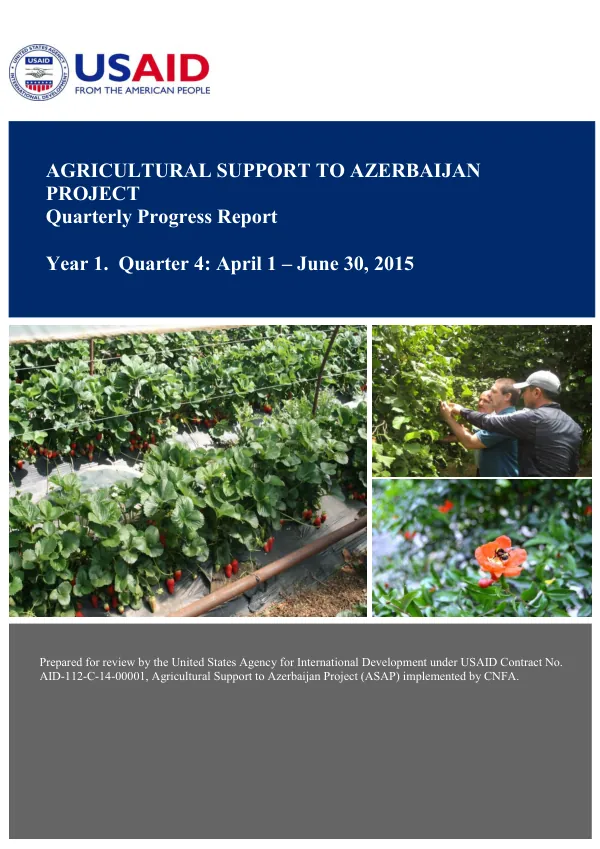
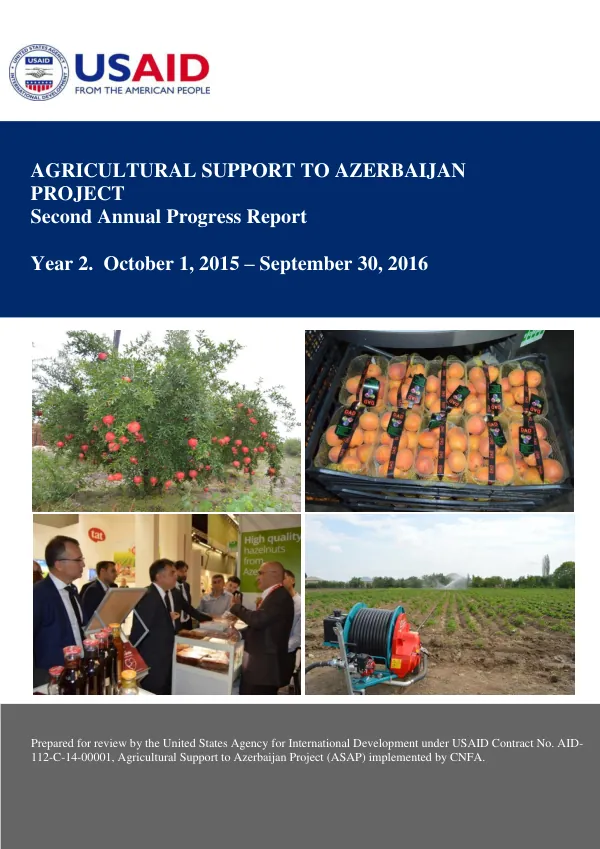
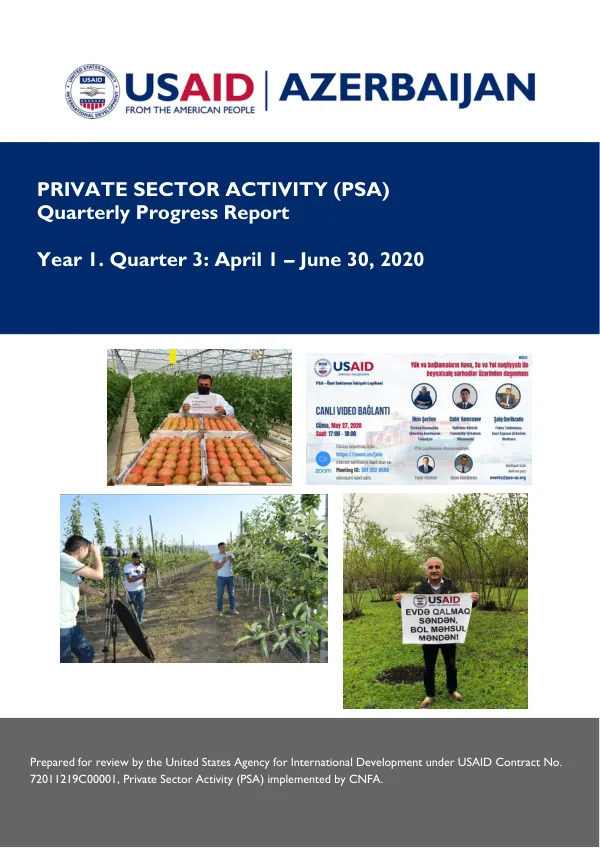
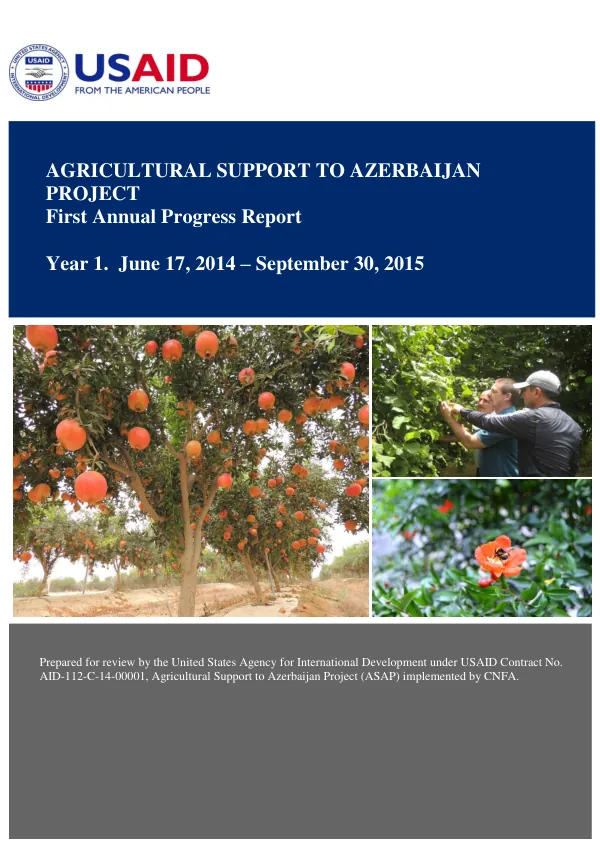
Agricultural Support to Azerbaijan Project (ASAP) First Annual Progress Report
The Agricultural Support to Azerbaijan Project (ASAP) was implemented by CNFA under USAID Contract No.
2015 · 65 pages
Sign in to readA free account is required to download.
Abstract
AID-112-C-14-00001. The project's primary objective was to improve the quality and quantity of goods produced in Azerbaijan's agricultural sector. The project focused on four value chains: Hazelnut, Orchard Fruit, Pomegranate, and Vegetable & Berry. During the first year of implementation, ASAP laid a foundation for assistance to the identified value chains. The project established an office in Baku, selected and contracted key and non-key personnel, and developed operational manuals and finance and administrative procedures. ASAP also developed a monitoring and evaluation system and conducted a Value Chain Survey and Analysis. The survey and analysis were implemented by three local Business Service Providers (BSPs) that were selected through a competitive process. The BSPs conducted interviews with stakeholders in all four value chains to identify prevailing opportunities and constraints. The data collected informed the development of Value Chain Strategies and Action Plans, which were submitted to USAID in November 2014. Implementation of these strategies and action plans commenced the following month. In the Hazelnut Value Chain, ASAP selected two orchards to serve as Demonstration Plots. The project employed a multi-disciplinary approach to managing the demos, providing training and oversight in pruning, fertilization, spraying, and irrigation. ASAP also identified hazelnut sorting as a critical contributor to post-harvest handling and initiated an investment from the Technology Transfer Fund to support beneficiaries in adopting new technologies. On the sales and marketing side, ASAP introduced large international buyers to processors in the value chain, potentially leading to the expansion of Azerbaijani exports to new EU and Asian markets. ASAP also assisted a group of hazelnut processors to establish a consortium to market and facilitate joint exports. The project supported them to exhibit at the largest international trade fair, where they showcased their products to potential buyers. In addition, ASAP provided training and technical assistance to processors to improve their skills and knowledge in areas such as quality control, packaging, and labeling. The project's programs were designed to address specific challenges in each value chain. In the Orchard Fruit Value Chain, ASAP focused on improving the quality and quantity of apples and pears. The project provided training and technical assistance to farmers on good agricultural practices, irrigation management, and pest control. ASAP also established a network of orchard fruit producers and processors to facilitate the exchange of information and best practices. In the Pomegranate Value Chain, ASAP focused on improving the quality and quantity of pomegranates. The project provided training and technical assistance to farmers on good agricultural practices, irrigation management, and pest control. ASAP also established a network of pomegranate producers and processors to facilitate the exchange of information and best practices. In the Vegetable & Berry Value Chain, ASAP focused on improving the quality and quantity of vegetables and berries. The project provided training and technical assistance to farmers on good agricultural practices, irrigation management, and pest control. ASAP also established a network of vegetable and berry producers and processors to facilitate the exchange of information and best practices. ASAP's programs were designed to address specific challenges in each value chain, including limited access to finance, inadequate infrastructure, and lack of technical expertise. The project's cross-cutting activities, including technology transfer, business support, access to finance, quality and food safety, and monitoring and evaluation, were also implemented to support the development of the agricultural sector in Azerbaijan. The project's success was attributed to the effective implementation of its programs and activities, as well as the strong partnerships established with local stakeholders and partners.