USAID DEC
Agriculture-Led Export Businesses Supporting Egypt's Processed Foods Export Industry
Sign inUSAID
Agriculture-Led Export Businesses Supporting Egypt's Processed Foods Export Industry
Agriculture-Led Export Businesses Supporting Egypt's Processed Foods Export Industry The Egyptian government has identified the processed foods sector as a key driver of economic growth and job creation.
503 pages
Sign in to readA free account is required to download.
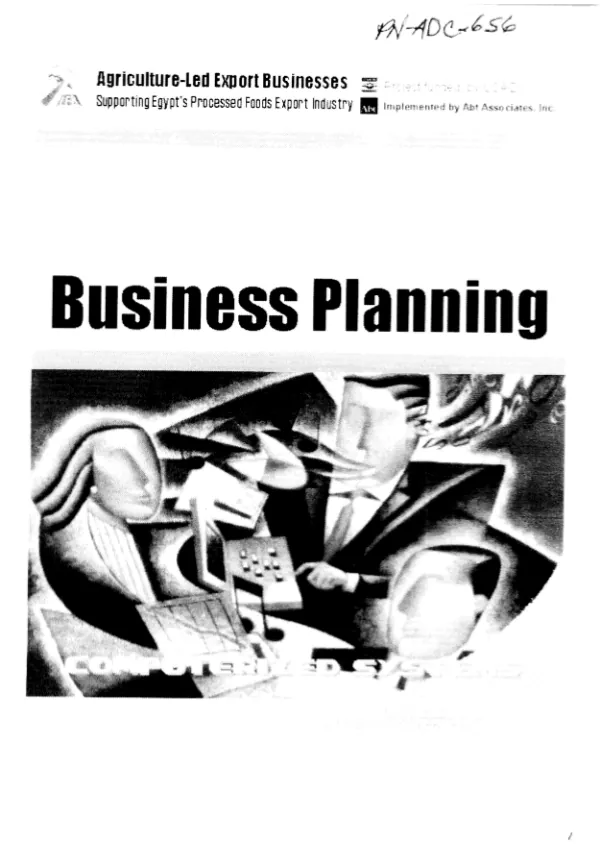
Abstract
To support this sector, the government has launched initiatives to enhance the competitiveness of Egyptian processed foods exports. One such initiative is the development of agriculture-led export businesses, which aim to promote the export of high-value processed foods products. The key objective of these businesses is to increase the value-added content of Egyptian processed foods exports, thereby enhancing their competitiveness in the global market. To achieve this objective, the businesses will focus on developing high-quality products that meet international standards, improving supply chain efficiency, and increasing market access through trade agreements and partnerships. The businesses will be established as limited liability companies, with a mix of public and private sector ownership. The companies will be registered in Egypt and will operate in accordance with the country's commercial laws and regulations. The ownership structure will be designed to ensure that the companies are managed in a transparent and accountable manner, with clear lines of authority and decision-making. The businesses will be capitalized with an initial investment of EGP 100 million, which will be used to cover start-up expenses, including the purchase of equipment, hiring of staff, and establishment of supply chain relationships. The investment will also be used to cover the costs of product development, marketing, and trade promotion. The businesses will generate revenue through the sale of high-value processed foods products, both domestically and internationally. The key to the success of these businesses lies in their ability to develop high-quality products that meet international standards, improve supply chain efficiency, and increase market access through trade agreements and partnerships. The businesses will focus on developing products that are in high demand in the global market, such as organic and halal products, and will work closely with suppliers and customers to ensure that their products meet the required standards. The businesses will be managed by a team of experienced professionals, including a CEO, marketing manager, and supply chain manager. The team will be responsible for developing and implementing the business strategy, managing day-to-day operations, and ensuring that the businesses are operated in a transparent and accountable manner. The businesses will be subject to regular monitoring and evaluation, including financial performance, product quality, and customer satisfaction. The results of these evaluations will be used to identify areas for improvement and to make adjustments to the business strategy as needed. Overall, the agriculture-led export businesses supporting Egypt's processed foods export industry have the potential to make a significant contribution to the country's economic growth and job creation. By developing high-quality products, improving supply chain efficiency, and increasing market access, these businesses can enhance the competitiveness of Egyptian processed foods exports and promote the country's economic development.