USAID DEC
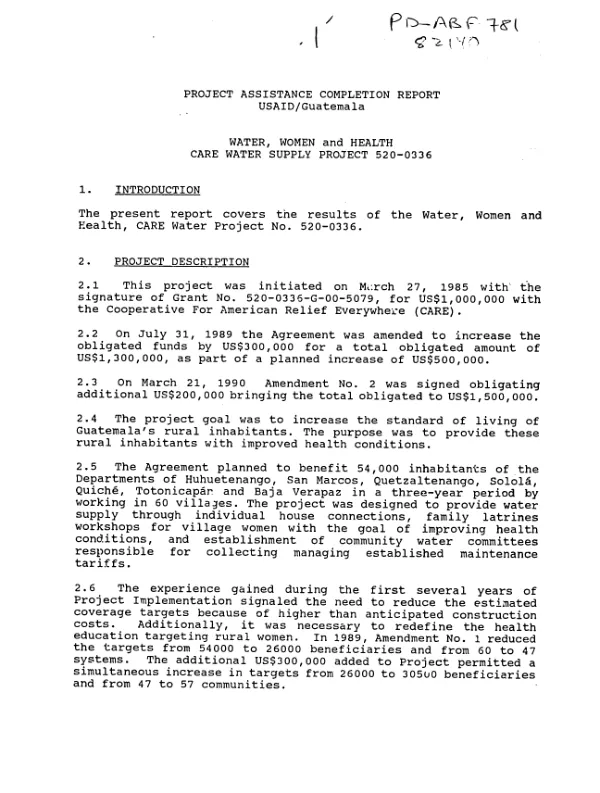
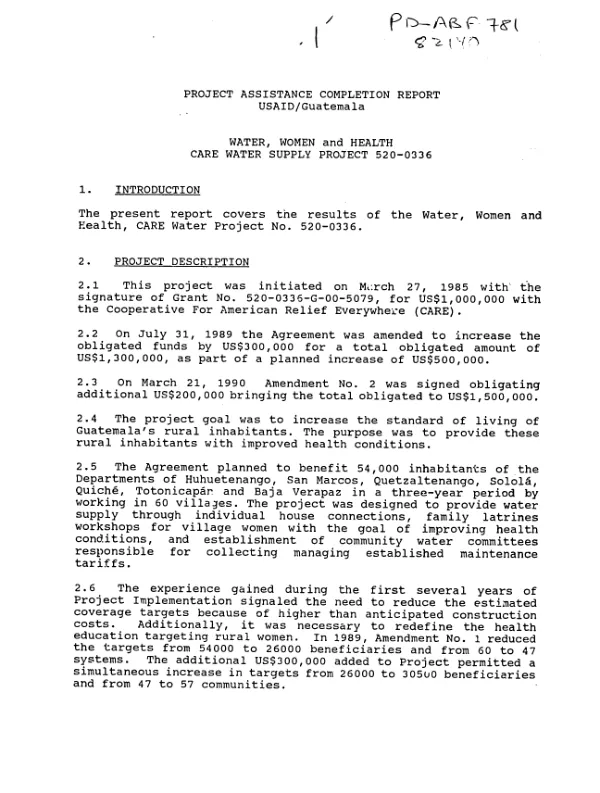
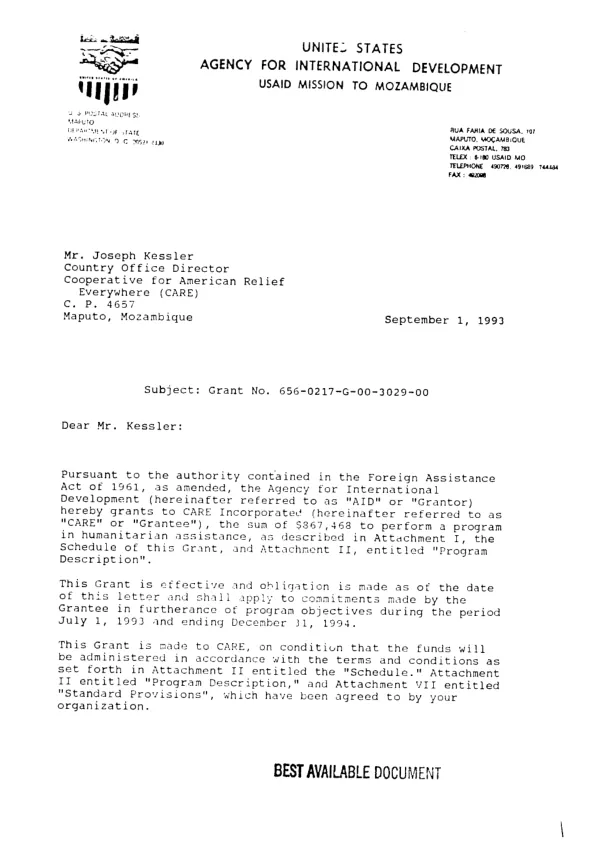
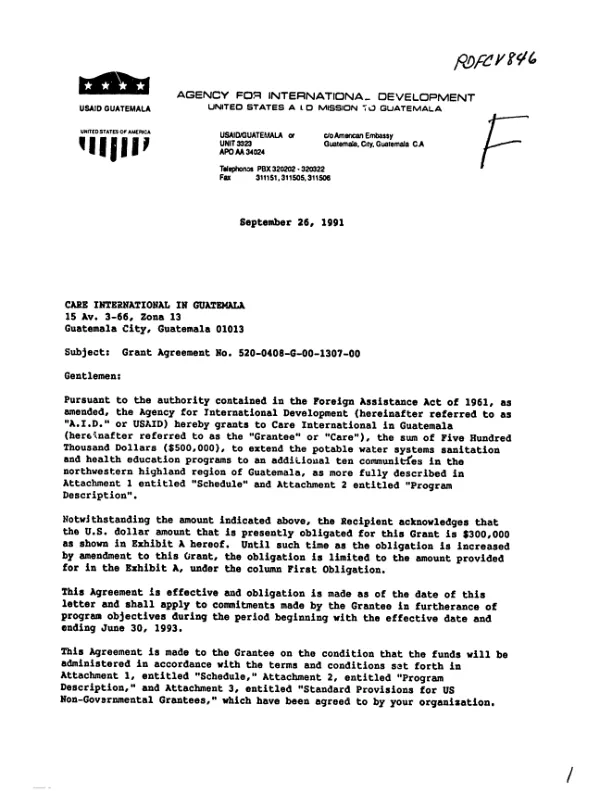
AID grant agreement no. 520-0408-G-00-1307-00 with CARE International in Guatemala to extend the potable water systems, sanitation, and health education programs to an additional ten communities in the northwestern highland region of Guatemala
Sign inUSAID. MISSION TO GUATEMALA
AID grant agreement no. 520-0408-G-00-1307-00 with CARE International in Guatemala to extend the potable water systems, sanitation, and health education programs to an additional ten communities in the northwestern highland region of Guatemala
Project to expand water sanitation and health activities in northwestern Guatemala initiated by project 5200336 to 10 additional communities, extending coverage to a total of 11,000 people in 22 communities.
1991
Sign in to readA free account is required to download.
Abstract
CARE will implement the project, which aims at combatting diarrheal disease, in cooperation with the Ministry of Health"s Unidad Ejecutora de Proyectos Acuaductos Rurales (UNEPAR). The project will employ an experimental approach, adapting proven technologies and methodologies from similar projects in Guatemala and the region. Key outputs will include: (1) construction of 10 gravity-fed potable water systems and a minimum of 800 latrines; (2) training of extension agents and promoters (especially women) to implement a program of hygiene and health education targeting 80% of households; and (3) appropriate use of oral rehydration therapy by 60% of mothers. Sustainability, an increasing concern in CARE projects, will be addressed through strict site selection criteria (which will include community willingness to include women health promoters in traditionally all-male water committees), a 20-year design life, early community organization, significant community in-kind inputs prior to and during the construction phase, training of village water committees in system administration and operation and maintenance, and the establishment of a system user fee.
Connected topics