USAID DEC
AIDE MEMOIRE POUR VACCINATEURS COMMENT PARLER AVEC LA MERE/PARENT
The vaccination schedule for children and women of reproductive age in a given region is outlined in a comprehensive plan.
2013 · 2 pages
Sign in to readA free account is required to download.
Abstract
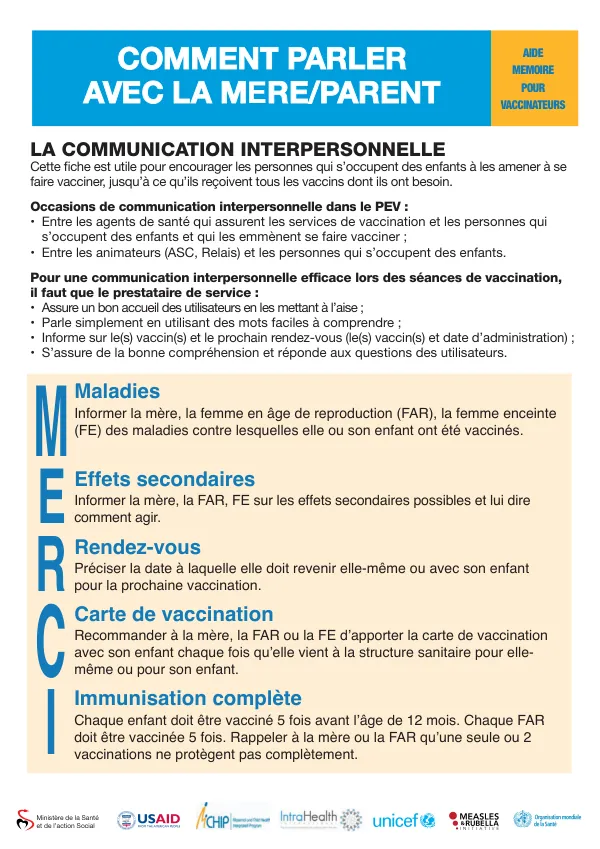
The plan emphasizes the importance of informing mothers, women of reproductive age, and pregnant women about the diseases against which they or their children have been vaccinated. This information is crucial for ensuring that individuals are aware of the potential risks and benefits associated with vaccination. The plan also highlights the need to inform mothers, women of reproductive age, and pregnant women about possible side effects of vaccination and provide guidance on how to manage them. Additionally, the plan recommends that mothers, women of reproductive age, and pregnant women be informed about the date of their next vaccination appointment and the importance of bringing their vaccination card with them to each visit. The vaccination schedule for children consists of five doses administered before the age of 12 months. Each dose is designed to protect against a specific disease, including tuberculosis, poliomyelitis, diphtheria, tetanus, pertussis, hepatitis B, and pneumococcal disease. The schedule also includes a booster dose against measles and rubella administered at 9 months of age. For women of reproductive age, the plan recommends a series of vaccinations against tetanus, diphtheria, and pertussis, with a total of five doses administered over a period of one year. The vaccinations are administered at 1st contact with the healthcare facility, 4 weeks after the 1st vaccination, 6 months after the 1st vaccination, 6 months after the 2nd vaccination, 1 year after the 3rd vaccination, 1 year after the 3rd vaccination, 1 year after the 4th vaccination, and 1 year after the 4th vaccination. Effective communication between healthcare providers and individuals seeking vaccination is essential for ensuring that the vaccination schedule is followed correctly. Healthcare providers should ensure a warm welcome, use simple language, and provide clear information about the vaccinations and the next appointment. They should also be prepared to answer questions and ensure that individuals understand the importance of completing the vaccination series. The vaccination schedule is designed to protect against a range of diseases, including tuberculosis, poliomyelitis, diphtheria, tetanus, pertussis, hepatitis B, and pneumococcal disease. The schedule is based on a comprehensive plan that takes into account the needs of children and women of reproductive age in the region. By following the recommended vaccination schedule, individuals can reduce their risk of contracting these diseases and protect their health and well-being. The plan emphasizes the importance of community involvement in promoting vaccination and reducing the risk of vaccine-preventable diseases. Healthcare providers should work closely with community leaders and other stakeholders to promote vaccination and ensure that individuals have access to the information and resources they need to make informed decisions about their health. The vaccination schedule is an essential tool for protecting public health and preventing the spread of vaccine-preventable diseases. By following the recommended schedule, individuals can reduce their risk of contracting these diseases and protect their health and well-being. The plan provides a comprehensive framework for promoting vaccination and reducing the risk of vaccine-preventable diseases in the region.