USAID. MISSION TO PHILIPPINES
AIDS surveillance and education project (ASEP)
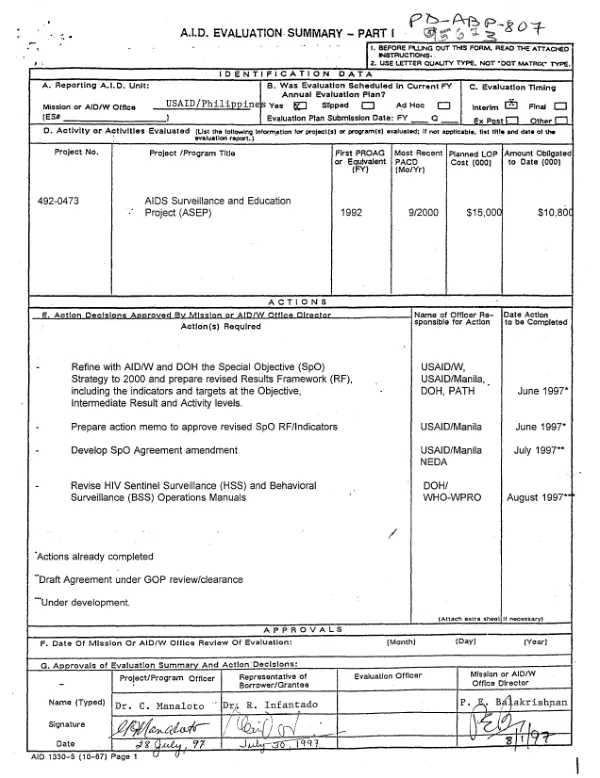
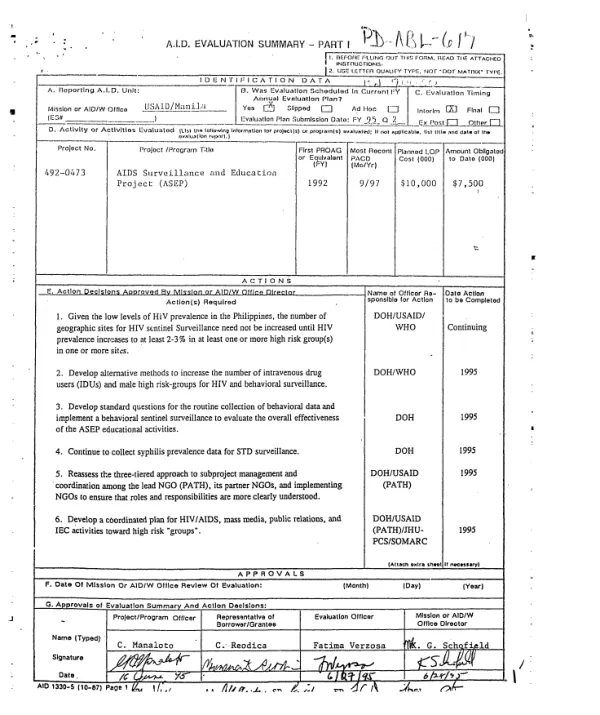
Summarizes interim evaluation (PD-ABK-671) of a project to control the spread of AIDS in the Philippines by monitoring HIV prevalence and conducting IEC activities.
1995
Sign in to readA free account is required to download.
Abstract
This well-conceived, timely, and solid project has made adequate progress toward achieving its objectives. Three rounds of HIV sentinel surveillance surveys have been conducted among six target groups at six geographic sites; data on risk behavior were collected in all three rounds, with serologic testing for syphilis added in the third round. HIV infection prevalence remains less than 1% in all of the high risk groups included in these rounds. Given this low incidence of HIV prevalence, there is no need to expand surveillance to an increased number of risk groups or geographic sites. Local NGOs are conducting IEC projects in Pasay, Quezon, Cebu, Angeles, and Davao, including outreach to high-risk group. There is a need to coordinate mass media activities and develop an overall IEC plan. Project experience shows that the Philippine AIDS prevention and control program has the potential to become a model for low-prevalence countries, provided the Department of Health AIDS unit and local government units institutionalize recent accomplishments and NGO grantees assume administrative responsibilities.
Connected topics
Related documents