USAID
Albania PLGP: Planting Roots for Sustainable Incomes
The Medicinal and Aromatic Plants (MAPs) subsector in Albania generates income for approximately 100,000 households.
2020 · 1 pages
Sign in to readA free account is required to download.
Abstract
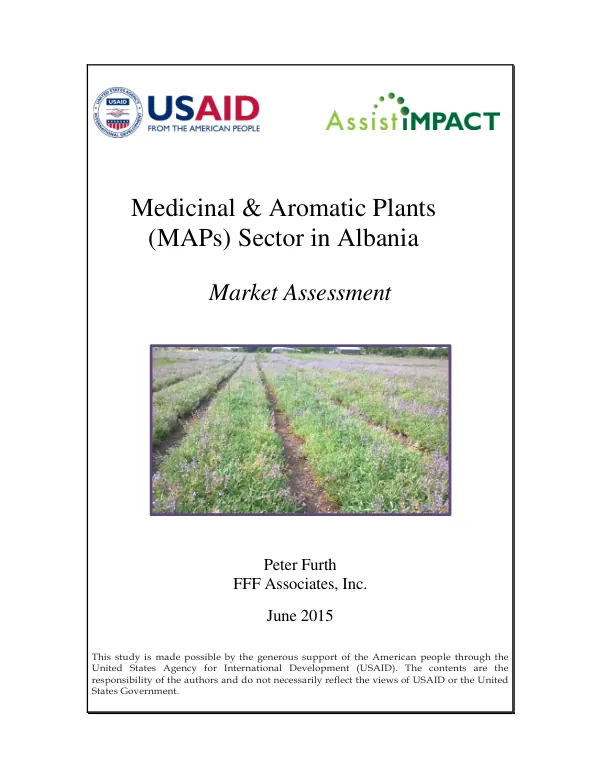
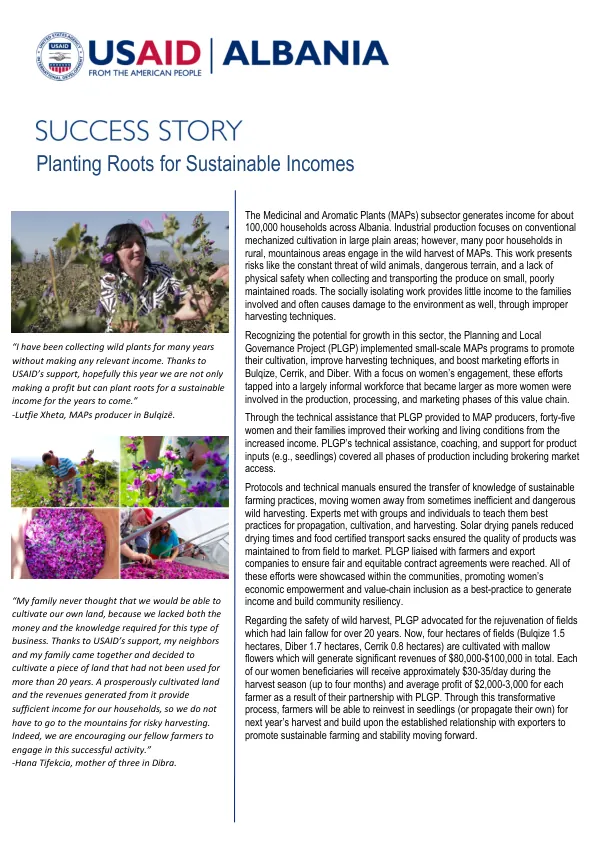
Industrial production focuses on conventional mechanized cultivation in large plain areas, while many poor households in rural, mountainous areas engage in the wild harvest of MAPs. This work poses risks such as the constant threat of wild animals, dangerous terrain, and a lack of physical safety when collecting and transporting the produce on small, poorly maintained roads. The socially isolating work provides little income to the families involved and often causes damage to the environment through improper harvesting techniques. The Planning and Local Governance Project (PLGP) implemented small-scale MAPs programs to promote their cultivation, improve harvesting techniques, and boost marketing efforts in Bulqize, Cerrik, and Diber. With a focus on women's engagement, these efforts tapped into a largely informal workforce that became larger as more women were involved in the production, processing, and marketing phases of this value chain. Through the technical assistance provided by PLGP, forty-five women and their families improved their working and living conditions from the increased income. PLGP's technical assistance, coaching, and support for product inputs covered all phases of production, including brokering market access. Protocols and technical manuals ensured the transfer of knowledge of sustainable farming practices, moving women away from sometimes inefficient and dangerous wild harvesting. Experts met with groups and individuals to teach them best practices for propagation, cultivation, and harvesting. Solar drying panels reduced drying times, and food-certified transport sacks ensured the quality of products was maintained from field to market. PLGP liaised with farmers and export companies to ensure fair and equitable contract agreements were reached. The efforts of PLGP showcased within the communities promoted women's economic empowerment and value-chain inclusion as a best-practice to generate income and build community resiliency. Regarding the safety of wild harvest, PLGP advocated for the rejuvenation of fields that had lain fallow for over 20 years. Now, four hectares of fields are cultivated with mallow flowers, which will generate significant revenues of $80,000-$100,000 in total. Each of the women beneficiaries will receive approximately $30-35 per day during the harvest season (up to four months) and average a profit of $2,000-$3,000 for each farmer as a result of their partnership with PLGP. Through this transformative process, farmers will be able to reinvest in seedlings (or propagate their own) for next year's harvest and build upon the established relationship with exporters to promote sustainable farming and stability moving forward. The success of these efforts is evident in the testimonials of women like Lutfie Xheta and Hana Tifekcia, who have seen significant improvements in their income and living conditions as a result of PLGP's support.
Related documents