USAID
ALLIANCEs action
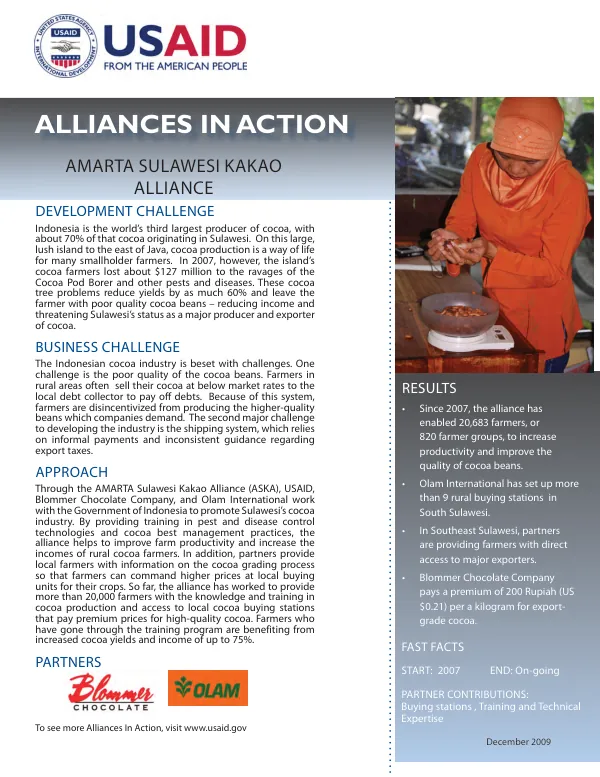
The AMARTA Sulawesi Kakao Alliance (ASKA) was established in 2007 to promote Sulawesi's cocoa industry.
2009 · 1 pages
Sign in to readA free account is required to download.
Abstract
Indonesia is the world's third-largest producer of cocoa, with approximately 70% of its production originating in Sulawesi. The island's cocoa farmers lost about $127 million in 2007 due to the Cocoa Pod Borer and other pests and diseases, which reduce yields by as much as 60% and result in poor-quality cocoa beans. The Indonesian cocoa industry faces several challenges, including the poor quality of cocoa beans and the shipping system, which relies on informal payments and inconsistent guidance regarding export taxes. Farmers in rural areas often sell their cocoa at below-market rates to local debt collectors to pay off debts, disincentivizing them from producing higher-quality beans. The alliance aims to address these challenges by providing training in pest and disease control technologies and cocoa best management practices to improve farm productivity and increase the incomes of rural cocoa farmers. Through ASKA, USAID, Blommer Chocolate Company, and Olam International work with the Government of Indonesia to promote Sulawesi's cocoa industry. Partners provide training to more than 20,000 farmers, enabling them to access local cocoa buying stations that pay premium prices for high-quality cocoa. Farmers who have completed the training program have benefited from increased cocoa yields and income of up to 75%. The alliance has also established more than 9 rural buying stations in South Sulawesi, providing farmers with direct access to major exporters. The alliance's efforts have resulted in significant improvements in the cocoa industry. Since 2007, ASKA has enabled 20,683 farmers or 820 farmer groups to increase productivity and improve the quality of cocoa beans. Blommer Chocolate Company pays a premium of 200 Rupiah (US $0.21) per kilogram for export-grade cocoa, providing farmers with a higher income. The alliance's approach has been successful in addressing the challenges facing the Indonesian cocoa industry, and its impact is expected to continue in the future. The AMARTA Sulawesi Kakao Alliance has been operational since 2007 and is ongoing. Partner contributions include buying stations, training, and technical expertise. The alliance's work has been focused on Sulawesi, where cocoa production is a significant contributor to the local economy. By addressing the challenges facing the cocoa industry, ASKA has improved the livelihoods of rural cocoa farmers and contributed to the growth of the industry.