LA COORDINADORA INDÍGENAS DE LAS ORGANIZACIONES INDÍGENAS DE LA CUENCA AMAZÓNICA
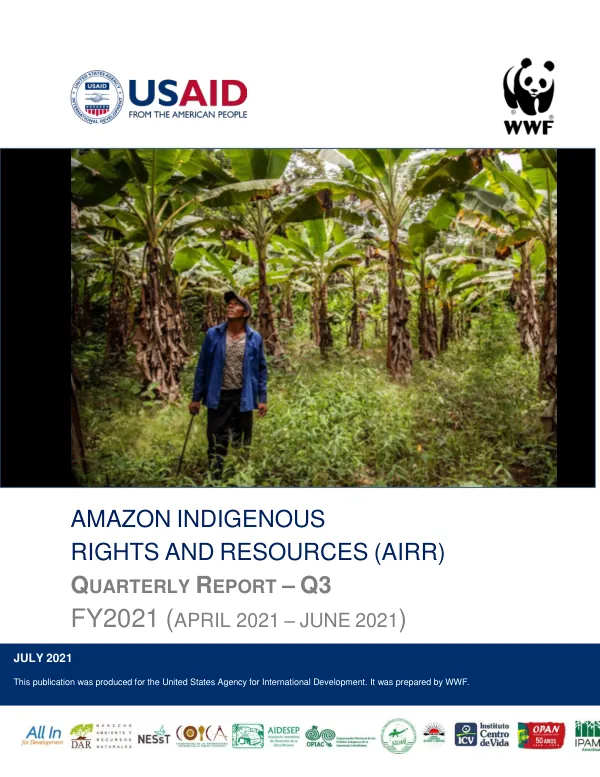
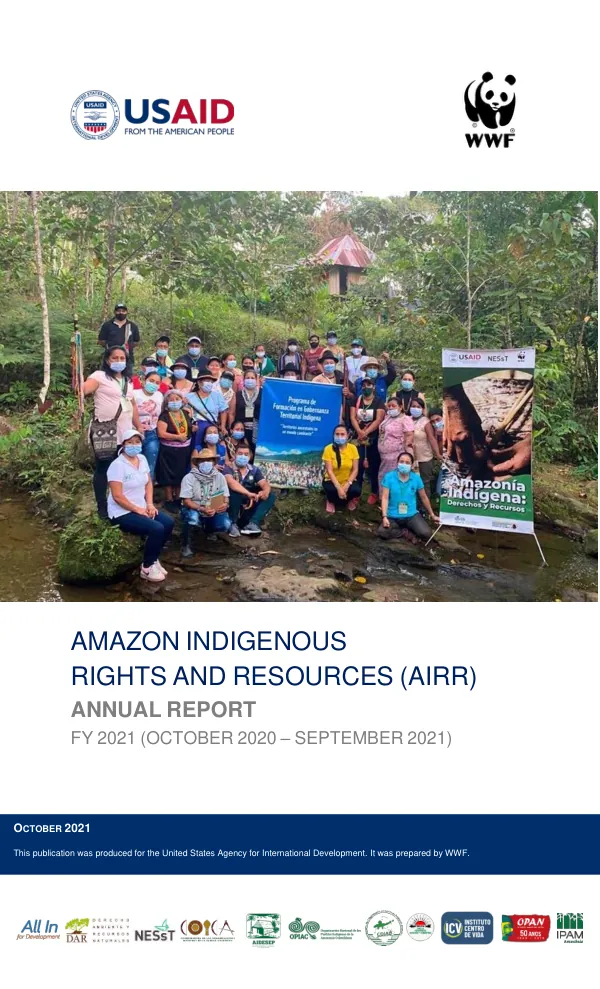
Amazon Indigenous Rights and Resources (AIRR) Annual Report FY 2021
Amazon Indigenous Rights and Resources (AIRR) is a project aimed at promoting the rights and resources of indigenous peoples in the Amazon biome.
2021 · 65 pages
Sign in to readA free account is required to download.
Abstract
The project is implemented by World Wildlife Fund Inc. (WWF) in partnership with various indigenous organizations and other stakeholders. The project's geographic coverage includes specific regions of the Amazon biome within Brazil, Colombia, Ecuador, and Peru. The project's main purpose is to support the development of indigenous enterprises and strengthen the capacities of indigenous peoples organizations to advocate for their rights and interests. To achieve this, the project has implemented various interventions, including the Applied Political Economic Analysis (APEA), the Gender and Youth Plan (GYP), Environmental Impact Assessments (EIA), and Strategic Environmental Studies (SEA). These studies have allowed the project to develop intervention strategies and adjust its approach as needed. During Fiscal Year (FY) 2021, the project made significant progress towards achieving its intermediate results. The project strengthened the capacities of 286 people, including 128 women and 47 youth, and 13 indigenous peoples organizations to advocate for their rights and interests. The project also strengthened the monitoring systems of AIDESEP, COICA, and SOMAI to generate and disseminate information that leads to action for the protection of indigenous territories. The project selected 25 indigenous enterprises through a participatory process implemented in conjunction with national Indigenous Economy Committees. These enterprises were strengthened in their legal, communications, and accounting needs, and are working towards sustainably producing goods and services and participating in local, national, or international supply chains. The project also made progress in strengthening its governance through the consolidation of the National Steering Committees and each of the four countries' CEIs. The project maintained opportunities for exchange, reflection, and adaptive decision-making among all project partners through two Pause and Reflect processes, collective analyses of lessons learned, and monthly meetings. The project's geographic focus is on specific regions of the Amazon biome within Brazil, Colombia, Ecuador, and Peru. The project's timeframes are from August 23, 2019, to September 30, 2024. The project's implementation is led by WWF, with the support of various indigenous organizations and other stakeholders. The project's key findings and methodologies include the use of Applied Political Economic Analysis (APEA), the Gender and Youth Plan (GYP), Environmental Impact Assessments (EIA), and Strategic Environmental Studies (SEA). The project's conclusions highlight the importance of strengthening the capacities of indigenous peoples organizations and indigenous enterprises to advocate for their rights and interests. The project's implementation details include the selection of 25 indigenous enterprises through a participatory process, the strengthening of the capacities of 286 people and 13 indigenous peoples organizations, and the strengthening of the monitoring systems of AIDESEP, COICA, and SOMAI. The project's recommendations include the continued support for indigenous peoples organizations and indigenous enterprises, and the strengthening of the project's governance and monitoring systems. The project's geographic context is the Amazon biome, which spans across Brazil, Colombia, Ecuador, and Peru. The project's timeframes are from August 23, 2019, to September 30, 2024. The project's recommendations highlight the importance of continued support for indigenous peoples organizations and indigenous enterprises, and the strengthening of the project's governance and monitoring systems.
Related documents