USAID
An Exporter's Guide to Effective Presentations
The Power of Presentations is a critical skill required in today's global business environment.
234 pages
Sign in to readA free account is required to download.
Abstract
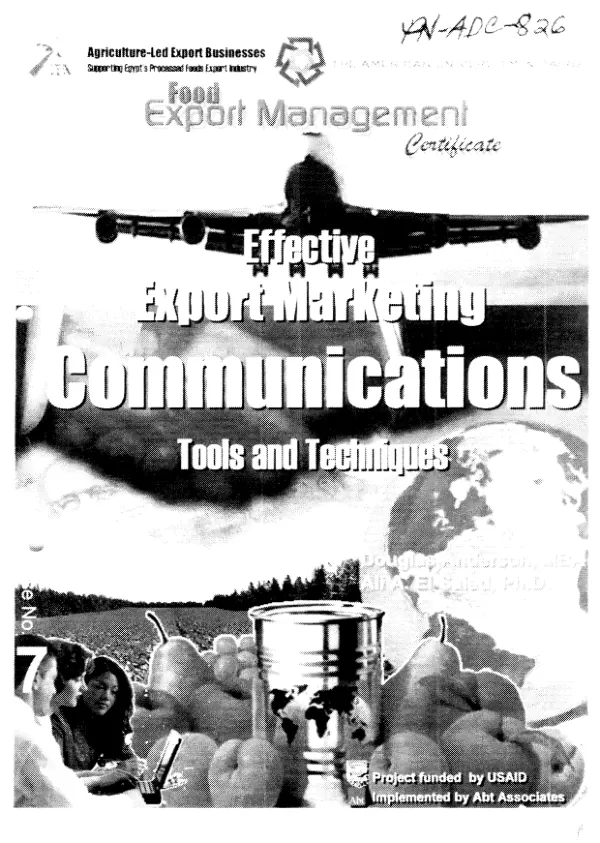
Effective presentations are a key tool for communicating with large groups or individuals from diverse backgrounds. In the international arena, communicating with people from other countries can be challenging due to language barriers, cultural differences, and varying business norms. Understanding the local culture and business norms in the target market is essential for effective presentation planning. This includes researching local history, religion, values, social institutions, politics, geography, and regional differences, as well as business ethics and protocol, social norms, language, and technology. This knowledge helps establish a cultural context for the presentation and determines how it should be prepared and delivered to the audience. To research the target market, one can read books and newspaper articles, talk to business people with experience in the market, and consult with trade officers at the Canadian Embassy or High Commission in the target country. Reviewing government, business, and tourism websites is also essential. Business people consistently request that presenters provide relevant and useful information in their world, not just academic and theoretical concepts. Many Canadians miss opportunities to successfully present their products or services to foreign audiences by not considering their interests. Companies have also missed the mark by making incorrect assumptions about their audience's background or knowledge. To avoid this, presenters should take the time to understand their audience's needs and interests. This includes conducting an audience analysis, using audience research strategies, and soliciting feedback from colleagues and cultural experts. By doing so, presenters can tailor their message to their audience and increase the effectiveness of their presentation. In the next section, we will discuss the importance of setting presentation objectives and rehearsing the presentation to ensure a successful outcome. Knowing your market is a critical first step in effective presentation planning. This involves researching local culture and business norms in the target market, including history, religion, values, social institutions, politics, geography, and regional differences, as well as business ethics and protocol, social norms, language, and technology. This knowledge helps establish a cultural context for the presentation and determines how it should be prepared and delivered to the audience. Setting presentation objectives is a critical step in effective presentation planning. This involves defining what you want to achieve with your presentation, including what you want to communicate, what actions you want the audience to take, and what outcomes you want to achieve. By setting clear objectives, presenters can focus their message and ensure that it is relevant and useful to their audience. To set presentation objectives, presenters should consider the following questions: What is the main message I want to communicate? What actions do I want the audience to take? What outcomes do I want to achieve? By answering these questions, presenters can develop clear and specific objectives that will guide their presentation. Rehearsing the presentation is also essential for effective presentation planning. This involves practicing the presentation in front of a mirror, record yourself, or practice with a colleague or friend. By rehearsing the presentation, presenters can identify areas for improvement, practice their delivery, and build their confidence. In the next section, we will discuss the importance of organizing for offshore presentations and the key considerations for effective offshore presentation planning. Organizing for offshore presentations requires careful planning and preparation. This involves assembling a team of experts, establishing a successful structure, and investing time in the opening and ending of the presentation. By doing so, presenters can ensure that their message is delivered effectively and that their audience is engaged and motivated. To organize for offshore presentations, presenters should consider the following key considerations: Assemble a team of experts, including a project manager, a content expert, and a technical expert. Establish a successful structure, including a clear agenda, a detailed outline, and a well-defined timeline. Invest time in the opening and ending of the presentation, including a clear introduction, a compelling conclusion, and a clear call to action. By following these key considerations, presenters can ensure that their offshore presentation is effective and engaging, and that their audience is motivated to take action.