USAID
The horticulture crops harvest and marketing calendar in Turkmenistan
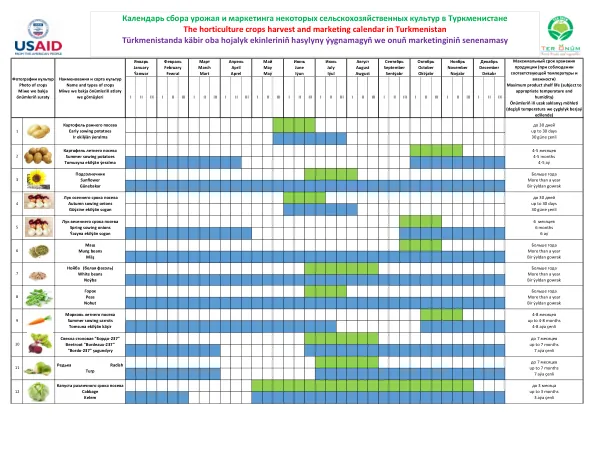
The horticulture crops harvest and marketing calendar in Turkmenistan is a comprehensive guide outlining the optimal sowing and harvesting periods for various crops.
2021 · 4 pages
Sign in to readA free account is required to download.
Abstract
The calendar is based on the country's climate and soil conditions, as well as the characteristics of different crop varieties. The calendar begins with the sowing period for various crops, including grapes, melons, and pomegranates. For example, the optimal sowing period for grapes is from March to May, while for melons it is from April to June. The calendar also provides information on the harvesting period for each crop, which depends on the sowing time, cultivation area, and characteristics of the variety. The calendar includes a range of crops, including fruits, vegetables, and nuts. For instance, the optimal harvesting period for pomegranates is from September to November, while for walnuts it is from October to December. The calendar also provides information on the storage and processing conditions for each crop, which is essential for maintaining their quality and shelf life. The marketing phase of the calendar is also an essential component, as it outlines the storage, processing, and sale of the crop. This phase depends on the sowing period, cultivation area, characteristics of the variety, and storage conditions. The calendar provides approximate information on the marketing phase, which is obtained from various publicly available sources. The development of this calendar was made possible with the assistance of the American people through the United States Agency for International Development (USAID). The project, which is responsible for the content of the calendar, does not necessarily reflect the position of USAID or the Government of the United States. The calendar is a valuable resource for farmers, agricultural experts, and policymakers in Turkmenistan, as it provides essential information on the optimal sowing and harvesting periods for various crops. It also highlights the importance of considering the climate, soil conditions, and characteristics of the crop variety when planning agricultural activities. The calendar includes a range of crops, including: - Grapes: optimal sowing period from March to May, harvesting period from September to November - Melons: optimal sowing period from April to June, harvesting period from July to September - Pomegranates: optimal sowing period from March to May, harvesting period from September to November - Walnuts: optimal sowing period from October to December, harvesting period from October to December - Figs: optimal sowing period from April to June, harvesting period from September to November - Pears: optimal sowing period from March to May, harvesting period from September to November - Apples: optimal sowing period from March to May, harvesting period from September to November - Plums: optimal sowing period from March to May, harvesting period from September to November - Apricots: optimal sowing period from March to May, harvesting period from September to November - Peaches: optimal sowing period from March to May, harvesting period from September to November - Nectarines: optimal sowing period from March to May, harvesting period from September to November - Cherries: optimal sowing period from March to May, harvesting period from September to November - Quince: optimal sowing period from March to May, harvesting period from September to November - Persimmons: optimal sowing period from March to May, harvesting period from September to November The calendar also provides information on the storage and processing conditions for each crop, which is essential for maintaining their quality and shelf life. The marketing phase of the calendar is also an essential component, as it outlines the storage, processing, and sale of the crop.