USAID DEC
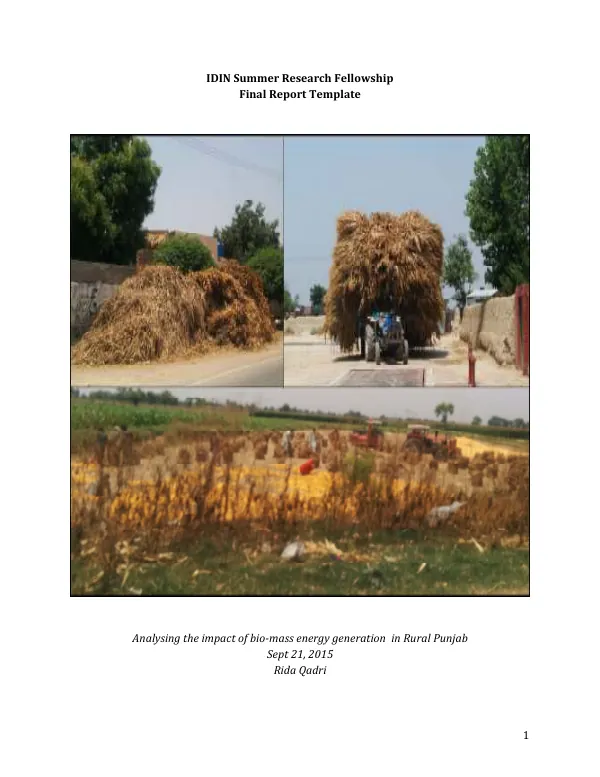
Analysing the impact of bio-mass energy generation in Rural Punjab
The biomass energy generation project in Rural Punjab, Pakistan, was initiated by a local firm in partnership with local farming communities.
2015 · 7 pages
Sign in to readA free account is required to download.
Abstract
The project utilizes crop residue such as corn stalks, wheat straw, rice straw, and cotton sticks to generate bio-mass fuel. The research aimed to understand the socio-economic impact of the biomass boiler on the supply chain, including the magnitude of farmers' involvement, the value of this activity to the farmer, and the potential creation of employment opportunities. The research methodology involved partnering with the organization to benefit from their existing networks and knowledge of the area. A lean research framework was designed to ensure that the study complied with the required standards. The supply chain was mapped out, and a sample of individuals from each tier of the supply chain was surveyed at six corn stalk supply centers. The research focused on isolating the impact of the biomass boiler from the general paper production activities of the company. The study found that the organization injected Rs. 228,978,024 (approximately $228,978) into the local economy in 2015 through 116 center staff salaries alone. Additionally, Rs. 76,371,414 ($76,371,414) was added through 377 suppliers and sub-suppliers associated with the centers. The suppliers and sub-suppliers picked up the residue for free from farmers, with most paying a negligible amount of Rs. 500 ($5) to clear the entire area. This means that most of what the organization pays suppliers goes towards the suppliers' income and the wage of the labor they hire, which comes to Rs. 40,289,223 ($40,289) for 2015. The study also found that the biomass boiler generates 50 labor jobs in the area, paid by day, based on the number of trolleys that they load/unload from. The economic impact of the project was not uniform by area, but varied considerably depending on the collection capacity of the center as well as the economic context of the area. The attached table represents this disaggregated information, showing the collection target, number of center staff, staff income, number of suppliers, labor income, and supplier and sub-supplier income for each center. The social impact perception of the intervention indicated optimistic results, with most suppliers feeling that their employment opportunities had increased, and more people would join this line of work in the future. However, the local context played a significant role in this aspect, as the two suppliers from Dhing Shah felt that this activity would create a shortage of labor or make labor more expensive in the future. This anxiety correlates with the numbers, which show higher labor wage rates in Dhing Shah. The organization is providing an alternate source of income for suppliers, which is expanding the local economy as well as the options available to the workers. The suppliers mostly mentioned better working conditions and cooperative staff as a reason to have joined this supply chain. This expanding people's choice set of where to work might impact the work culture in other firms. Future research directions include understanding the impact of the biomass boiler on the supply chain for other crops like wheat and cotton. This would be an interesting comparative exercise to see if the different market contexts of various crops impact the supply of the residue and limit or enhance the benefits to the supply chain evident in the corn-stalk case. Additionally, a longitudinal study over time could see if attitudes of farmers change once they realize their crop residue can be monetized.
Related documents