CHILD FUND INTERNATIONAL
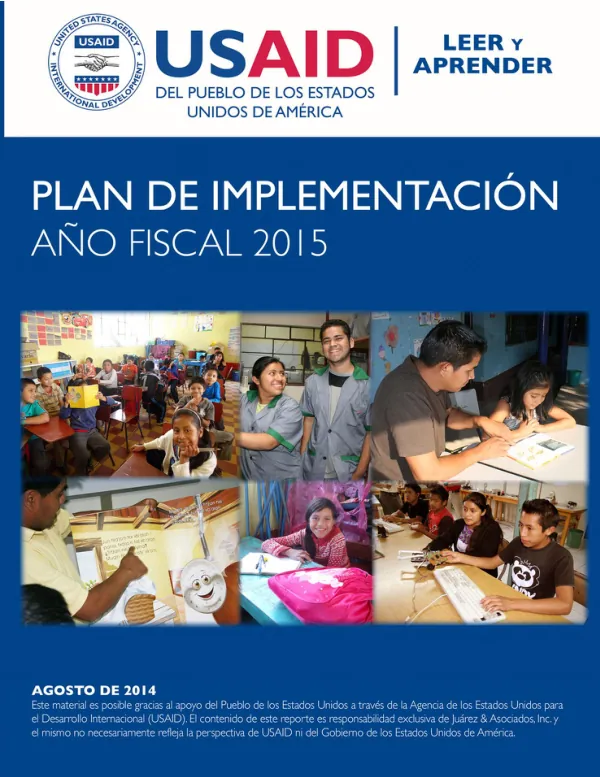
Annual Implementation Plan 2015: USAID Lifelong Learning Project
The USAID Lifelong Learning Project is a two-year initiative aimed at improving education outcomes in Guatemala.
2015 · 94 pages
Sign in to readA free account is required to download.
Abstract
The project is organized into two main components: Component A, Learning to Read, and Component B, Education for Employment and Lifelong Learning. Component A focuses on improving reading skills among students in the target municipalities. During the second fiscal year, the project will work closely with local Ministry of Education (MOE) authorities to develop departmental and municipal Early Basic Instruction (EBI) model plans, which will lead to classroom-level implementation. The project will also provide technical assistance in developing the EBI model operational guide and instruments to measure reading progress. Additionally, the project will analyze current reading materials in L1 and L2 languages, develop and validate new educational and instructional materials in Spanish and Mayan languages, and assist MOE authorities in implementing the National Textbook and Educational Material Policy. Regarding human resource development, the project will design and/or adapt teacher and professional training programs to improve the skills of teachers, supervisors, and MOE technical staff in first and second language reading instruction. These programs will be implemented through universities at a regional level and linked to teacher support actions provided by regional technical staff of MOE to preprimary and first-grade teachers. Component B aims to reduce or eliminate barriers to youth access alternative basic education and workforce training. The project will implement strategies to create alliances among key youth service providers, develop a communication strategy to promote awareness of youth education and employment, and increase commitment to addressing the needs of out-of-school youth (OSY). Activities will also focus on developing shared quality standards for alternative basic education and workforce training, creating conditions within service providers to adopt and improve quality and standards, and implementing a strategic plan to increase quality and effectiveness of youth programming activities. The project will also develop a plan for parental and community participation to increase parents' and communities' efforts to support educational quality, emphasizing reading, and providing them with strategies to improve their involvement. An awareness campaign will be implemented to inform the public on the importance of quality education, reading to improve learning, and the effectiveness of learning in the child's first language. Additionally, the project will develop an Early Reading Socialization Approach to promote appropriate reading environments at the family, school, and community level. The project will be implemented in 12 target municipalities, and activities will be carried out in collaboration with local and educational authorities, as well as regional representatives from the National Youth Council (Conjuve). The project will also work closely with the MOE, universities, and other stakeholders to achieve its objectives. The budget for the 2015 fiscal year is detailed in the fourth section of the document, and the project's brand positioning and communication strategies are also outlined. The document includes a comprehensive executive summary, a brief introduction, and a summary of the specific planning that includes a description of the main tasks and activities planned for each component. The second section presents a specific planning matrix, which includes tasks and activities by subcomponents, as well as expected products, actors, and staff responsible for its implementation. The project's implementation will be carried out in accordance with the Contract No. AID-520-C-14-00001, and the opinions expressed by the authors do not necessarily reflect the views of USAID or the Government of the United States of America.
Related documents
Documents in this collection
 2016
2016USAID DEC
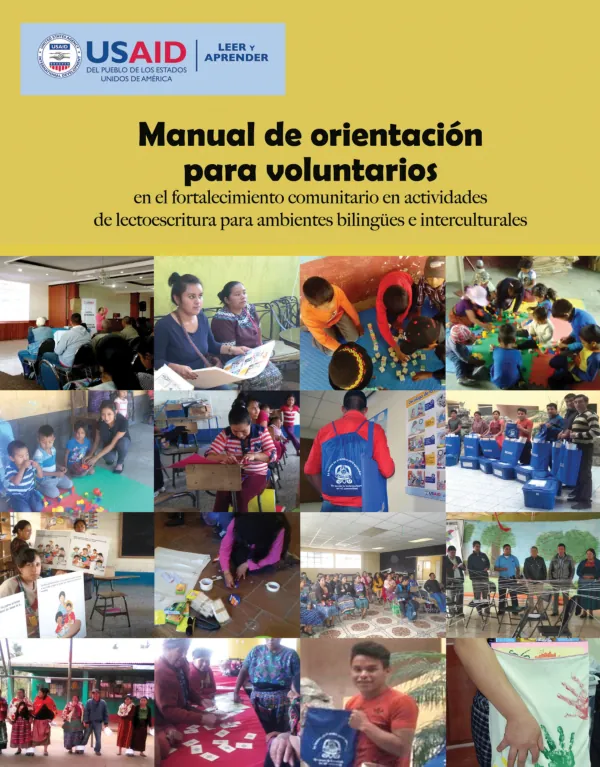
Manual de orientación para voluntarios en el fortalecimiento comunitario en actividades de lectoescritura para ambientes bilingües e interculturales
Open record 2016
2016USAID DEC