USAID DEC
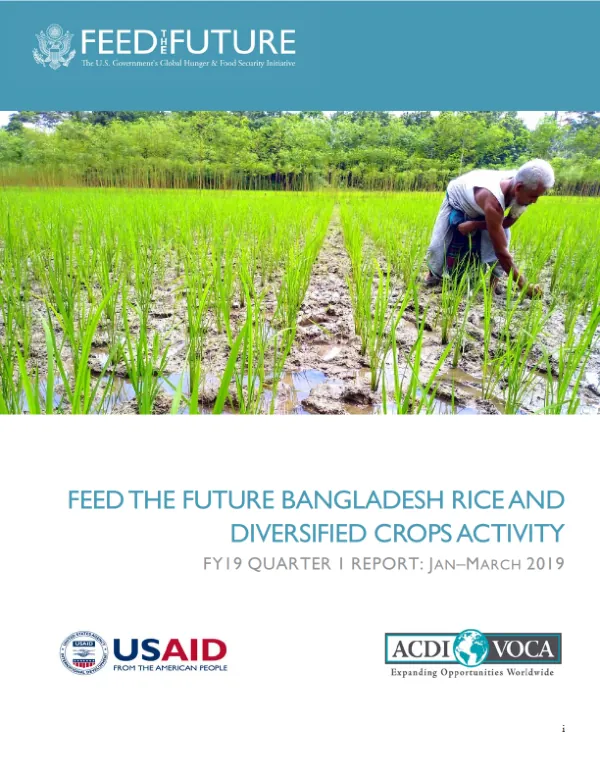
Annual Performance Study for FY 2019 Feed the Future Bangladesh Rice and Diversified Crops (RDC) Activity
Sign inACDI/VOCA
Annual Performance Study for FY 2019 Feed the Future Bangladesh Rice and Diversified Crops (RDC) Activity
The Feed the Future Bangladesh Rice and Diversified Crops (RDC) activity is a USAID-funded initiative implemented by ACDI/VOCA in the Dhaka, Khulna, and Barisal divisions of southern Bangladesh.
2019 · 80 pages
Sign in to readA free account is required to download.
Abstract
The RDC activity crafts transformational business relationships between firms, male and female farmers, and other value chain actors in five priority crop value chains, including rice, maize, sunflower, sesame, and mungbean. The activity supports function actors in the FTF zone and aims to improve the productivity and income of smallholder farmers. RDC interventions in the rice sector were implemented through private firms, including Ispahani Agro, Partex Agro, Petrochem, Bayer Crops, Krishibid Machinery, and Konika. The study found that rice yield increased by 23 percent (1.26 MT/ha) in 2019 compared to 2017 due to the use of better-quality seed and improved management practices. However, the average area cultivated per producer for rice production decreased by 16 percent since 2017, likely due to fluctuating market prices and profitability. The gross margin decreased by $125 per ha, caused by an increase in input cost for rice by 14 percent ($97 per hectare) and a decrease in market price by 22 percent ($50 per MT) in 2019 since 2017. In the maize sector, RDC intervened with Petrochem and NAAFCO through improving input, focusing on seed. The study found that the cultivation area per producer for maize remained unchanged from 2017 to 2019, but the yield increased by 69 percent (4.67 MT) per ha over this period due to better quality seed. The maize seed sale of the input traders increased by 89 percent in the FTF zone, and the gross margin of the maize producers increased by 37 percent ($239) per ha despite an upward trend of input cost and a slightly decreasing market price. In the mungbean sector, RDC implemented interventions in partnership with private firms, including SACO, Prantojon, and Konika, mainly through procurement of produce (grain and seed) based on contract farming. The study found that the input cost increased by 9 percent ($7/ha) in 2019 compared to 2017, and the average cultivation area per producer decreased by 22 percent (0.12 ha per producer) due to multiple harvesting operations. However, the adoption of improved management practices increased by 45 percent among mungbean farmers in 2019 from 2018. RDC interventions in the sunflower sector were implemented through private firms, including NCPL and MRT Agro, in case of procurement of produce (grain) through contract farming while ensuring better quality inputs. The study found that the average cultivation area per producer increased by 45 percent (0.08 ha per producer) in 2019 from 2017, and the input cost decreased by 18 percent ($70/ha) in 2019 compared to 2017. The adoption of improved management practices, such as mechanization for cultivation, increased by 4 percent among sunflower producers from 2018 to 2019. The RDC activity has had a positive impact on the value chain actors in the rice, maize, and sunflower sectors. In the rice sector, 43.5 percent of value chain actors adopted innovations in business due to RDC interventions. In the maize sector, 52.5 percent of value chain actors adopted innovations in business, and 40 percent of the value chain actors reported an improvement in their business situation. In the sunflower sector, the number of contract farmers of the companies increased, and the distribution channel geographically expanded.