ACDI/VOCA
Annual Performance and Baseline Report: 2017-2018
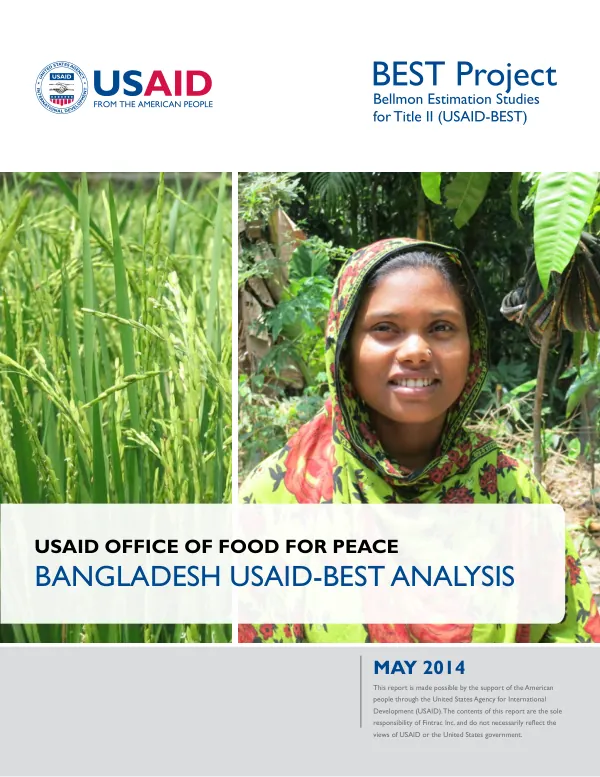
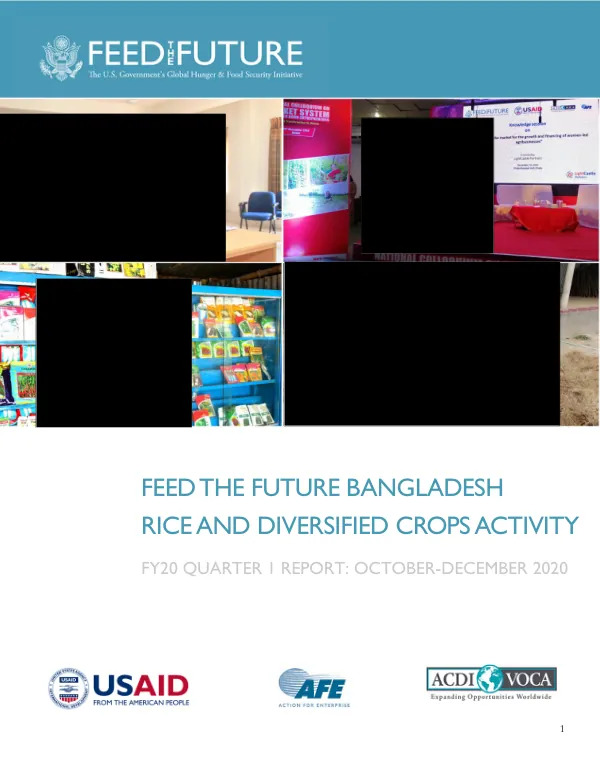
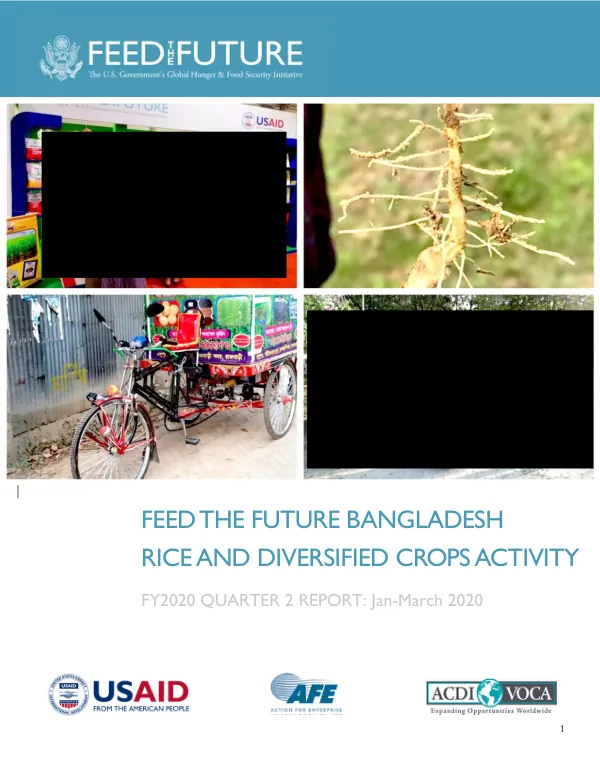
The Rice and Diversified Crops Activity was launched in July 2016 to promote a diversified farm management approach oriented to intensified rice production and higher-value, nutrient-rich crops.
2019 · 49 pages
Sign in to readA free account is required to download.
Abstract
The activity aimed to increase incomes and improve food security and nutrition in the Feed the Future (FtF) zone. The project was implemented in several districts, with a focus on improving market systems and increasing access to high-yielding varieties (HYV) of rice and other crops. The project's broad objective was to undertake a comparative static analysis to assess the extent of market system changes and their impact on farm management practices. The analysis was conducted through a combination of surveys, key informant interviews (KII), and other data collection methods. The results of the analysis were used to identify areas of improvement and to inform future interventions. The project's research design and methodology are outlined in detail in the report. The methodology involved a baseline survey conducted in 2017, which collected data on farm management practices, market access, and other relevant variables. The survey was followed by an annual performance survey in 2018, which collected data on changes in farm management practices and market access over time. The baseline survey revealed that farmers in the intervention areas had limited access to high-yielding varieties of rice and other crops. The survey also found that farmers in the intervention areas had lower yields and lower incomes compared to farmers in the control areas. The annual performance survey found that farmers in the intervention areas had increased their yields and incomes over time, and had improved their access to high-yielding varieties of rice and other crops. The project's market actor survey found that suppliers of inputs such as seeds, fertilizers, and pesticides had improved their services and had increased their sales to farmers in the intervention areas. The survey also found that buyers of rice and other crops had improved their services and had increased their purchases from farmers in the intervention areas. The project's conclusion was that the Rice and Diversified Crops Activity had been successful in promoting market system changes and improving farm management practices in the intervention areas. The project's findings and recommendations are outlined in detail in the report. The project's methodology involved a combination of surveys, KII, and other data collection methods. The surveys were conducted in several districts, and the data was collected on farm management practices, market access, and other relevant variables. The KII were conducted with key stakeholders, including farmers, suppliers, and buyers. The project's results showed that farmers in the intervention areas had improved their yields and incomes over time, and had improved their access to high-yielding varieties of rice and other crops. The project's findings also showed that suppliers of inputs had improved their services and had increased their sales to farmers in the intervention areas, and that buyers of rice and other crops had improved their services and had increased their purchases from farmers in the intervention areas. The project's recommendations are outlined in detail in the report. The recommendations include continued support for the Rice and Diversified Crops Activity, and the expansion of the project to other districts. The recommendations also include the need for further research on the impact of the project on farm management practices and market access. The project's descriptive statistics for the intervention areas and potential areas are outlined in detail in the report. The statistics show that farmers in the intervention areas had improved their yields and incomes over time, and had improved their access to high-yielding varieties of rice and other crops. The statistics also show that suppliers of inputs had improved their services and had increased their sales to farmers in the intervention areas, and that buyers of rice and other crops had improved their services and had increased their purchases from farmers in the intervention areas. The project's indicator performance tracking table (IPTT) is outlined in detail in the report. The IPTT shows that the project had achieved its objectives and had made significant progress in promoting market system changes and improving farm management practices in the intervention areas. The IPTT also shows that the project had faced some challenges, including limited access to high-yielding varieties of rice and other crops, and limited access to inputs such as seeds, fertilizers, and pesticides. The project's performance indicator reference sheet (PIRS) is outlined in detail in the report. The PIRS shows that the project had achieved its objectives and had made significant progress in promoting market system changes and improving farm management practices in the intervention areas. The PIRS also shows that the project had faced some challenges, including limited access to high-yielding varieties of rice and other crops, and limited access to inputs such as seeds, fertilizers, and pesticides. The project's monitoring, evaluation, and learning (MEL) framework is outlined in detail in the report. The MEL framework shows that the project had established a robust monitoring and evaluation system, which had enabled the project to track its progress and make adjustments as needed. The MEL framework also shows that the project had established a learning system, which had enabled the project to share its knowledge and best practices with other stakeholders. The project's digital financial service (DFS) and mobile financial service (M
Related documents