USAID DEC
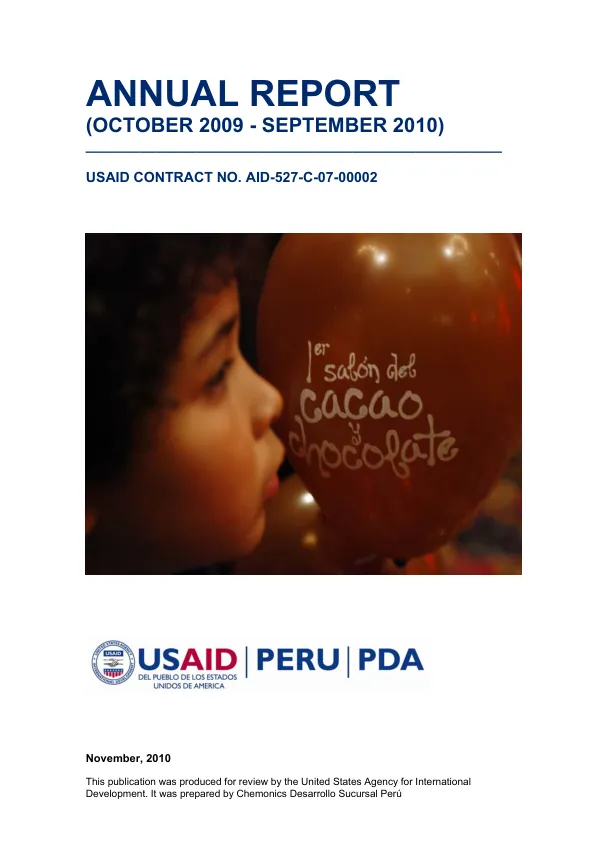
Annual Report 2009-2010
The Alternative Development Program in Peru began replication of its post eradication model in Ucayali during the reporting year.
2010 · 73 pages
Sign in to readA free account is required to download.
Abstract
CORAH eradicated 2,284 hectares of coca in the areas of Campo Verde, San Alejandro, and Von Humboldt between March and October 2010. The Program successfully signed 31 communities with 955 families, and activities are underway to establish 1,855 hectares of licit crops, with 250 hectares already in nurseries. The post eradication model in Ucayali received support from the Ucayali Regional Government, which sponsored community signing ceremonies and worked closely with the Program to provide agricultural technical assistance and economic infrastructure investment. The Program's top priority for the next phase is to make this post eradication intervention successful. The reporting year saw an increase in strengthening relations with strategic partners, including local and regional governments, private enterprise, and producer associations. This deepened relations yielded more investment in Program areas, increased promotion of products, and helped producer organizations position themselves as market actors. Public investment in Program areas increased significantly, from $1.02 million in the prior reporting year to $13.9 million in the reporting year. The majority of this investment was for economic and social infrastructure and other agricultural projects in alliance with regional and local governments. The Program also supported the Participatory Budget process and competitive funds, which led to an increase in public investment in Program areas. The Program actively participated in four major national-level events, including ExpoAmazónica Fair, Mistura, ExpoAlimentaria, and the 1st Salón de Cacao and Chocolate. These events showcased products from Program areas, such as cacao, chocolate, palm, coffee, and others. Many Program-supported organizations were also assisted to sharpen their commercial presentation skills for exposure to new clients and markets. The Program focused efforts on strengthening producer organizations, including organizing farmers for structured price negotiations and developing business plans and strategies. Of the 31 organizations strengthened by the Program, 30% substantially increased their level of management capability. These organizations currently have over 13,500 members, with over 8,000 being Program participants. The Program also sponsored leadership training for 90 leaders within these organizations to develop a more robust management capacity. The Program's efforts in the reporting year led to increased public investment, strengthened organizations, and promotion of products and Program-supported organizations. These achievements will continue to be a key strategy to increase participation of the public sector in Program areas. The Ucayali Regional Government played a crucial role in supporting the post eradication model, sponsoring community signing ceremonies and working closely with the Program to provide agricultural technical assistance and economic infrastructure investment. The Program's success in replicating its post eradication model in Ucayali demonstrates its ability to create conditions for the transition to the licit economy in the wake of programmed eradication. The Program's work with strategic partners, including local and regional governments, private enterprise, and producer associations, yielded more investment in Program areas, increased promotion of products, and helped producer organizations position themselves as market actors. The Program's efforts in promoting products and Program-supported organizations through national-level events also contributed to its success. The Program's focus on strengthening producer organizations, including developing business plans and strategies, led to increased management capability and membership. The Program also sponsored leadership training for 90 leaders within these organizations to develop a more robust management capacity. The Program's achievements in the reporting year demonstrate its commitment to creating conditions for the transition to the licit economy in the wake of programmed eradication. The Program's success in replicating its post eradication model in Ucayali and strengthening producer organizations will continue to be a key strategy to increase participation of the public sector in Program areas.