USAID DEC
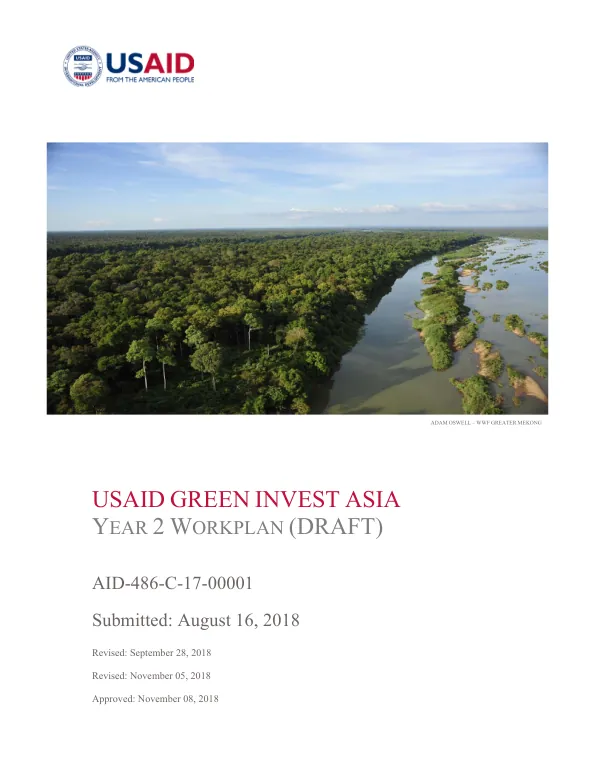
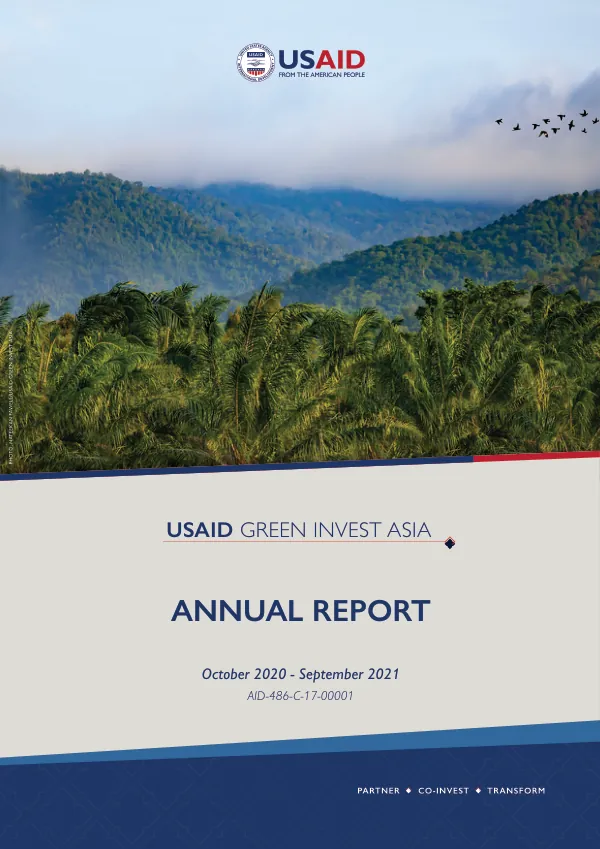
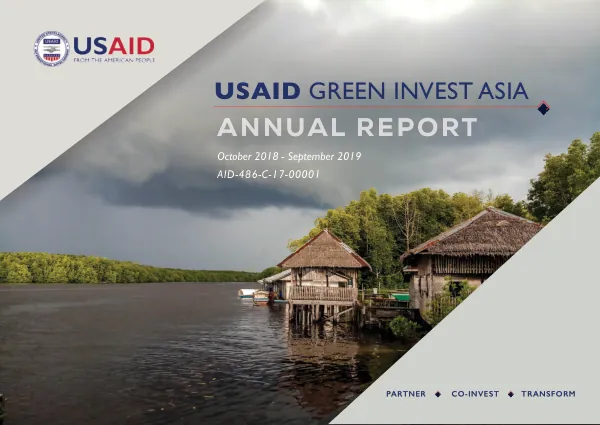
Annual Report 2019: USAID Green Invest Asia
The USAID Green Invest Asia activity began its second year in 2018 with a focus on responding to market demands for carbon assessments, feasibility studies, investment readiness services, and more.
2019 · 28 pages
Sign in to readA free account is required to download.
Abstract
The activity continued to build a robust pipeline for potential investment, with resources used to carry the activity into Year 3 and beyond. The efforts paid off, with a more than two-fold increase in requests for service, 44 company inquiries, and the help of securing a $23.75 million investment into a sustainable rubber project with an in-depth carbon assessment. The activity engaged with businesses that produce or source commodities most closely linked with deforestation and degradation in the region, including timber, cacao, coconut, coffee, rubber, and biomass. Of the 24 active business projects, the majority were located in Indonesia (9), followed by the Philippines (7) and Cambodia (5). Progress in Vietnam picked up toward the end of Year 2. The activity co-organized eight events and contributed to five more with businesses, financial institutions, and other private sector actors. These events enhanced awareness on the importance of sustainable finance, gender-lens investing, sustainable sourcing, environmentally sustainable agriculture and forestry sector businesses in Asia. The events resulted in eight company prospects that are in varied stages of due diligence. The activity published two guidelines for the banking sector on land use investment assessments and sustainability-linked loans for small and medium-sized enterprises, as well as two studies to better understand the role of women and growth opportunities for women-led businesses in selected value chains. The activity also partnered with three companies to directly improve ESG integration, low-emission investment decision making, and smallholder access to finance. Banks' insufficient knowledge, tools, and experience to operationalize sustainable finance, investors' lack of GHG measurement tools to analyze their portfolios, and too-little smallholder finance have all been identified as major systemic hurdles to increasing investment in sustainable land use. The activity published 22 digital products, including web articles and videos, to enhance awareness and knowledge on sustainable land use investment. The activity's efforts have resulted in significant progress, with an estimated 12 million tons of CO2e gains by 2030 based on initial estimates. These projects will attract approximately 40 percent of the activity's $400 million investment target. The activity has also made significant strides in addressing systemic issues, including the lack of sustainable finance, by signing an MOU with the Association of Banks in Cambodia to support member banks' ESG integration and developing a methodology to measure the portfolio-level carbon footprint of the Rabo Foundation.