USAID DEC
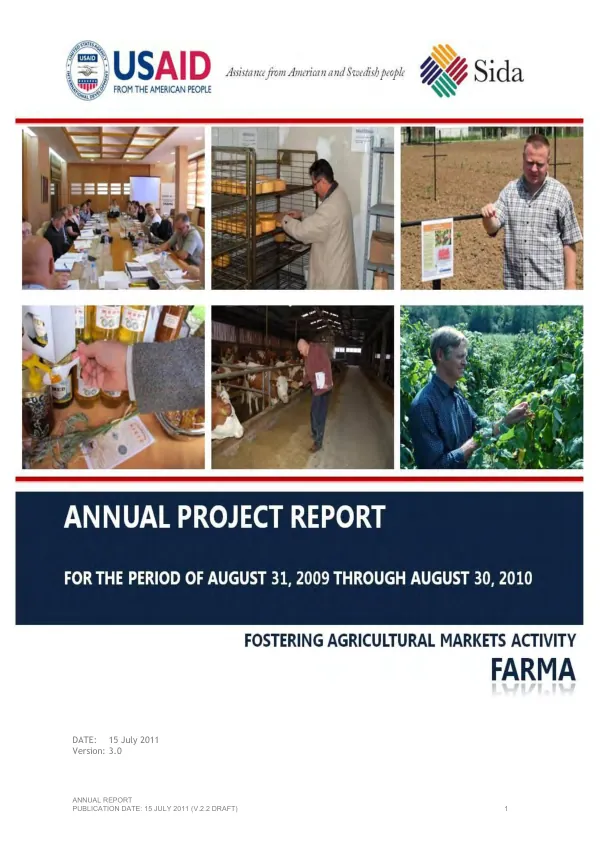
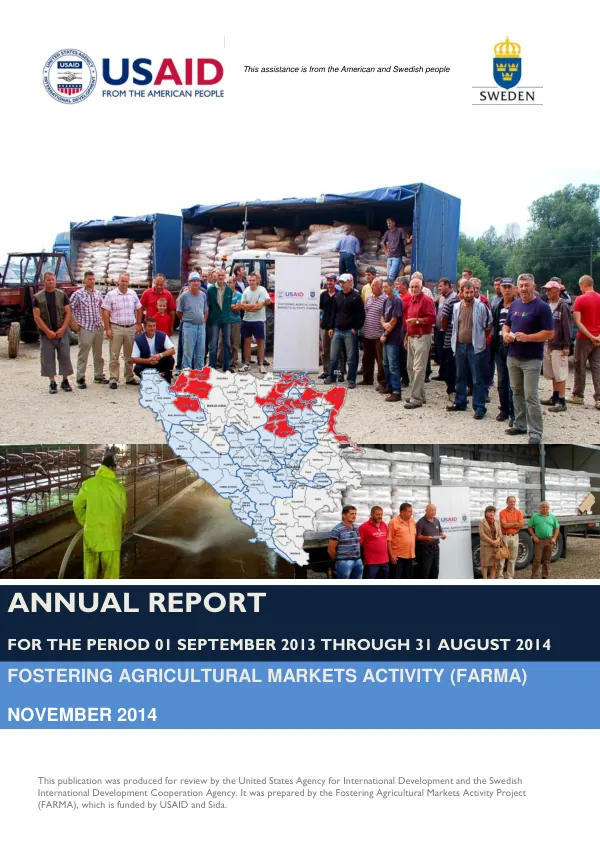
Annual Report: Fostering Agricultural Markets Activity (FARMA) for the Period 01 September 2013 Through 31 August 2014
Sign inORGANIZATION FOR INTERNATIONAL COOPERATION AND DEVELOPMENT
Annual Report: Fostering Agricultural Markets Activity (FARMA) for the Period 01 September 2013 Through 31 August 2014
The Fostering Agricultural Markets Activity (FARMA) project in Bosnia and Herzegovina began in 2013 with funding from the United States Agency for International Development (USAID) and the Swedish International Development Cooperation Agency (Sida).
2014 · 105 pages
Sign in to readA free account is required to download.
Abstract
The project aimed to improve the competitiveness of the agricultural sector in Bosnia and Herzegovina by enhancing market access, improving the quality of agricultural products, and increasing the income of farmers. The project focused on several key areas, including the animal and dairy sector, medicinal and aromatic plants (MAPs) and honey, fruit and vegetables (F&V), EU integration, standards, and environment, development fund, marketing support, post-flood recovery emergency response, market information, cooperation with local institutions, gender equality, and working with youth. The project also included a development fund to support small and medium-sized enterprises (SMEs) in the agricultural sector. The project implemented several interventions to achieve its objectives, including training programs for farmers, provision of technical assistance, and support for market access. The project also established a development fund to provide financial support to SMEs in the agricultural sector. The project's activities were implemented in several regions of Bosnia and Herzegovina, including the Federation of Bosnia and Herzegovina and the Republika Srpska. The project's results showed significant improvements in the agricultural sector, including increased income for farmers, improved quality of agricultural products, and enhanced market access. The project also contributed to the development of the agricultural sector in Bosnia and Herzegovina, including the establishment of new businesses and the creation of jobs. The project's activities were implemented in partnership with local institutions, including the Ministry of Foreign Trade and Economic Relations, the Federation of Bosnia and Herzegovina, and the Republika Srpska. The project also collaborated with international organizations, including the European Union, the World Bank, and the United Nations. The project's achievements were recognized by the government of Bosnia and Herzegovina, which acknowledged the project's contributions to the development of the agricultural sector. The project's results also contributed to the country's EU integration process, including the implementation of EU standards and regulations in the agricultural sector. The project's success was attributed to the strong partnership between the project team, local institutions, and international organizations. The project's activities were also supported by a robust monitoring and evaluation system, which ensured that the project's progress was regularly assessed and adjusted as needed. The project's legacy continued after its completion, with many of the businesses and institutions established during the project continuing to operate and contribute to the development of the agricultural sector in Bosnia and Herzegovina. The project's results also served as a model for future development projects in the region, demonstrating the potential for international cooperation and support to contribute to the development of the agricultural sector in post-conflict countries.