CHEMONICS
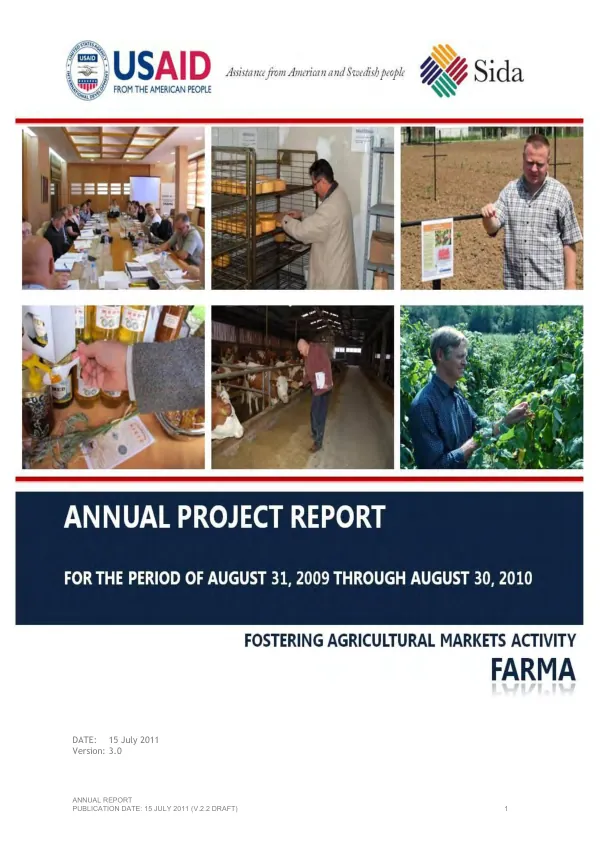
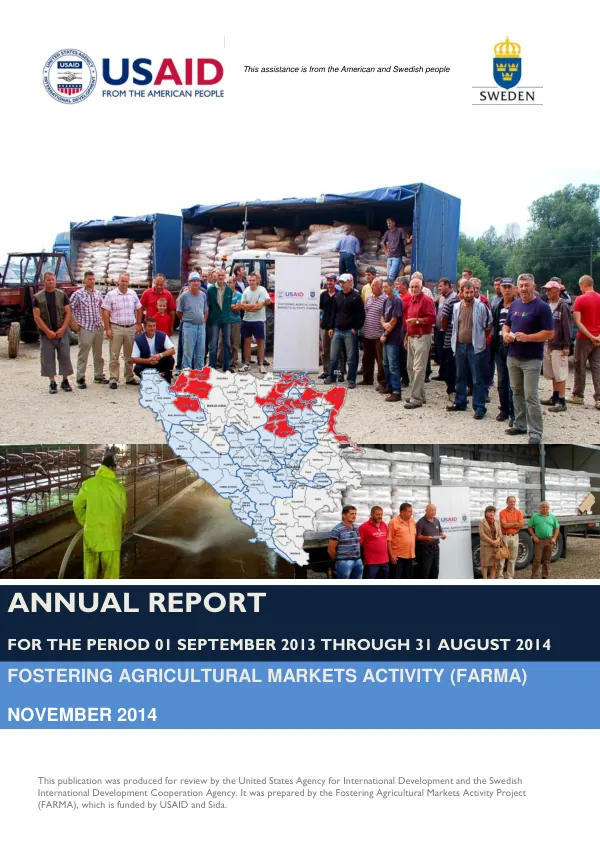
FARMA FINAL REPORT FOR THE PERIOD 1 SEPTEMBER 2009 THROUGH 29 JULY 2015
The Fostering Agricultural Markets Activity (FARMA) was a $22.2 million project implemented in Bosnia and Herzegovina (BiH) from 2009 to 2015.
2015 · 67 pages
Sign in to readA free account is required to download.
Abstract
Funded by the U.S. Agency for International Development (USAID) and the Swedish International Development Agency (Sida), the project aimed to improve the competitiveness of BiH agricultural producers, businesses, and products in the dairy, fruits and vegetables, and medicinal and aromatic plants (MAPs) sectors. The project focused on expanding environmentally sustainable processing, domestic sales, export sales, and the production of value-added products. Implemented by Chemonics International and Orgut Consulting AB, FARMA achieved outstanding results despite severe adverse weather events, financial and political crises throughout its lifespan. FARMA beneficiaries out-performed their sectors, particularly in export growth in the fruit and vegetable sector. In the dairy sector, FARMA contributed to import substitution through efforts to improve cheese production technologies, introduction of 16 new cheese varieties, and improved brand and quality recognition. The project also helped farmers to recover from the 2014 floods through the rapid disbursement of more than $2.2 million in grants. Full-time employment among FARMA beneficiaries increased, and the project played a significant role in overcoming constraints for the export of products of plant and animal origin to the EU. FARMA developed a comprehensive program to improve milk quality, increase milk production through improved animal feed, improve cheese production technologies, introduce new cheese varieties, and promote BiH dairy products on domestic and international markets. As a result, FARMA beneficiaries in the dairy sector increased their sales by 75 percent over the life of the project. The project also organized more than 770 training events and study tours, including training for producers on topics such as milk hygiene, animal feeding, milk production standards, animal welfare, and farm recordkeeping. Approximately 74 percent of milk produced in BiH in 2014 met EU standards with an Extra or First class rating, compared with 53 percent in 2009. FARMA provided training to farmers on feed production, barn building, and farm management practices. The project also assisted testing of feed and soil on 100 dairy farms and initiated a pilot program called “Two Harvests per Year” — in which farmers harvested vetch, fodder pea mixture, and oats for silage in one season, and corn in the next. This led to a 30 percent decrease in the cost of animal feed. The project's achievements have been summarized in the section on “Key accomplishments,” with further details on the achievements and FARMA activities that contributed to this, described in detail in the remainder of the report.
Related documents