CREATIVE ASSOCIATES INTERNATIONAL INC.
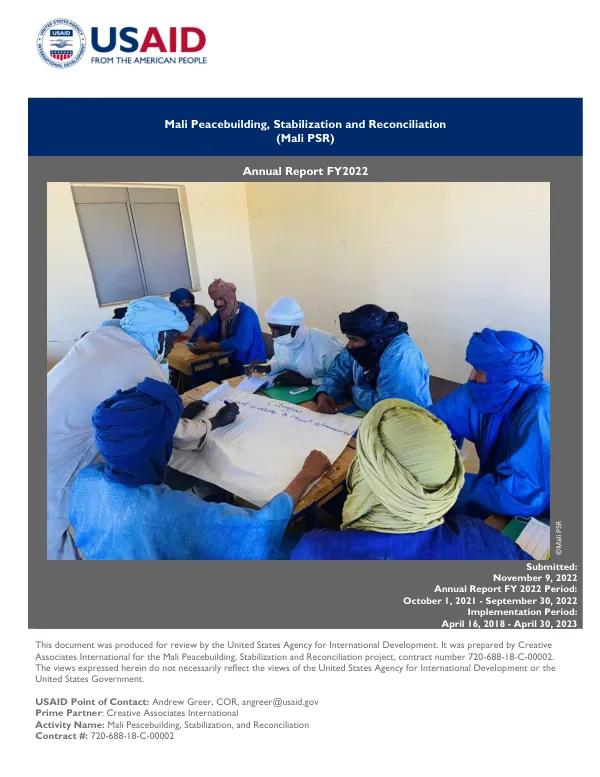
Annual Report FY 2022: Mali Peacebuilding, Stabilization and Reconciliation
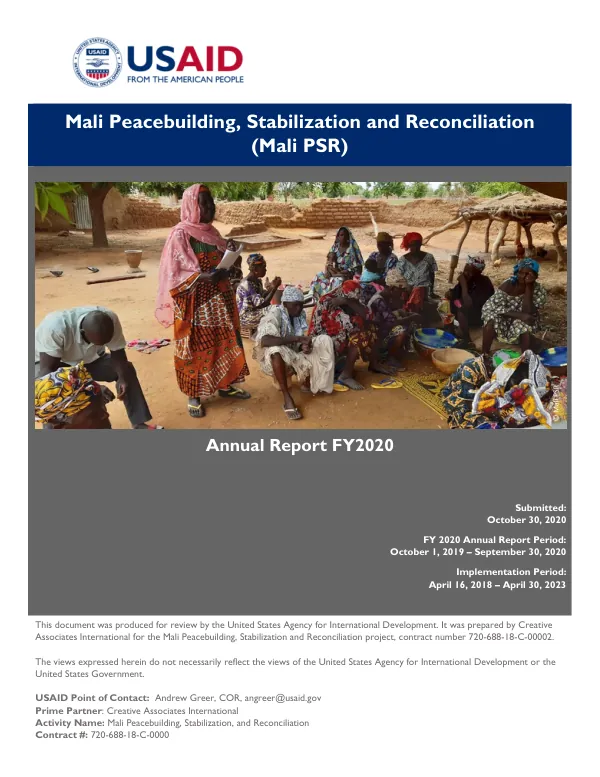
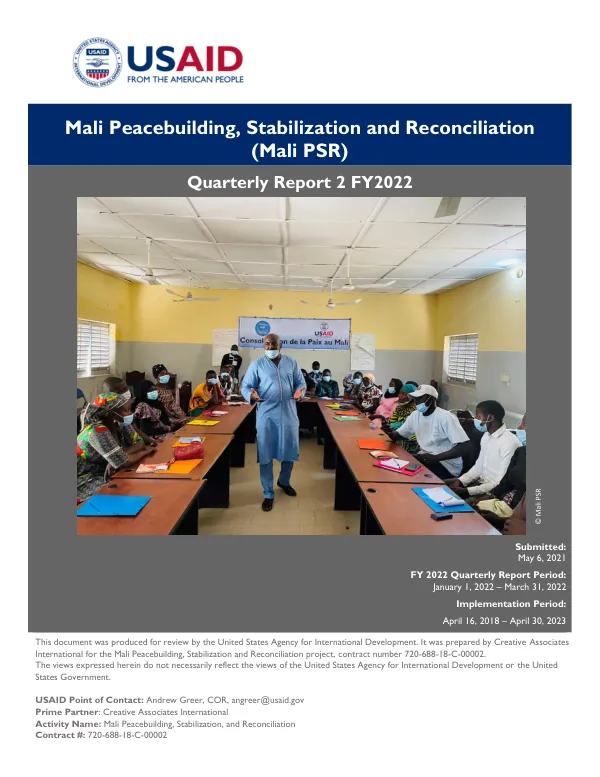
Mali Peacebuilding, Stabilization and Reconciliation (Mali PSR) is a program implemented in Mali, with the primary goal of fostering greater collaboration between community stakeholders and their leaders, and empowering citizens to play productive roles in their communities.
2022 · 50 pages
Sign in to readA free account is required to download.
Abstract
The program is funded by the United States Agency for International Development (USAID) and is being implemented by Creative Associates International. During the period from October 1, 2021 to September 30, 2022, Mali PSR continued to consolidate gains made in the previous three years, with a focus on expanding implementation across the four program objectives. Despite heightened insecurity in the central and northern regions of Mali, the program expanded its activities to reach more communities. One of the key activities conducted by Mali PSR during this period was a citizen perception survey in its 43 communes. The survey aimed to assess progress toward program outcomes, learn what activities are achieving the desired outcomes, and examine changing citizen perceptions on key issues related to community social cohesion, governance, conflict, violent extremism, civic engagement, and COVID-19. A sample of 2,373 people aged 16 and older were surveyed, including citizens who are active participants in the program and those who are not. The preliminary results of the survey showed significant improvement over the baseline in several key indicators and key behavioral changes resulting from Mali PSR activities. For example, the percentage of citizens in target communes who express favorable views towards other identity groups increased from 58% to 63%. Additionally, the percentage of citizens who express increased confidence in local or regional authorities or institutions increased from 45% to 51%. The data from the midline evaluation also indicates that in three years, trust in local elected officials increased from 45 percent to more than 51 percent. The analysis shows that community members are able to increase trust in their government when elected officials use inclusive practices to keep them informed about what actions and policy decisions they are making and what community development initiatives are being planned, and when elected officials solicit input from their constituents and/or provide space for them to give feedback on what they have done and are doing. Mali PSR used the data from the midline assessment to pause, reflect, and learn about what activities made an impact across Mali PSR's four objectives. The data revealed that many of the interventions had successfully advanced Mali PSR's overarching goals. For example, data under Objective 3 shows that the majority of youth aged 16-29 years old, who engaged in Mali PSR activities that were designed to reduce their proclivity to violent extremism, now believe that it is never justifiable to join a violent extremist or armed group. That number increased from 80% to 95% between the first and third years of the program. Citizens noted during the survey their belief that if young people are not economically empowered, they will continue to be tempted to join armed groups to earn money. With this in mind, Mali PSR worked to provide economic empowerment opportunities to young people, including training and job placement programs. Overall, the data from the midline evaluation suggests that Mali PSR's activities are having a positive impact on community social cohesion, governance, and conflict, and that the program is making progress towards its overarching goals.