CREATIVE ASSOCIATES INTERNATIONAL INC.
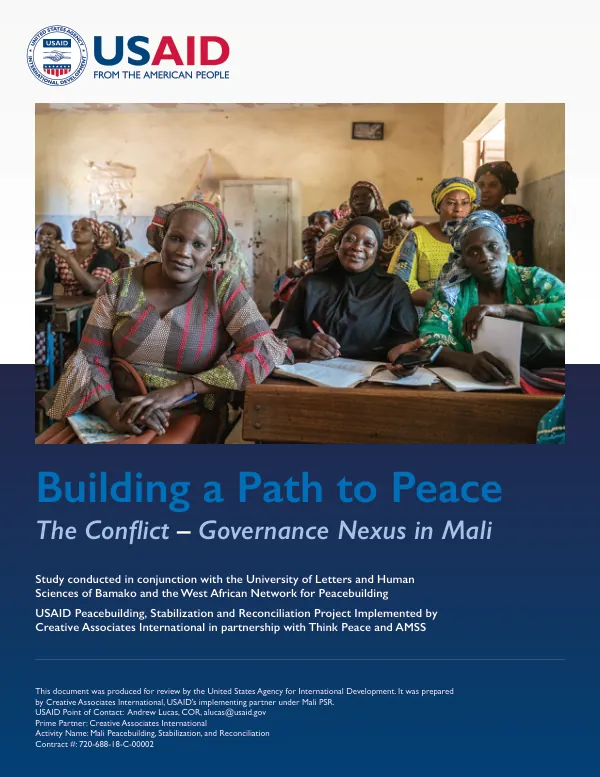
The Conflict – Governance Nexus in Mali: Building a Path to Peace
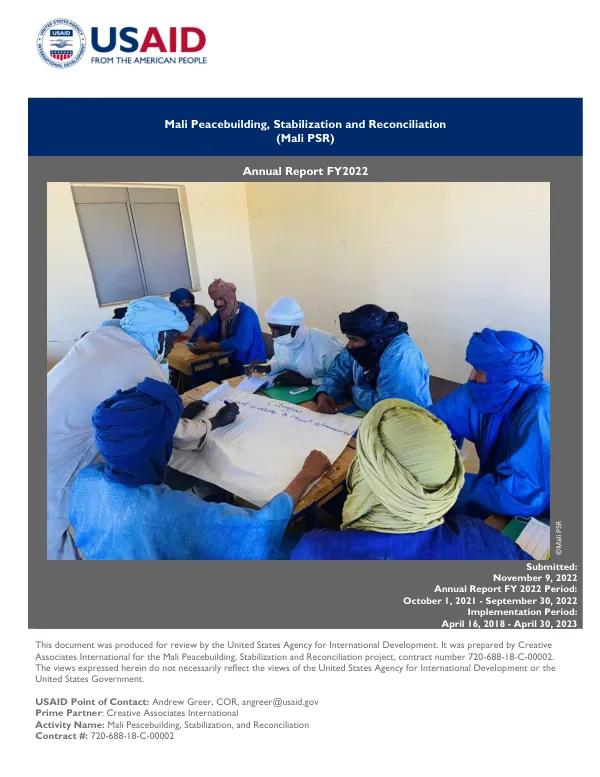
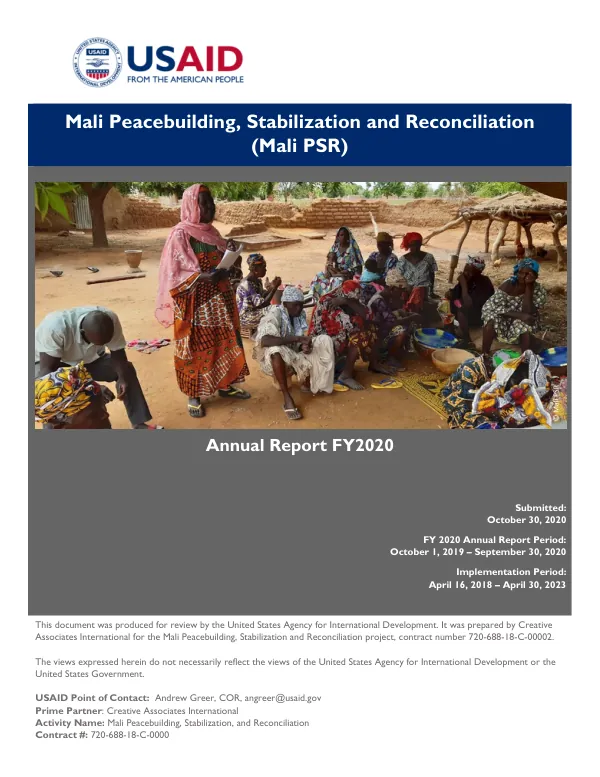
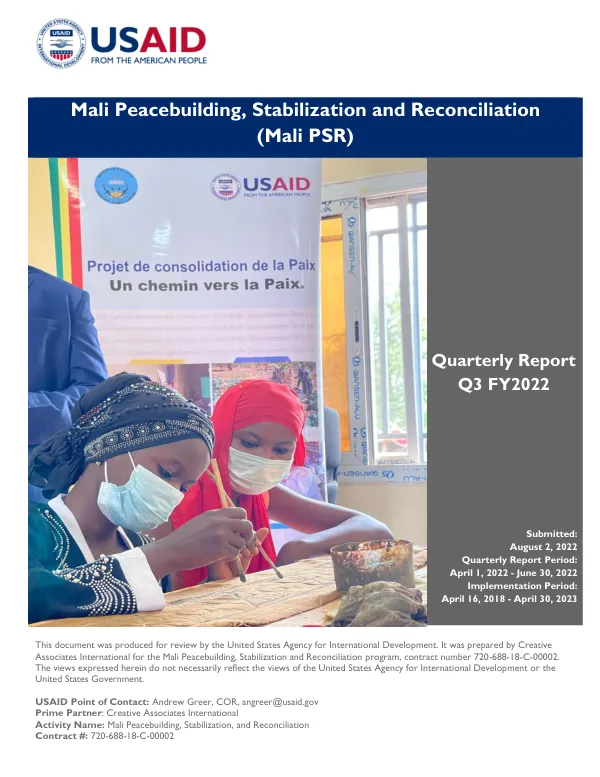
The Mali Peacebuilding, Stabilization, and Reconciliation project was implemented by Creative Associates International in partnership with Think Peace and AMSS, with funding from the United States Agency for International Development (USAID).
2020 · 4 pages
Sign in to readA free account is required to download.
Abstract
The project aimed to address the complex conflict dynamics in Mali, which are driven by competition for natural resources, weak governance, the struggle for legitimacy, and the breakdown of social cohesion. The Conflict – Governance Nexus in Mali assessment was conducted in conjunction with the University of Letters and Human Sciences of Bamako and the West African Network for Peacebuilding. The assessment identified four conflict dynamics common to all Peacebuilding, Stabilization, and Reconciliation (PSR) intervention areas: competition for natural resources, weak governance, the struggle for legitimacy, and the breakdown of social cohesion. These drivers are intertwined, and the State's absence and failure to administer justice can lead to people taking matters into their own hands. The Fragility – Resilience Assessment Methodology (FRAMe) was used to gather citizens' perspectives on the overall governance system and its intersection with conflict dynamics. FRAMe measures both the functionality and efficacy of the governance system, which includes eight dimensions: leadership, citizen participation, security, justice, administration, financial management, social cohesion, and women's agency. The findings indicate that the patterns of fragility and the paths to resilience do not differ significantly between the North and Center part of the country, but there are differences between regions. The FRAMe findings highlight the importance of addressing the security-related issues, which are more complex than the presence of State actors. The justice dimension is consistently perceived as contributing to fragility and will undermine attempts to deal with conflicts that require adjudication. The efficacy of the system is largely challenged by two factors: mutual trust that actors in the system will respect decisions made, and the social contract (system legitimacy). The implications of the findings are universal to all areas, and the project recommends the establishment of an Early Warning Response System (EWRS) that will be effective if citizens report and if the responses are perceived as respecting the rights, needs, and concerns of all citizens. The EWRS will focus on two factors: citizens' trust and confidence and system legitimacy. The project also recommends the implementation of Social, Economic, and Cultural Development Plans (PDSECs) to address the overall process in which citizens are engaged in contributing to the development of plans and the execution of the plans. The FRAMe findings suggest that women could be a path to resilience, and their agency should be built through their influence within the family and identifying how this influence could be expanded to enhance the system overall. The project also recommends building women's agency through their influence within the family and identifying how this influence could be expanded to enhance the system overall, providing a safe and effective way to build their authority and opens new roles and paths for young women to follow. The project's findings and recommendations are based on the FRAMe assessment, which was conducted in conjunction with the University of Letters and Human Sciences of Bamako and the West African Network for Peacebuilding. The assessment identified four conflict dynamics common to all PSR intervention areas and highlighted the importance of addressing the security-related issues, the justice dimension, and the efficacy of the system. The project's recommendations are aimed at building trust, enhancing knowledge and capacity, and fostering collective action. The project recommends building trust through social cohesion, trust and confidence, and inclusion. The project also recommends enhancing knowledge and capacity through system legitimacy, civic infrastructure, and decision making. Finally, the project recommends fostering collective action through decision making, performance, and civic infrastructure.
Related documents