CHEMONICS
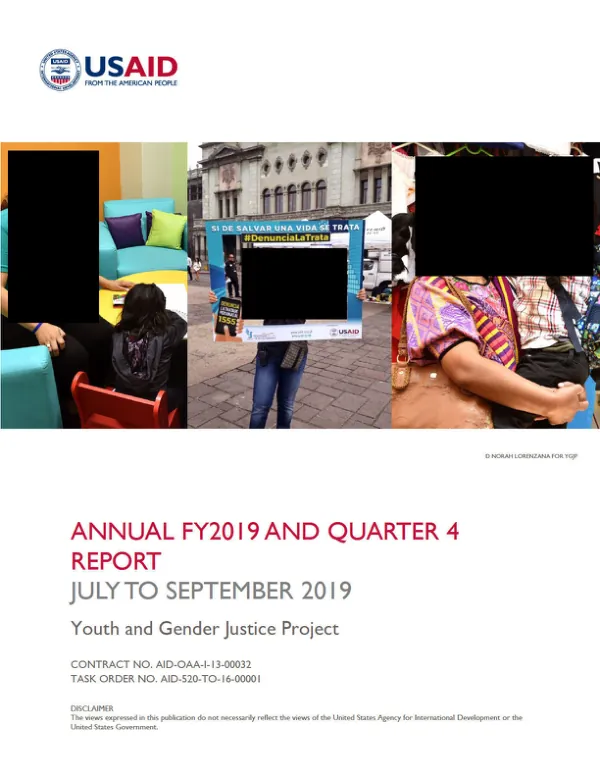
Annual Report: Guatemala Youth and Gender Justice Project 2019
The Guatemala Youth and Gender Justice Project (YGJP) is a four-year, eight-month activity implemented by Chemonics International, together with its partners under the Rule of Law Indefinite Quantity Contract.
2019 · 42 pages
Sign in to readA free account is required to download.
Abstract
The project was awarded on May 20, 2016, by the United States Agency for International Development (USAID). The main objective of the project is to strengthen the capacity of the Guatemalan Government and key civil society organizations (CSOs) to strengthen the justice system and related services to respond to the needs of juvenile offenders and victims, victims of gender-based violence (GBV), and victims of trafficking in persons (TIP). Grounded in the local systems responsible for these services, YGJP promotes greater integration and coordination among actors in support of reducing violence and impunity. The project targets reductions in recidivism among juvenile offenders and increases in prosecution rates of GBV and TIP. During Year 3, fiscal year 2019, YGJP's activities focused on achieving the project's three results. Result 1 aimed to improve government capacity to provide juvenile justice services. To achieve this, YGJP worked with the Guatemalan Government to develop and implement a new juvenile justice model, which included the establishment of specialized courts and the training of judges and prosecutors. Result 2 focused on improving government services for GBV victims. YGJP collaborated with the Guatemalan Government to develop and implement a comprehensive GBV response strategy, which included the establishment of GBV units within the Public Ministry and the training of prosecutors and judges on GBV cases. The project also worked with civil society organizations to provide support services to GBV victims, including counseling, medical care, and economic empowerment. Result 3 aimed to strengthen the government's response to TIP. YGJP worked with the Guatemalan Government to develop and implement a comprehensive TIP response strategy, which included the establishment of TIP units within the Public Ministry and the training of prosecutors and judges on TIP cases. The project also collaborated with civil society organizations to provide support services to TIP victims, including counseling, medical care, and economic empowerment. Throughout the year, YGJP also focused on improving communication and coordination among project stakeholders, including the Guatemalan Government, civil society organizations, and USAID. The project also implemented a robust monitoring and evaluation system to track progress towards its results and make adjustments as needed. One notable success story from the year was the inauguration of a new protection model for children and adolescents, which was developed and implemented by YGJP in collaboration with the Guatemalan Government. This model aimed to provide a comprehensive and coordinated response to the needs of children and adolescents in conflict with the law, including access to justice, social services, and economic empowerment. Overall, YGJP's activities during Year 3, fiscal year 2019, made significant progress towards achieving the project's results and contributing to the reduction of violence and impunity in Guatemala. The project's work in improving government capacity, services for GBV victims, and the response to TIP will have a lasting impact on the lives of Guatemalan citizens and will contribute to the country's efforts to strengthen its justice system and promote human rights.
Related documents