USAID DEC
Life is Priceless: Using Mobile Phone and SMS Technology to Reach Most at-Risk Populations
Sign inUSAID
Life is Priceless: Using Mobile Phone and SMS Technology to Reach Most at-Risk Populations
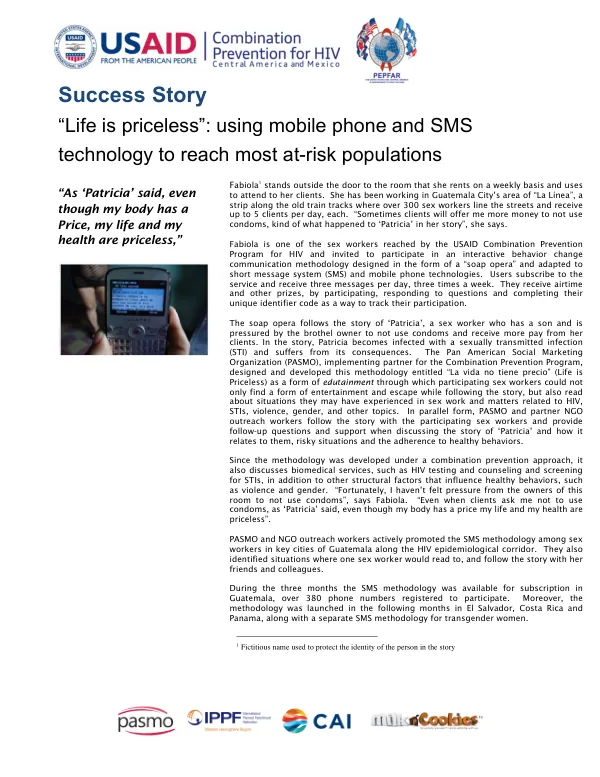
The Combination Prevention Program for HIV in Guatemala City's area of "La Línea" aimed to reduce the spread of HIV among sex workers.
2013 · 1 pages
Sign in to readA free account is required to download.
Abstract
The program utilized an interactive behavior change communication methodology, designed as a "soap opera" and adapted for mobile phone technologies. This methodology, titled "La vida no tiene precio" (Life is Priceless), was developed by the Pan American Social Marketing Organization (PASMO) in collaboration with the USAID Combination Prevention Program. The soap opera followed the story of "Patricia," a sex worker who faced pressure from brothel owners to forgo condom use in exchange for higher pay. The narrative highlighted the consequences of not using condoms, including the transmission of sexually transmitted infections (STIs). Participating sex workers received three messages per day, three times a week, and were rewarded with airtime and other prizes for their participation. Outreach workers from PASMO and partner NGOs followed up with the participants, discussing the story and its relevance to their own experiences and risky situations. The methodology addressed not only biomedical services, such as HIV testing and counseling, but also structural factors influencing healthy behaviors, such as violence and gender. The program promoted the use of condoms and adherence to healthy behaviors among sex workers. Fabiola, a sex worker participating in the program, stated that she had not faced pressure from room owners to forgo condom use and valued her life and health as priceless. The program's outreach efforts targeted sex workers in key cities along the HIV epidemiological corridor in Guatemala. Outreach workers identified situations where sex workers would read and discuss the story with their colleagues, promoting the methodology's adoption. During the three months the methodology was available in Guatemala, over 380 phone numbers registered to participate. The program was later launched in El Salvador, Costa Rica, and Panama, with a separate SMS methodology developed for transgender women. The success of the program demonstrates the potential of mobile phone technologies and interactive behavior change communication methodologies in reaching most-at-risk populations, such as sex workers. By addressing the complex issues surrounding HIV transmission and promoting healthy behaviors, the program aimed to reduce the spread of HIV among sex workers in the region.
Related documents
Documents in this collection
 2021
2021USAID DEC
Advocacy Plan of the COMISCA Joint Negotiation for the Sustainable HIV Response in Central America Project
Open record 2021
2021USAID DEC