USAID DEC
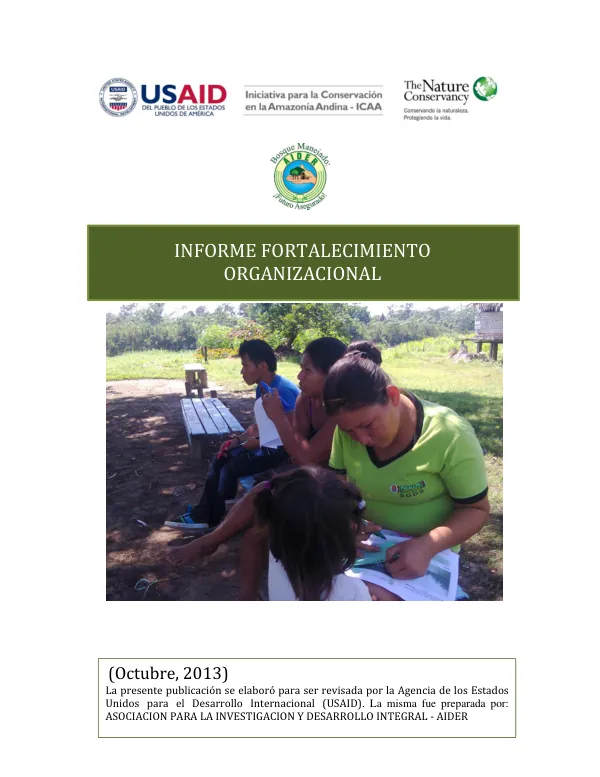
Apoyo a la implementación de actividades productivas sostenibles en las Comunidades Nativas Nuevo Saposoa, Patria Nueva Y Callería, Ucayali
Sign inCONSERVATION STRATEGY FUND
Apoyo a la implementación de actividades productivas sostenibles en las Comunidades Nativas Nuevo Saposoa, Patria Nueva Y Callería, Ucayali
The agricultural development initiative in the Ucayali region of Peru aims to promote sustainable activities in the communities of Patria Nueva, Callería, and Nuevo Saposoa.
2013 · 9 pages
Sign in to readA free account is required to download.
Abstract
The initiative is part of a broader effort to conserve biodiversity and promote economic development in the region. The project is implemented by a consortium of organizations, including the Federación de Organizaciones Indígenas del Ecuador (FEINCE), the Coordinadora Indígenas de las Organizaciones Indígenas de la Cuenca Amazónica (COICA), and the Asociación para la Investigación y Desarrollo Integral (AIDER). The project's objectives include identifying and strengthening the activities of various actors working in the Callería watershed, as well as promoting the implementation of sustainable activities in the target communities. The project's methodology involves conducting interviews with key stakeholders, analyzing existing information, and participating in a meeting convened by the Instituto del Bien Común. The project has identified several key actors working in the Callería watershed, including the Organización Regional AIDESEP Ucayali (ORAU), the Servicio Nacional de Áreas Naturales Protegidas (SERNANP), the Gobierno Regional de Ucayali, and the Instituto del Bien Común (IBC). These actors have various lines of action, including the management of paiche (Arapaima gigas) in Nuevo Saposoa, the conservation of the Sierra del Divisor Reserve, and the promotion of sustainable activities in the target communities. The project's results highlight the importance of coordination and collaboration among the various actors working in the Callería watershed. The project has identified several areas of overlap and potential for synergy among the different actors, including the management of cochas and the promotion of sustainable activities in the target communities. The project's findings also highlight the need for further research and analysis to better understand the complex relationships between the various actors and the ecosystems in the Callería watershed. The project's recommendations include the establishment of a coordination mechanism to bring together the various actors working in the Callería watershed, as well as the development of a comprehensive plan to promote sustainable activities in the target communities. The project also recommends the establishment of a monitoring and evaluation system to track the progress of the project and identify areas for improvement. The project's geographic focus is on the Ucayali region of Peru, with a specific emphasis on the communities of Patria Nueva, Callería, and Nuevo Saposoa. The project's timeframes are not explicitly stated, but the project's methodology and recommendations suggest a long-term commitment to promoting sustainable activities in the target communities.
Related documents
Documents in this collection
 2013
2013USAID DEC
Apoyo a la implementación de actividades productivas sostenibles en las Comunidades Nativas Nuevo Saposoa, Patria Nueva y Callería, Ucayali
Open record 2013
2013USAID DEC