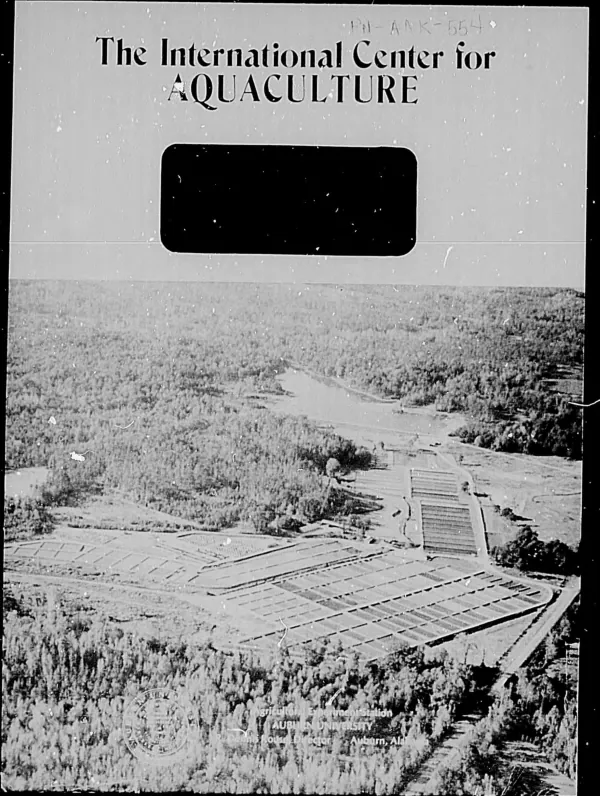
AUBURN UNIVERSITY. INTERNATIONAL CENTER FOR AQUACULTURE
Aquaculture development in Ecuador
Aquaculture has a demonstrated potential in Ecuador but future development requires greater investment in infrastructure and additional donor assistance.
Phelps, Ronald P. · 1981
Sign in to readA free account is required to download.
Abstract
This report assesses the state of aquacultural development in Ecuador and offers recommendations to host govenment agencies and to USAID/Ecuador. The author begins by describing the programs and evaluating the capabilities of aquaculture-related government agencies (Departamento de Piscicultura, Instituto Nacional de Pesca, Subcomision Ecuatoriano-Peruana, and Ministrio de Agricultura) and universities (Escula Superior Politencia del Litoral, Universidades de Guayaquil and de Loja, and Universidad Technica de Machala). Observations and comments are offered regarding particular areas of aquaculture. Coastal shrimp culture, rapidly growing to cover 30,000 ha and generate $34 million in exports in 1980, is generally extensive rather than intensive and has led to exploitation of mangrove areas. National inventories of existing shrimp ponds, salitrales (saline soils), and mangrove areas; efforts to preserve post-larvae shrimp in the wild; and a shrimp culture research station are needed. Chame, a hardy fish popular in the Province of Manabi, and other varieties of native fish, e.g., Dama and Tilapia, should be investigated as candidates for intensive cultivation. Both cage culture and integrated rice-fish culture should also be explored. Fish management in the Proyecto de Babhoyo in the Rio Guayas drainage system, and in a water storage project near Jipijapa in Manabi must be improved. It is recommended that the Departamento de Piscicultura take the lead in aquaculture development; reduce its regulatory responsibility; establish separate mariculture and freshwater aquaculture sections and research stations; continue to emphasize staff training; consider Peace Corps participation in its extension program; and seek donor technical assistance. USAID/Ecuador should consider supporting warmwater aquaculture in Ecuador, especially in regard to shrimp cultivation, technician training, extension, and research station development.
Related documents