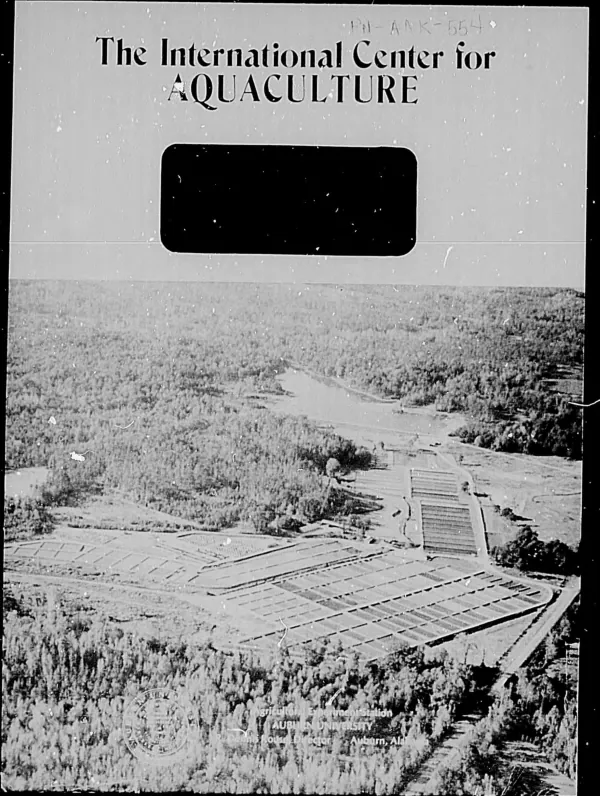
AUBURN UNIVERSITY. INTERNATIONAL CENTER FOR AQUACULTURE
Upper Meta River system ornamental fishery
Concerns about possible overharvesting of ornamental fish led Colombia"s Instituto Nacional de los Recursos Naturales Renovables y del Ambiente (INDERENA) to investigate the Upper Meta River fishery.
Scully, Richard J.; Garzon F., Fernando · 1980
Sign in to readA free account is required to download.
Abstract
Interviews with fishermen and reviews of marketing data were conducted, producing estimates of the total harvest, relative abundance of different species, locational (piedmont or savanna portion of the fishery) and seasonal (high water or low) characteristics, methods of capture, and net economic value of the catch. Findings for the period 10/77-3/79 here presented indicate that an estimated annualized harvest of 18,223,700 ornamental fish provided an estimated minimum of 382 fishermen with a combined gross income of 16,911,032 pesos. A total of 57 species, of which only three could be considered food fish, were recorded as harvested. Eight of 52 species listed in marketing records accounted for 71% of the listed catch. Of these, four (Apistogramma ramiresi, Cucha, Cardenal Tetra, and Neon Tetra) showed signs of decline in annual catch over the period 1975-78; these species may have been overharvested. Considering the nearly endless number of rivers, streams, and lagoons in the Upper Meta system, however, it is likely that only a small fraction of the area is being overfished. It is recommended that: (1) the relative density of fish in fished and unfished areas be compared in order to determine the intensity of fishing at traditional sites and the geographical extent of the resources in relation to areas being exploited; (2) laws protecting aquatic environments be strengthened, particularly those regarding stream modifications for agricultural or industrial use and those regarding buffers between waterways and agricultural lands; (3) the toxicity to aquatic organisms, residual effects, and minimum effective dosages of pesticides being used in the area be studied; (4) INDERENA and Alcopeces (a fish exporting organization) prepare a manual of preferred methods of catching, holding, and transporting fish; (5) a rigorous effort be made to ensure the validity of "salvoconducto" statistics; and (6) aquaculture schemes be developed to mass produce the most cultivable species. Appendices list species and provide the catch calculation equation. Three references (1963-79) are cited.
Related documents