USAID DEC
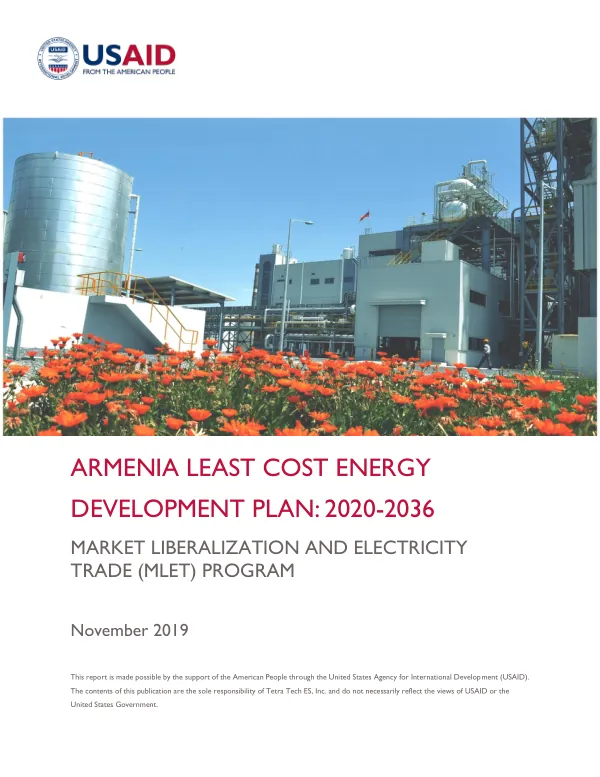
Armenia Least Cost Energy Development Plan: 2020-2036 Market Liberalization and Electricity Trade (MLET) Program
Sign inTETRA TECH ESI, INC.
Armenia Least Cost Energy Development Plan: 2020-2036 Market Liberalization and Electricity Trade (MLET) Program
The Armenian Least Cost Energy Development Plan: 2020-2036 Market Liberalization and Electricity Trade (MLET) Program is a comprehensive study aimed at optimizing the country's energy sector.
2020 · 212 pages
Sign in to readA free account is required to download.
Abstract
The plan is based on a detailed analysis of the current energy system, including electricity generation, transmission, and consumption, as well as natural gas imports and supply. In 2016, Armenia's electricity generation mix consisted of 93% thermal power plants, 4% hydroelectric power plants, and 3% other sources. The country's electricity consumption was primarily driven by the industrial sector, accounting for 44% of total demand, followed by the residential sector at 31%. The commercial sector accounted for 15% of electricity consumption, while the agricultural sector accounted for 10%. The study employed the Integrated MARKAL-EFOM System (TIMES) model platform to analyze various scenarios for the Armenian energy sector. The TIMES model is a generic reference energy system that can be tailored to specific country contexts. The model was driven by scenarios that considered different assumptions about future energy demand, technology costs, and policy frameworks. The baseline-reference scenario (BASE-R) assumed a moderate growth rate in GDP and a gradual increase in energy demand. The scenario also assumed the continued use of natural gas as the primary fuel for electricity generation, with a focus on improving energy efficiency and reducing greenhouse gas emissions. The results of the BASE-R scenario showed that the country's energy sector would require significant investments in new power plants, with a focus on gas-fired and renewable energy sources. The study also explored various sensitivity scenarios, including different GDP growth rates, nuclear development options, and changes in natural gas prices. The results of these scenarios highlighted the importance of considering multiple factors when developing energy policy, as the optimal energy mix and investment strategy can vary significantly depending on the specific context. The plan recommends a range of policy measures to support the transition to a more efficient and sustainable energy sector. These measures include the promotion of energy efficiency, the development of renewable energy sources, and the liberalization of the electricity market to encourage competition and investment. The plan also emphasizes the need for continued investment in the energy sector, particularly in the areas of transmission and distribution infrastructure. The study's findings and recommendations are intended to inform the development of a comprehensive energy policy for Armenia, one that balances the need for economic growth and energy security with the need to reduce greenhouse gas emissions and promote sustainable development.