USAID DEC
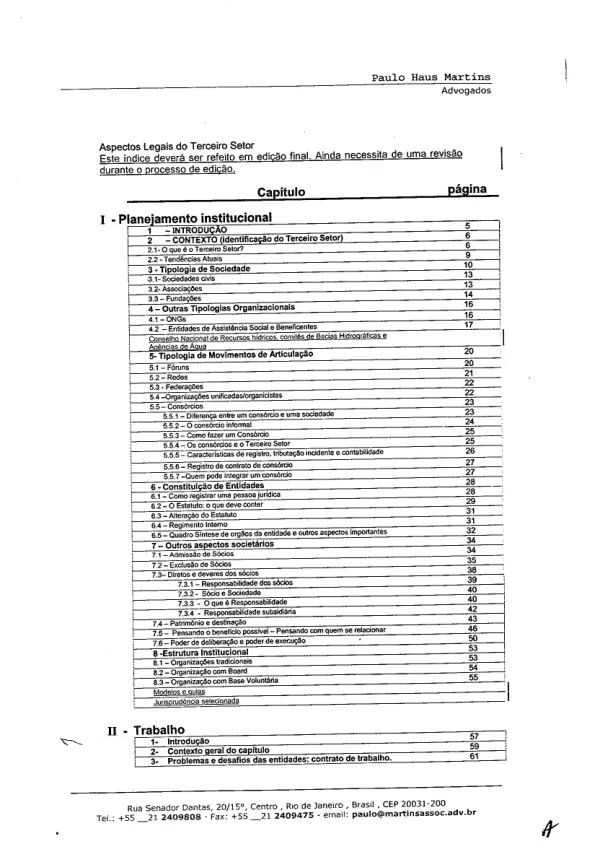
Aspectos Legais do Terceiro Setor
The concept of the Third Sector, also known as the non-profit sector, is a crucial aspect of modern society.
2014 · 299 pages
Sign in to readA free account is required to download.
Abstract
This sector encompasses a wide range of organizations, including civil societies, associations, foundations, and non-governmental organizations (NGOs). These entities play a vital role in addressing social, economic, and environmental challenges, often in collaboration with government agencies and private sector entities. The Third Sector is characterized by its diverse typology, with various forms of organizations emerging to address specific needs and goals. Civil societies, for instance, are formed to promote social change and advocate for the rights of marginalized groups. Associations, on the other hand, are typically established to advance the interests of their members, while foundations focus on philanthropic activities and grant-making. NGOs, meanwhile, often engage in humanitarian work, advocacy, and development projects. In Brazil, the Third Sector has been growing in importance, with many organizations working to address pressing social and environmental issues. The country's legal framework provides a range of options for establishing and operating Third Sector organizations, including civil societies, associations, and foundations. These entities can be registered as non-profit organizations, which allows them to access funding and resources from government agencies and private donors. One of the key challenges facing Third Sector organizations in Brazil is navigating the complex regulatory environment. This includes complying with tax laws, labor regulations, and other requirements. To address this challenge, many organizations seek the advice of lawyers and other experts who specialize in non-profit law. The concept of the Third Sector is not limited to Brazil, however. It is a global phenomenon, with organizations operating in many countries to address a wide range of issues. In the United States, for example, the Third Sector is a major player in the non-profit sector, with organizations such as the American Red Cross and the Nature Conservancy playing important roles in disaster relief, conservation, and other areas. In terms of governance, Third Sector organizations often adopt a range of structures, including boards of directors, executive committees, and volunteer-led groups. These structures are designed to ensure that organizations are managed effectively and that their goals are achieved. In some cases, organizations may also establish partnerships with government agencies, private sector entities, and other organizations to leverage resources and expertise. The Third Sector is also characterized by its diverse funding streams, which can include government grants, private donations, and corporate sponsorships. Organizations may also generate revenue through the sale of goods and services, as well as through fundraising events and campaigns. In conclusion, the Third Sector is a vital component of modern society, playing a crucial role in addressing social, economic, and environmental challenges. In Brazil, the sector is growing in importance, with many organizations working to address pressing issues. While navigating the regulatory environment can be challenging, many organizations are able to overcome these obstacles and achieve their goals through effective governance, partnerships, and funding strategies. The concept of the Third Sector is closely tied to the idea of civil society, which refers to the network of organizations and individuals working to promote social change and advocate for the rights of marginalized groups. In Brazil, civil society organizations have played a key role in promoting democracy, human rights, and social justice. In terms of labor law, Third Sector organizations in Brazil are subject to a range of regulations, including the Labor Code and the Social Security Code. These laws govern issues such as employment contracts, wages, and benefits, as well as social security contributions and tax obligations. The concept of the Third Sector is also closely tied to the idea of partnerships and collaborations, which are essential for achieving social, economic, and environmental goals. In Brazil, many organizations are working together to address pressing issues, such as poverty, inequality, and environmental degradation. In terms of taxation, Third Sector organizations in Brazil are exempt from income tax, provided they meet certain requirements, such as being registered as a non-profit organization and devoting their resources to charitable or social purposes. However, organizations may still be subject to other taxes, such as the Social Security Contribution and the Municipal Tax on Services. The concept of the Third Sector is closely tied to the idea of social responsibility, which refers to the obligation of organizations to contribute to the well-being of society. In Brazil, many organizations are working to promote social responsibility, through initiatives such as corporate social responsibility programs and social impact investing. In terms of governance, Third Sector organizations in Brazil are subject to a range of regulations, including the Civil Code and the Corporate Law. These laws govern issues such as the establishment and operation of organizations, as well as the rights and obligations of directors, officers, and members. The concept of the Third Sector is closely tied to the idea of philanthropy, which refers to the practice of giving money, time, or other resources to support charitable or social causes. In Brazil, philanthropy is a growing trend, with many individuals and organizations donating to support a wide range of causes, from education and healthcare to environmental conservation and social justice. In terms of partnerships, Third Sector organizations in Brazil are working together to address pressing issues, such as poverty, inequality, and environmental degradation. These partnerships can