USAID DEC
Guia Prática para Cultivo de Ananás
The agricultural development initiative for pineapple cultivation in Brazil began with the publication of the "GUIA PRACTICA PARA CULTIVO DE ANANÁS" in September 2013.
2013 · 13 pages
Sign in to readA free account is required to download.
Abstract
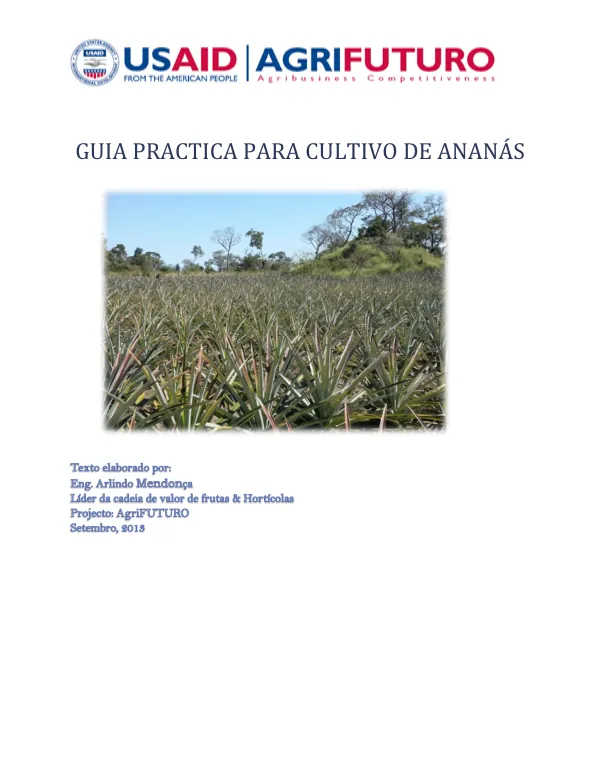
The document was written by Eng. Arlindo Mendonça, Líder da cadeia de valor de frutas & Hortícolas, as part of the Projecto: AgriFUTURO. Preparation of the soil for pineapple cultivation is a crucial step in the process. The area selected for planting should have good drainage and access to water, as water will be used for fertilizers, agro-chemicals, and irrigation. The soil should not be encharcado or have poor drenagem, as this can lead to the appearance of diseases such as Phytophthora. The ideal soil type is arenozo, which allows for good drainage and aeration. The preparation of the soil involves two stages: mechanical and manual. The first stage involves using an arado and grade to loosen the soil, followed by a second stage of manual preparation. This process should be done twice, with a two-week interval in between to allow for the decomposition of organic matter. The camas, or beds, should be 60-70cm wide and 30cm high, with 80-90cm of space between them. This allows for good drenagem and prevents the appearance of diseases. The plantio, or planting, of pineapple can be done using two different methods: directo or using camas. The directo method reduces the cost of labor for preparing the camas, but requires good drenagem and no encharcamento. The plantio can be done in linhas simples or duplas, with the latter allowing for more plants per area. The selection of mudas, or seedlings, is critical for the success of the crop. The ideal size for mudas is between 30-60cm in height and 1-2kg in weight. The plantio should be done within two weeks of the colheita, or harvest, of the previous crop. The tratamento de mudas, or treatment of seedlings, involves curing the mudas in the sun for 2-3 days to kill any bichinhos, or insects, and then desinfecção using products with low toxicity. This process eliminates pragas, or pests, and doenças, or diseases, from the mudas. The manutenção da plantação, or maintenance of the plantation, involves several stages, including fertilização, irrigação, controle de plantas infestantes, and controle de pragas e doenças. The fertilização involves applying a mixture of fertilizers, including sulfato de amónio, sulfato de potássio, sulfato ferroso, sulfato de zinco, ácido cítrico, and bórax, to the soil. The irrigação requires 60-150mm of water per month, and the controle de plantas infestantes and controle de pragas e doenças are critical for preventing losses in the field.