USAID DEC
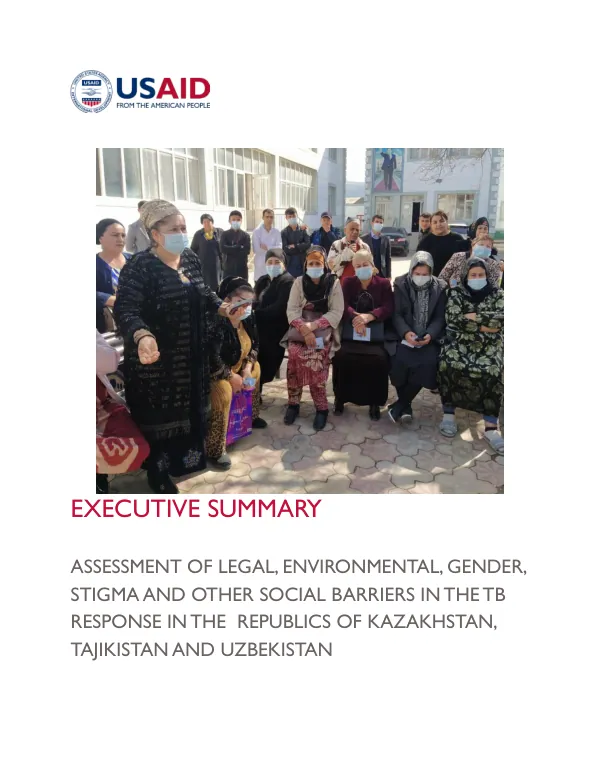
ASSESSMENT OF LEGAL, ENVIRONMENTAL, GENDER, STIGMA AND HUMAN RIGHTS RELATED BARRIERS IN RESPONSE ON TB IN REPUBLIC OF TAJIKISTAN
Sign inABT ASSOCIATES
ASSESSMENT OF LEGAL, ENVIRONMENTAL, GENDER, STIGMA AND HUMAN RIGHTS RELATED BARRIERS IN RESPONSE ON TB IN REPUBLIC OF TAJIKISTAN
The Republic of Tajikistan has been actively involved in controlling tuberculosis (TB) through effective measures at the political and legislative levels.
2021 · 51 pages
Sign in to readA free account is required to download.
Abstract
Despite significant efforts and progress in implementing anti-TB interventions, the country continues to face challenges in controlling the epidemic. One of the primary challenges is ensuring universal access to prevention, diagnosis, and treatment of all forms of TB for the entire population. According to the World Health Organization (WHO), the estimated incidence of all TB cases in Tajikistan was 83 per 100,000 population in 2019, with a mortality rate of 7.9 per 100,000 population, excluding TB/HIV cases. The ratio of women to men among newly reported TB cases is 1 to 1.2, indicating a relatively equal distribution of the disease among both sexes. However, TB mainly affects the young and the most economically able-bodied group of the population. The USAID "Elimination of TB in Central Asia" (ETICA) Activity aims to reduce the burden of TB in Central Asian countries through various activities, including improving detection and creating an enabling environment for access to and treatment of TB. A baseline assessment is conducted to determine the baseline situation in the Activity area, which will inform the implementation of USAID ETICA activities. The study will also help assess the effectiveness of the overall Activity upon its completion. The study employed a combination of qualitative and quantitative methods, including a desk review, to collect data. The data collection process involved a stratified sampling of households in targeted cities and districts, with a total of 1,200 respondents. The study aimed to assess the legal, environmental, gender, stigma, and human rights-related barriers in response to TB in Tajikistan. The study's findings indicate that the Government of Tajikistan has implemented various policies and procedures to control TB, including the National Programme for the Protection of the Population against Tuberculosis (NPPPT) for the period of 2021-2025. However, the study highlights several challenges, including limited awareness about TB symptoms, transmission routes, and treatment options among the general population. The study also found that stigma and social acceptability are significant barriers to TB control, particularly among women and marginalized groups. The study recommends strengthening the NPPPT, improving awareness about TB, and addressing stigma and social acceptability issues to ensure universal access to prevention, diagnosis, and treatment of all forms of TB. The study also suggests enhancing the role of civil society organizations and community-based initiatives in TB control efforts. The study's findings will inform the implementation of USAID ETICA activities and contribute to the development of effective strategies for TB control in Tajikistan. The study's recommendations aim to address the challenges faced by the country in controlling the TB epidemic and ensuring universal access to prevention, diagnosis, and treatment of all forms of TB. The study's methodology involved a combination of qualitative and quantitative methods, including a desk review, focus group discussions, and interviews with key stakeholders. The study's analytical framework was based on the World Health Organization's (WHO) guidelines for TB control and the USAID ETICA Activity's objectives. The study's data analysis involved the use of statistical software, including SPSS, to analyze the quantitative data. The study's findings were presented in the form of tables, figures, and text, which provide a comprehensive overview of the challenges and opportunities for TB control in Tajikistan. The study's limitations include the use of a stratified sampling method, which may not be representative of the entire population. However, the study's findings provide valuable insights into the challenges and opportunities for TB control in Tajikistan and will inform the implementation of USAID ETICA activities. The study's conclusions highlight the need for strengthened efforts to control the TB epidemic in Tajikistan, including improving awareness about TB, addressing stigma and social acceptability issues, and enhancing the role of civil society organizations and community-based initiatives in TB control efforts. The study's recommendations aim to ensure universal access to prevention, diagnosis, and treatment of all forms of TB and contribute to the development of effective strategies for TB control in Tajikistan.
Related documents
Documents in this collection
 2021
2021USAID DEC
Assessment of Legal, Environmental, Gender, Stigma and Human Rights Related Barriers in Response on TB in Republic of Kazakhstan
Open record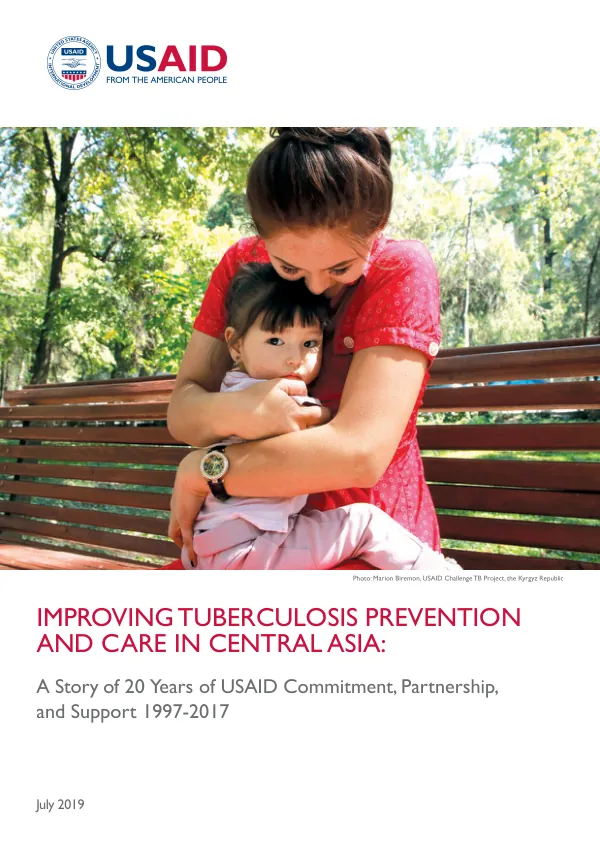 2019
2019USAID DEC
Improving Tuberculosis Prevention and Care in Central Asia: A Story of 20 Years of USAID Commitment, Partnership, and Support 1997-2017
Open record