USAID DEC
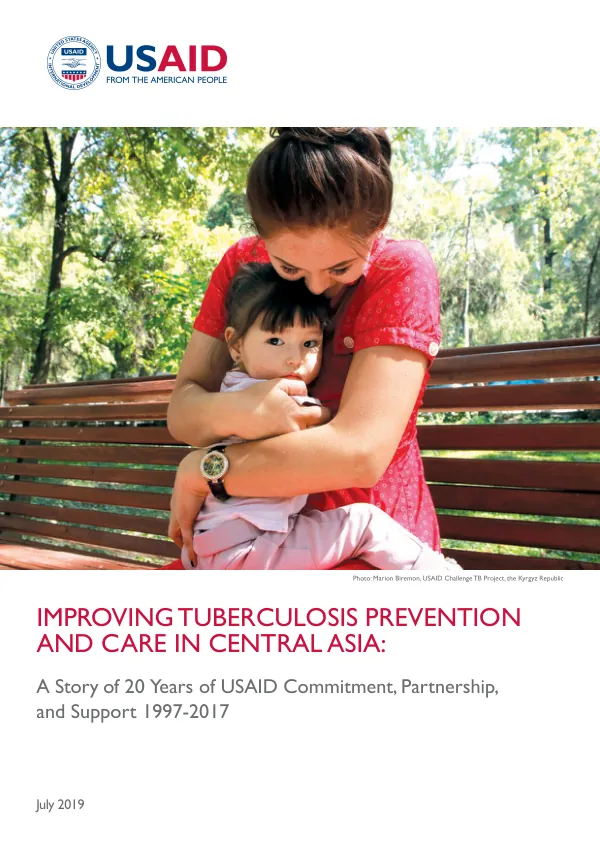
Improving Tuberculosis Prevention and Care in Central Asia: A Story of 20 Years of USAID Commitment, Partnership, and Support 1997-2017
Sign inABT ASSOCIATES
Improving Tuberculosis Prevention and Care in Central Asia: A Story of 20 Years of USAID Commitment, Partnership, and Support 1997-2017
The United States Agency for International Development (USAID) has been actively involved in improving tuberculosis (TB) prevention and care in Central Asia for over 20 years.
2019 · 74 pages
Sign in to readA free account is required to download.
Abstract
The agency's TB Control Program, which began in 1997, aimed to reduce the burden of TB and prevent or eliminate multidrug-resistant forms of the disease. The program was funded by USAID and implemented by various partners, including Project HOPE, Abt Associates, Inc., and the Royal Netherlands Chemical Society (KNCV) Tuberculosis Foundation. The TB Control Program focused on strengthening national TB programs, improving interagency coordination and cooperation, and increasing access to TB diagnosis and treatment. The program also supported the development of community-based treatment supporters, who played a crucial role in providing care and support to TB patients. In addition, the program worked to improve the quality of TB care, including the use of Directly Observed Treatment, Short Course (DOTS) and the implementation of quality management systems. One of the key achievements of the TB Control Program was the reduction in TB cases and deaths in Central Asia. Between 2000 and 2017, TB cases decreased by 21-60% in the region, while TB deaths dropped by 53-97%. The program also contributed to the development of a robust TB control system, which included the establishment of laboratories, the training of healthcare workers, and the implementation of infection prevention and control measures. The TB Control Program also placed a strong emphasis on community education and support. The program worked with local non-governmental and civil society organizations to raise awareness about TB, promote early detection and treatment, and provide support to TB patients and their families. In addition, the program supported the development of a culture of monitoring and improvement, which enabled the national TB programs to track progress, identify areas for improvement, and make data-driven decisions. The program's success was also attributed to the strong partnerships that were established with the governments of Kazakhstan, the Kyrgyz Republic, Tajikistan, Turkmenistan, and Uzbekistan. The partnerships enabled the program to leverage resources, expertise, and funding to support TB control efforts in the region. In addition to the TB Control Program, USAID has also invested in other initiatives to improve TB prevention and care in Central Asia. Since 2011, the U.S. Government has invested almost $2.9 billion in international TB control, including $1.2 billion for USAID interventions. The investments have supported a range of activities, including case finding and diagnostics, treatment, and infection prevention and control. The TB Control Program's achievements have been recognized by the World Health Organization (WHO), which has acknowledged the program's contributions to the reduction of TB cases and deaths in Central Asia. The program's success has also been attributed to the strong leadership and commitment of the national TB programs, as well as the dedication and hard work of healthcare workers, community members, and other stakeholders who have worked tirelessly to improve TB prevention and care in the region. Overall, the USAID TB Control Program has made significant contributions to the improvement of TB prevention and care in Central Asia. The program's achievements have been recognized by the international community, and its success has provided a model for TB control efforts in other regions of the world.