USAID DEC
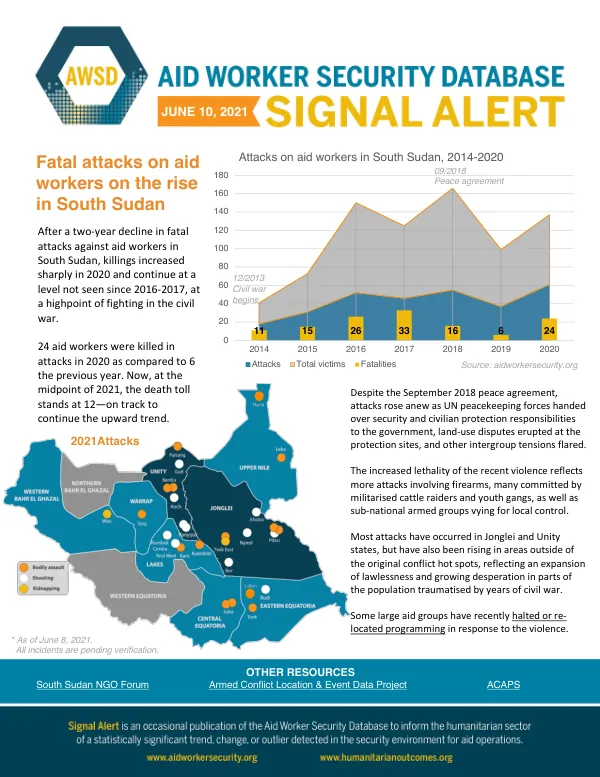
Attacks on aid workers in South Sudan, 2011-2020
Attacks on aid workers in South Sudan have been a persistent concern since the outbreak of civil war in 2013.
2021 · 1 pages
Sign in to readA free account is required to download.
Abstract
The conflict escalated in 2016-2017, resulting in a high number of fatalities among aid workers. However, after a two-year decline in fatal attacks, the number of killings increased sharply in 2020. This upward trend continued into 2021, with 12 aid worker fatalities reported by June 8, 2021. The recent surge in violence is attributed to the increased use of firearms in attacks, often perpetrated by militarized cattle raiders and youth gangs, as well as sub-national armed groups vying for local control. Most attacks have occurred in Jonglei and Unity states, but have also been rising in areas outside of the original conflict hotspots. This expansion of lawlessness reflects growing desperation in parts of the population traumatized by years of civil war. The peace agreement signed in September 2018 has not led to a significant reduction in attacks on aid workers. In fact, the handover of security and civilian protection responsibilities from UN peacekeeping forces to the government has contributed to the rise in violence. Land-use disputes and intergroup tensions have also flared, particularly at protection sites. As a result, some large aid groups have halted or relocated their programming in response to the violence. The data on attacks on aid workers in South Sudan from 2014 to 2020 reveals a concerning trend. The number of attacks and fatalities has consistently increased over the years, with 2020 witnessing the highest number of killings since 2016-2017. The total number of victims has also risen, with a significant proportion of them being aid workers. The situation remains precarious, with the death toll continuing to rise in 2021. The humanitarian community is closely monitoring the situation, and efforts are being made to address the root causes of the violence and ensure the safety of aid workers. However, the current trend suggests that the situation may continue to deteriorate unless urgent action is taken to address the underlying issues driving the conflict.