USAID
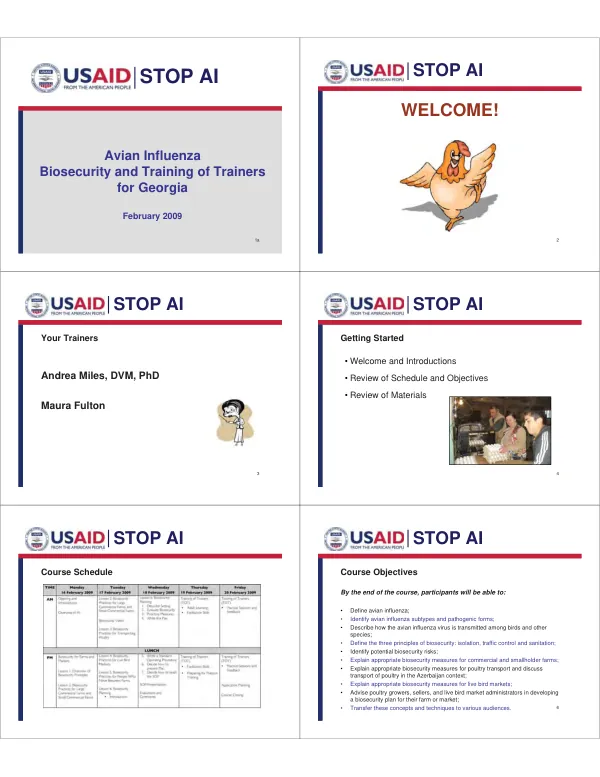
Avian Influenza Biosecurity and Training of Trainers for Georgia
Avian Influenza Overview The avian influenza virus is a highly contagious and deadly disease that affects poultry and other bird species.
2009 · 28 pages
Sign in to readA free account is required to download.
Abstract
It is caused by the influenza A virus, which is classified into different subtypes based on the hemagglutinin (H) and neuraminidase (N) proteins on its surface. The H5 and H7 subtypes are considered highly pathogenic and can cause significant mortality in poultry. The avian influenza virus is primarily spread through direct contact with infected birds, contaminated feed, water, and equipment, as well as through the movement of people and animals. The virus can also be transmitted through the air, particularly in areas with high concentrations of birds. In Georgia, the most likely sources of a new outbreak of H5N1 HPAI are wild birds, poultry farms, and live bird markets. The clinical signs of highly pathogenic avian influenza include acute death, depression, and respiratory difficulty. The incubation period of the virus can range from 3 to 7 days, with some cases reported as short as 24 hours. The virus survives best in live birds, where it can be transmitted through direct contact and contaminated feed and water. Biosecurity Principles Biosecurity is a critical component of preventing the spread of avian influenza in poultry farms and live bird markets. The three principles of biosecurity are isolation, traffic control, and sanitation. Isolation involves creating an environment where poultry are protected from carriers of disease, such as people, birds, and other animals. Traffic control involves controlling the movement of people, animals, equipment, and vehicles into, out of, and within the farm or market. Sanitation involves regular cleaning and disinfection of housing, equipment, vehicles, and people. To implement biosecurity measures, poultry farms and live bird markets must ensure good animal husbandry and management practices. This includes providing adequate feed, water, and ventilation, removing carcasses regularly, and keeping records of flock health. Isolation can be achieved by restricting access to the farm through the use of gates and fences, securing buildings with no holes in screens to allow entry of wild birds, and removing standing bodies of water on property that might attract wild birds. Traffic control involves limiting entry to and movement on the farm and poultry houses, keeping an authorized visitor log book, and restricting unauthorized visitors. Sanitation involves regular cleaning and disinfection of housing, equipment, vehicles, and people. By implementing these biosecurity measures, poultry farms and live bird markets can reduce the risk of avian influenza outbreaks and protect the health and well-being of poultry and humans. Biosecurity Practices for Large Commercial Farms Large commercial poultry farms are at high risk of avian influenza outbreaks due to the large number of birds and the movement of people and equipment on and off the farm. To prevent the spread of disease, large commercial farms must implement strict biosecurity measures, including isolation, traffic control, and sanitation. Isolation involves designing and maintaining the farm to keep out disease brought by people, wild birds, and other pests. This can be achieved by restricting access to the entire farm through the use of gates and fences, securing buildings with no holes in screens to allow entry of wild birds, and removing standing bodies of water on property that might attract wild birds. In addition to implementing biosecurity measures, large commercial farms must also maintain good animal husbandry and management practices, including keeping records of flock health, providing adequate feed, water, and ventilation, and removing carcasses regularly. By combining these practices with strict biosecurity measures, large commercial farms can minimize the risk of avian influenza outbreaks and maintain a healthy and productive flock.