USAID
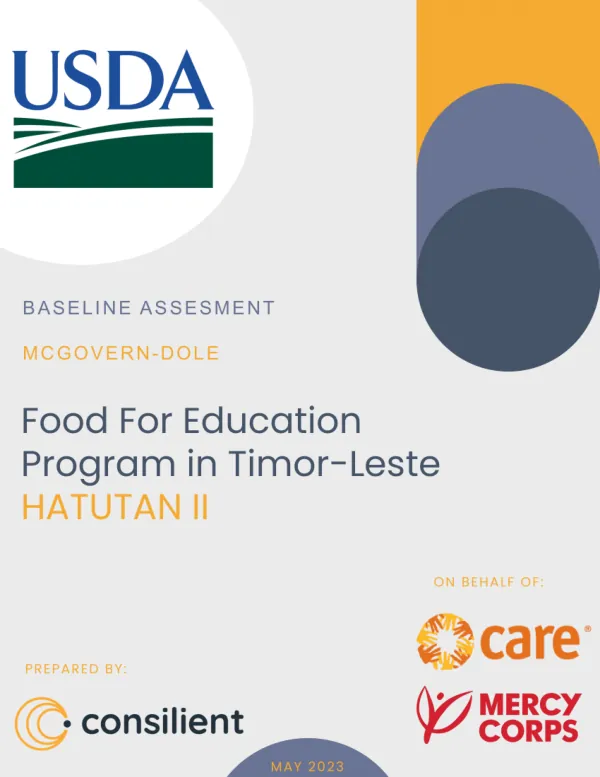
Baseline Assessment: HATUTAN II
The HATUTAN II program is a development initiative implemented in Timor-Leste, with the primary objective of improving literacy outcomes among students.
180 pages
Sign in to readA free account is required to download.
Abstract
The program focuses on enhancing the quality of instruction, teaching practices, and literacy instruction materials in participating schools. A baseline assessment was conducted to evaluate the program's effectiveness and identify areas for improvement. The assessment revealed that overall literacy scores among students in participating schools were lower compared to national benchmarks. Specifically, the average literacy score was 21, which is below the national average of 25. However, the assessment also found that students who received training in literacy skills showed significant improvement in their literacy subtask scores. For instance, students who received training in reading comprehension showed a 24% increase in their scores compared to those who did not receive training. The assessment also identified several predictors of literacy outcomes, including the quality of instruction, teaching practices, and teacher skills and knowledge. The results showed that schools with high-quality instruction and teaching practices had significantly higher literacy scores compared to schools with low-quality instruction and teaching practices. Additionally, the assessment found that teacher attendance and literacy instruction materials were also significant predictors of literacy outcomes. The assessment also evaluated the effectiveness of the school feeding program (SFP) in improving student attendance and health outcomes. The results showed that the SFP had a positive impact on student attendance, with a 27% increase in attendance rates among participating schools. However, the assessment also found that the SFP faced several challenges, including food preparation and storage, purchase of local foods, and community contribution to the program. In terms of health and nutrition outcomes, the assessment found that students in participating schools had lower body mass index (BMI) scores compared to national benchmarks. However, the assessment also found that students who received training in nutrition practices showed significant improvement in their knowledge of nutrition and health practices. The results also showed that access to clean water and sanitation, as well as access to healthcare, were significant predictors of health and nutrition outcomes. The assessment also evaluated the effectiveness of the program in improving agricultural practices and economic outcomes among participating farmers. The results showed that farmers who received training in perma-garden use and agricultural practices showed significant improvement in their farm sales and economic empowerment. Additionally, the assessment found that VSLA loan use and VSLA membership were significant predictors of economic outcomes among participating farmers. Overall, the baseline assessment provides valuable insights into the effectiveness of the HATUTAN II program in improving literacy outcomes, teaching practices, and health and nutrition outcomes among students and farmers in Timor-Leste. The assessment highlights several areas for improvement, including the need to enhance the quality of instruction, teaching practices, and literacy instruction materials, as well as the need to improve access to clean water and sanitation, and access to healthcare.