USAID DEC
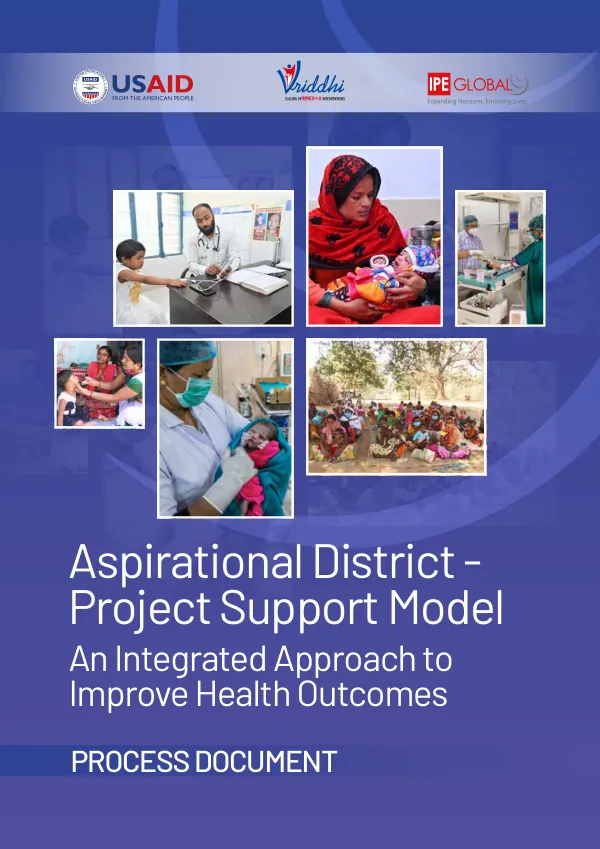
Aspirational District - Project Support Model: An Integrated Approach to Improve Health Outcomes
Sign inGOVERNMENT OF INDONESIA
Aspirational District - Project Support Model: An Integrated Approach to Improve Health Outcomes
The Aspirational Districts Programme was launched by the Government of India in January 2018 as part of its New India 2022 Strategic Vision.
2021 · 48 pages
Sign in to readA free account is required to download.
Abstract
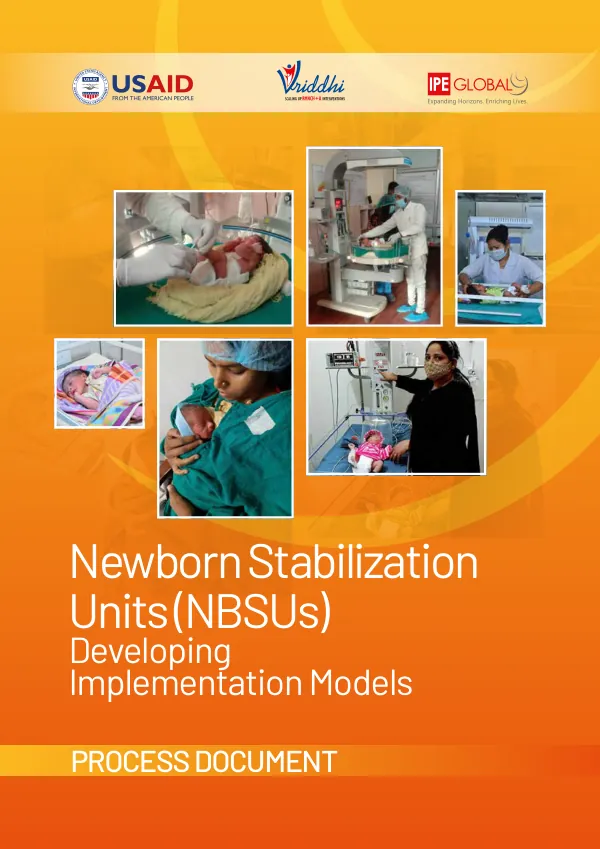
The objective of the programme is to bring about rapid transformation in identified districts through convergence of various schemes, collaboration of various stakeholders, and competition for development among districts. The programme covers 117 districts and is steered by Niti Aayog with active roles of district administration, state governments, and central line ministries. The Aspirational Districts were selected by various ministries based on deficiency, sensitivity, and need of the district. Niti Aayog used an index based on five thematic areas: Health & Nutrition, Education, Agriculture & Water Resources, Financial Inclusion & Skill Development, and Basic Infrastructure. The 11 indicators used in the Composite Index were: poverty, medical care during pregnancy, institutional delivery, stunting of children below 5 years, wasting in children below 5 years, elementary dropout rate, poor student teacher ratio, un-electrified households, rural households without access to toilets, and percentage of households with no access to safe drinking water. The Vriddhi Aspirational District Support Model (VADSM) is a package of interventions and tools designed to impact the health environment, interactions, and outcomes specifically in the RMNCH+A domain. The model consists of 14 distinct interventions implemented under three strategies: Creating Demonstration Models for Strengthening Implementation, Developing Evidence to Action Tools, and Introducing Innovative Technology. Strategy 1 focuses on creating demonstration models for strengthening implementation, which includes initiatives such as enhancing the quality of labor rooms and operation theatres under LaQshya, implementing Family Participatory Care in SNCUs, improving the performance and quality of care at Newborn Stabilization Units, and supporting the adoption and rollout of the FPLMIS. Strategy 2 focuses on developing evidence to action tools, which includes initiatives such as designing and implementing a District Hospital Quality of Care Index (DQCI) dashboard, developing and implementing SNCU Quality of Care Index (SQCI) for all 20 SNCUs, helping ADs enhance the effectiveness of Supportive Supervision and adopt ADARSSH, and developing and implementing RMNCH+A Action Agenda using a Strategic Approach to assist ADs in preparation of District Health Action Plans. Strategy 3 focuses on introducing innovative technology to enhance the quality of care, which includes initiatives such as standardized handheld Doppler devices for FHR monitoring, introducing multimodal pulse oximeters for pneumonia screening, installing and using the Safe Delivery App in 7,250 functionaries, and piloting Systems E-Approach for Women at Risk (SEWA) – an algorithm-based tracking App for High Risk Pregnancies. The impact of these interventions has been positive, and most ADs have shown significant progress in health dashboard indicators during the period. Project learnings from the interventions have been taken to guide policy and programme for improved quality across the RMNCH domain.
Related documents