INSTITUTE FOR CONTEMPORARY STUDIES. INTERNATIONAL CENTER FOR ECONOMIC GROWTH
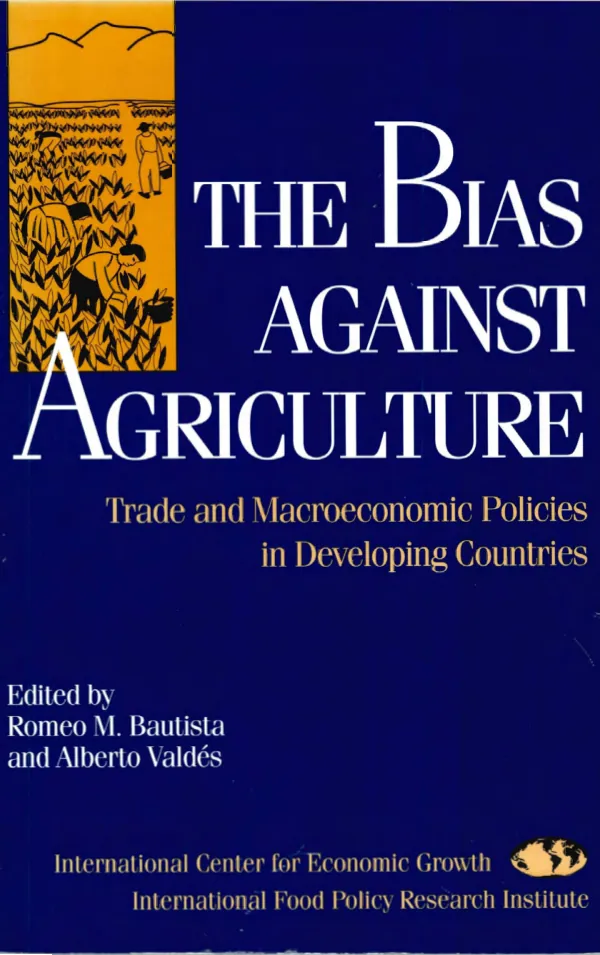
Bias against agriculture : trade and macroeconomic policies in developing countries
There is a growing awareness that the pro-industrialist macroeconomic and trade policies adopted by developing countries since the early 1950"s contain a hidden, but operative bias against agriculture.
Bautista, Romeo M., ed.; Valdes, Alberto, ed. · 1970
Sign in to readA free account is required to download.
Abstract
A compilation of recent studies on this subject is presented in this volume. First, an introductory section discusses how exchange rate, monetary, import substitution, tariff, industrial protection, and other policies, by introducing price biases against agricultural goods, reduce incentives to invest in agriculture. Section II presents studies of the effects of such policies on agriculture in eight countries: Peru, Colombia, Nigeria, Zaire, Philippines, Pakistan, Argentina, and Chile. The three regional studies in Section III analyze the cumulative effects of trade and macroeconomic policies on agriculture in Asia, Latin America, and Africa, while the two studies in Section IV examine, respectively, (1) the effects of specific policies on agricultural price stabilization, and (2) how public awareness of potential policy impacts can influence the policy process. A summary reflection by the editors notes that the empirical research indicates a twofold bias against agriculture: (1) in the export sector, a bias for manufactured products and against agricultural products; and (2) within agriculture, a bias for food crops and against export crops. Some steps which governments can take to achieve a more neutral stance are discussed in conclusion. Includes 15-page bibliography.