JOHNS HOPKINS UNIVERSITY BLOOMBERG SCHOOL OF PUBLIC HEALTH/INFO PROJECT
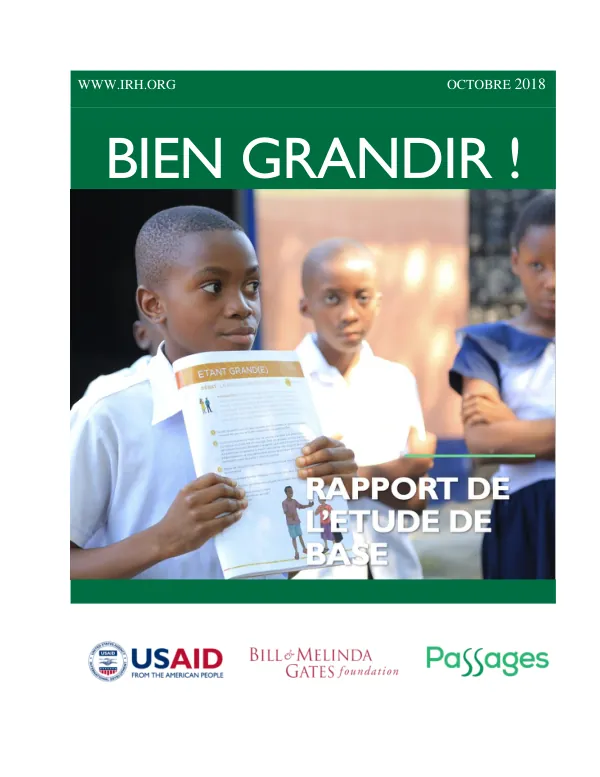
Bien grandir ! Rapport de l’étude de base
The Global Early Adolescent Study (GEAS) is a research initiative focused on understanding the experiences and challenges of early adolescents.
2018 · 51 pages
Sign in to readA free account is required to download.
Abstract
The study aims to inform the development of effective interventions to support the health, well-being, and education of this age group. The research is conducted in collaboration with the Johns Hopkins Bloomberg School of Public Health, the Institute for Reproductive Health at Georgetown University, and Save the Children, with funding from the United States Agency for International Development (USAID) and the Bill and Melinda Gates Foundation. The study employs a longitudinal design, collecting data from a sample of early adolescents in Kinshasa, Democratic Republic of Congo. The research team uses a range of instruments, including surveys, interviews, and focus groups, to gather information on the adolescents' socio-demographic characteristics, family structure, peer relationships, school experiences, and community context. The study also explores the adolescents' perceptions of gender norms, autonomy, and experiences of childhood adversity, as well as their knowledge and attitudes towards health and sexuality. The study's findings highlight the significant challenges faced by early adolescents in Kinshasa, including limited access to education, poverty, and exposure to violence and exploitation. The research also reveals that early adolescents who are out of school are more likely to experience poverty, family conflict, and exposure to violence. In contrast, adolescents who are in school are more likely to have higher aspirations for education and employment, and to have more positive relationships with their peers and family members. The study's results also suggest that early adolescents in Kinshasa face significant barriers to accessing health and education services, including lack of information, stigma, and limited access to resources. The research highlights the need for targeted interventions to support the health, well-being, and education of early adolescents, including programs to improve access to education, health services, and economic opportunities. The study's methodology is described in detail in the annexes, including the sampling strategy, data collection instruments, and data quality control procedures. The research team also provides a range of tables and figures to illustrate the study's findings, including data on the adolescents' socio-demographic characteristics, family structure, peer relationships, and experiences of childhood adversity. Overall, the Global Early Adolescent Study provides valuable insights into the experiences and challenges of early adolescents in Kinshasa, and highlights the need for targeted interventions to support their health, well-being, and education. The study's findings have important implications for policymakers, program implementers, and researchers working to improve the lives of early adolescents in low- and middle-income countries.