USAID DEC
BiH Power System and Directive 2005/89/EC (Directive) concerning measures to safeguard of electricity supply and infrastructure investment
Sign inADVANCED ENGINEERING ASSOCIATES INTERNATIONAL, INC. /SGGA
BiH Power System and Directive 2005/89/EC (Directive) concerning measures to safeguard of electricity supply and infrastructure investment
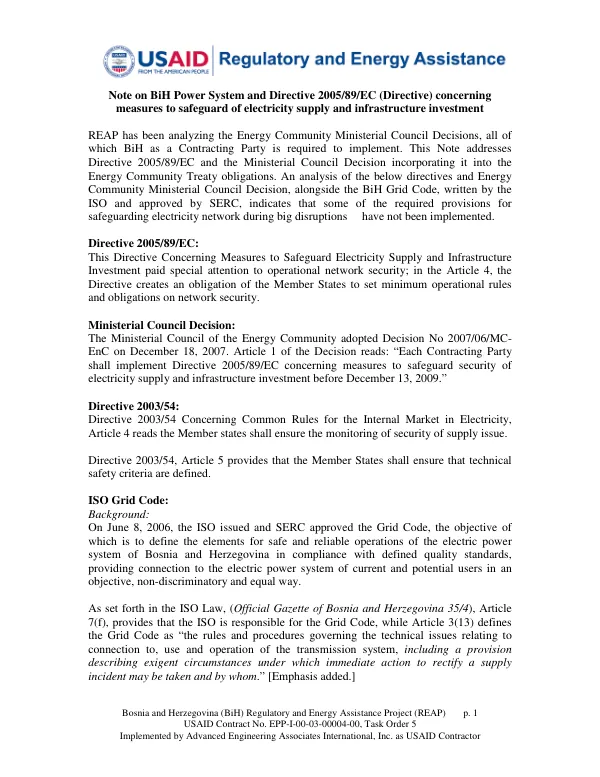
The Bosnia and Herzegovina (BiH) Regulatory and Energy Assistance Project (REAP) has been analyzing the Energy Community Ministerial Council Decisions, which BiH as a Contracting Party is required to implement.
2014 · 2 pages
Sign in to readA free account is required to download.
Abstract
This analysis focuses on Directive 2005/89/EC and the Ministerial Council Decision incorporating it into the Energy Community Treaty obligations. The directive and decision emphasize the importance of safeguarding electricity supply and infrastructure investment, particularly operational network security. Directive 2005/89/EC requires Member States to set minimum operational rules and obligations on network security, as outlined in Article 4. The Ministerial Council Decision, adopted on December 18, 2007, mandates that each Contracting Party implement the directive before December 13, 2009. Additionally, Directive 2003/54 Concerning Common Rules for the Internal Market in Electricity emphasizes the monitoring of security of supply and technical safety criteria. The ISO Grid Code, approved by SERC on June 8, 2006, aims to define the elements for safe and reliable operations of the electric power system in Bosnia and Herzegovina. However, the Grid Code lacks measures and procedures for guarding the system from major disruptions, as required by Directive 2005/89/EC. The absence of these measures poses a significant risk to the BiH Power system, and the development of such a document is essential. One example of a measure to control consumption and guard the system from major disruptions is automated sub-frequency unloading. However, the implementation of this measure is hindered by the lack of sufficient relays and a plan agreed upon by the relevant stakeholders. The available power that can be unloaded automatically is only 23% of the peak power, which is insufficient to prevent a blackout in case of a major disruption. The slow and inefficient performance of SERC and ISO in addressing this issue has resulted in potential consequences for customers and electricity providers. It is essential that ISO updates the Grid Code to develop a document that defines measures and processes to safeguard the power system from disruptions. All stakeholders, including EPs, Transco, and ISO, must agree on and implement the document, which will require financial investment from the electricity providers to purchase and install necessary equipment. REAP aims to communicate this problem to the ISO and EPs to build momentum for initiating the procedure.