USAID
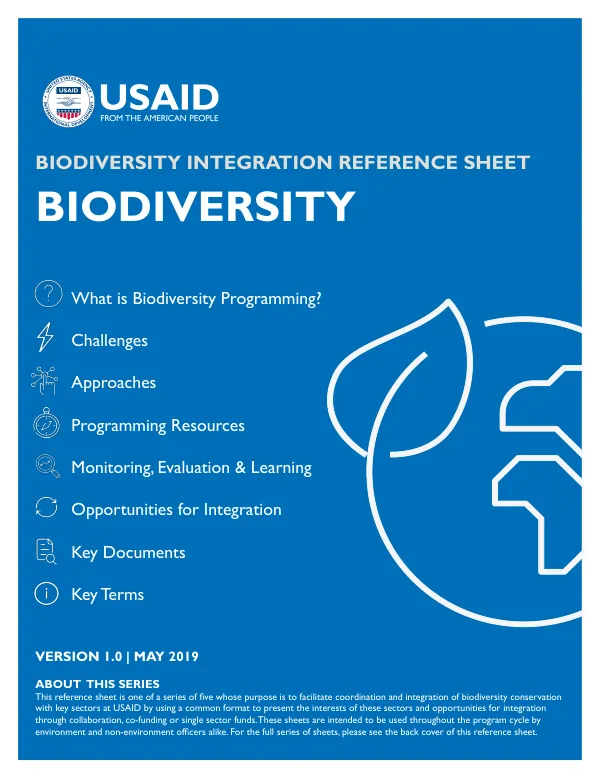
Biodiversity Integration Reference Sheet
Biodiversity programming at USAID is guided by the 2014 Biodiversity Policy, which includes two Agency-wide goals and six objectives to reach these goals.
2019 · 12 pages
Sign in to readA free account is required to download.
Abstract
The policy also includes the four-part Biodiversity Code, which guides the Agency in determining whether activities meet the legislative requirements for the use of biodiversity funding. Each year, all USAID programs receiving biodiversity funds are reviewed for consistency with the Code. The primary causes of biodiversity loss are habitat loss and degradation, overexploitation of natural resources, pollution, invasive species, and climate change. Underlying these categories of threats are a variety of social, economic, and political factors. The USAID Biodiversity Policy divides these challenges into threats and drivers and identifies at least five key categories of each. Threats are the human activities or processes that directly cause degradation or loss of biodiversity, while drivers are the underlying factors that enable or otherwise add to the occurrence or persistence of threats. USAID's approaches to these biodiversity challenges are as diverse as the challenges themselves, ranging from land and water protection to private-sector engagement and livelihood alternatives. These approaches can address both direct threats to biodiversity and the drivers of those threats, or help create the enabling conditions for conservation. USAID's biodiversity conservation approaches are aligned with the standard classification developed by the Conservation Measures Partnership and International Union for the Conservation of Nature. The USAID Biodiversity Policy divides the world into two tiers of operating units, with Tier One operating units being highly ranked for their biodiversity value and containing a preponderance of globally significant ecoregions. Tier Two operating units either contain a globally significant ecoregion, provide important habitat for endangered and threatened species, add to the range of ecosystems supported by the USAID portfolio, or exhibit a comparative advantage or previous record of success for USAID. USAID focuses its biodiversity programming on approximately 40 countries and regions, with more than half of Agency biodiversity funding focusing on the 14 Tier One operating units. The primary causes of biodiversity loss in these regions include habitat loss and degradation, overexploitation of natural resources, pollution, invasive species, and climate change. USAID's approaches to addressing these challenges include land and water protection, private-sector engagement, and livelihood alternatives. The Biodiversity and Development Handbook is a key tool for implementation of the USAID Biodiversity Policy, providing step-by-step guidance on biodiversity and integrated biodiversity programming. The handbook also facilitates integration of biodiversity conservation with other development sectors by defining key concepts and mapping out programming and policy intersections. Evidence in Action is a comprehensive resource that walks practitioners through steps to apply evidence and an evidence-based approach to the design and implementation of strategic approaches for biodiversity conservation in the USAID context. The Biodiversity and Development Handbook is a key tool for implementation of the USAID Biodiversity Policy, providing step-by-step guidance on biodiversity and integrated biodiversity programming. The