ENVIRONMENTAL INCENTIVES, LLC
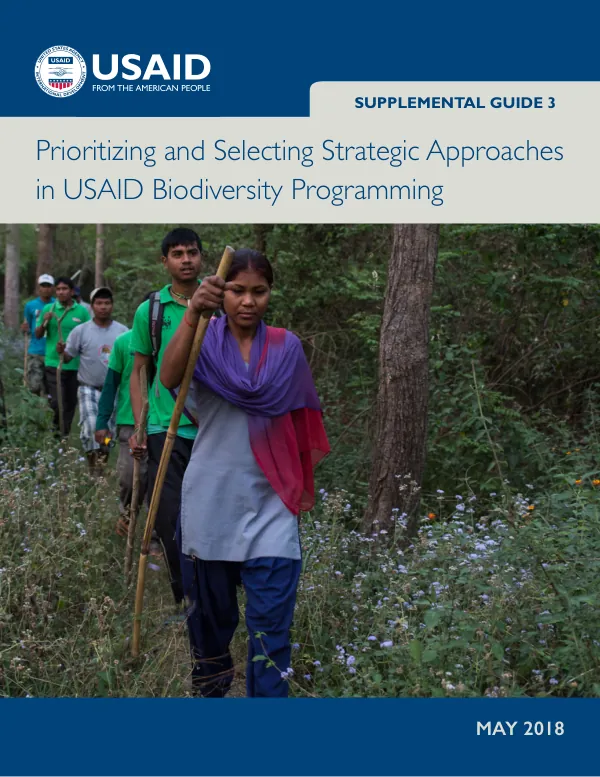
Prioritizing and Selecting Strategic Approaches in USAID Biodiversity Programming
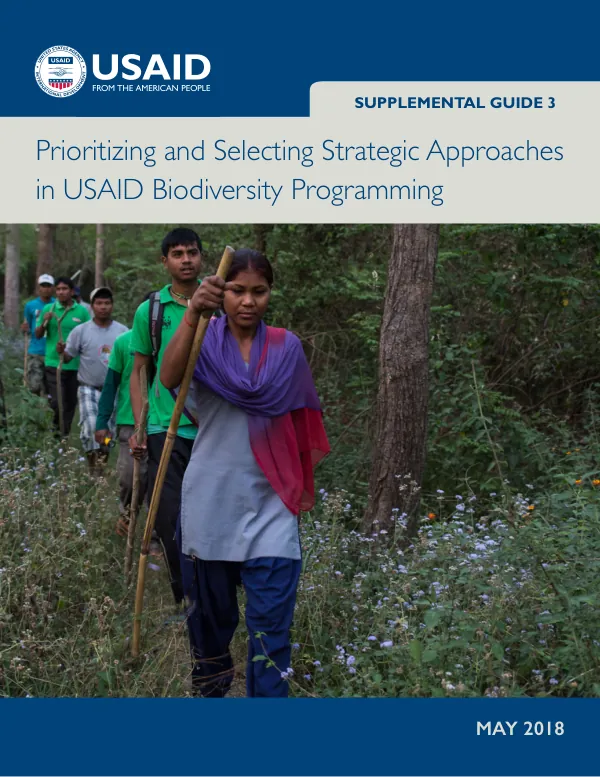
Prioritizing and Selecting Strategic Approaches in USAID Biodiversity Programming is a supplemental guide that provides in-depth guidance to assist USAID staff and implementing partners in completing the biodiversity program design process.
2018 · 15 pages
Sign in to readA free account is required to download.
Abstract
This guide supplements the USAID Biodiversity How-To Guides, which have been developed to help design teams, program managers, and implementing partners systematically approach biodiversity conservation design, planning, monitoring, evaluation, and learning within the USAID Program Cycle. The guide outlines the importance of prioritizing strategic approaches, which are sets of actions with a common focus that work together to address specific threats, drivers, and/or opportunities in order to achieve a set of relevant results. A good strategic approach meets the following criteria: it is linked to critical factors in the situation model, focused on specific courses of action, feasible in light of the program's resources and constraints, and appropriate to and fitting within United States Government regulations and host country and/or site-specific cultural, social, and biological norms. The guide provides a step-by-step approach to prioritizing strategic approaches, which includes rating each strategic approach for potential impact and feasibility, discarding ineffective strategic approaches, ranking remaining strategic approaches relative to one another, choosing the "final" set of strategic approaches, and revisiting strategic approaches regularly. The guide also includes a series of tips to help guide teams in this important process. The guide uses the same fictitious example project – the Grand River project – as used in the three Biodiversity How-To Guides. The Grand River project example's purpose links to a fictitious Country Development Cooperation Strategy component – an Intermediate Result on "Biodiversity conservation for improved well-being of targeted rural communities." Although fictitious, the example is based on real-life conservation contexts. The guide emphasizes the importance of determining which actions to take in the conservation planning process. Design teams often develop their conservation programs based on what they know how to do – not necessarily what is most strategic to do. Going through an evidence-based prioritization process will help teams systematically assess the potential value of different strategic approaches and select those that are likely to have the greatest impact. The guide assumes design teams have already completed a situation/problem analysis to understand their context and possibly developed a situation model and brainstormed strategic approaches to help reduce high-priority threats. At this point, they will be ready to prioritize their strategic approaches following the five steps below. As with other phases in the Program Cycle, it is essential that the design team considers available evidence when choosing and rating their strategic approaches. Step 1: Rate each strategic approach for potential impact and feasibility. This involves evaluating the potential impact of each strategic approach and its feasibility in light of the program's resources and constraints. The guide provides a table (Table 1) to help teams rate each strategic approach. Step 2: Discard ineffective strategic approaches. This involves identifying and discarding strategic approaches that are unlikely to have a significant impact or are not feasible in light of the program's resources and constraints. Step 3: Rank remaining strategic approaches relative to one another. This involves ranking the remaining strategic approaches based on their potential impact and feasibility. Step 4: Choose the "final" set of strategic approaches. This involves selecting the strategic approaches that are likely to have the greatest impact and are feasible in light of the program's resources and constraints. Step 5: Revisit strategic approaches regularly. This involves regularly reviewing and revising the strategic approaches to ensure they remain relevant and effective. The guide also includes a discussion worksheet (Annex: Discussion Worksheet) to help teams facilitate the prioritization process. The worksheet provides a framework for teams to discuss and evaluate the strategic approaches and make informed decisions. Overall, the guide provides a comprehensive approach to prioritizing and selecting strategic approaches in USAID biodiversity programming. It emphasizes the importance of evidence-based decision-making and provides a step-by-step approach to help teams systematically assess the potential value of different strategic approaches and select those that are likely to have the greatest impact.