USAID DEC
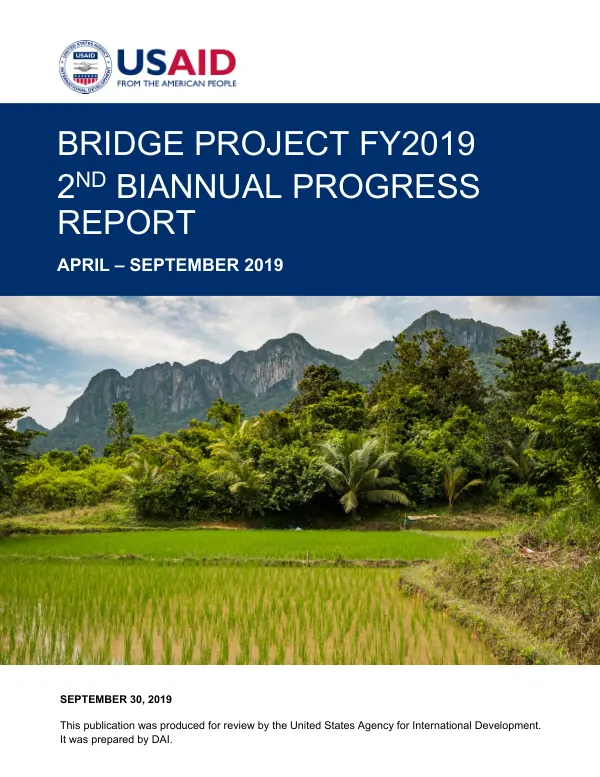
Biodiversity Results and Integrated Development Gains Enhanced (BRIDGE) Project FY2019 2nd BIANNUAL PROGRESS REPORT April – September 2019
Sign inCONSERVATION INTERNATIONAL FOUNDATION
Biodiversity Results and Integrated Development Gains Enhanced (BRIDGE) Project FY2019 2nd BIANNUAL PROGRESS REPORT April – September 2019
The Biodiversity Results and Integrated Development Gains Enhanced (BRIDGE) project supports the Forestry and Biodiversity (FAB) Office in the U.S.
2019 · 35 pages
Sign in to readA free account is required to download.
Abstract
Agency for International Development's (USAID) Economic Growth, Education, and Environment Bureau (E3) to achieve the second goal of the Biodiversity Policy. The project aims to promote and support efforts to integrate biodiversity conservation into the larger development context. BRIDGE operates within an underlying theory of change, which informs the project's strategic direction over the life of the project. The BRIDGE theory of change is centered on the idea that if USAID technical staff and influencers can use integration approaches to improve programming and implementation for biodiversity conservation integration, and if a body of evidence supporting biodiversity conservation integration across key development sectors is understood by USAID internal and external constituencies for integration, then USAID investments will better support both sustainable development and improved biodiversity conservation outcomes. To realize this theory of change, the BRIDGE project focuses on three mutually reinforcing goals: identifying approaches that support the integration of biodiversity conservation and other key development sectors in USAID programming, improving the evidence base for biodiversity conservation and development integration, and identifying and engaging constituencies for biodiversity conservation integration. The BRIDGE project is implemented by DAI Global, LLC and four subcontractors, and operates within a five-year task order under the REPLACE IQC. The project's Monitoring, Evaluation and Learning (MEL) plan provides a complete overview of the BRIDGE theory of change and results chain. The biannual progress report for the period of April to September 2019 seeks to comply with the requirement of providing biannual progress reports in comparison to the annual work plan. The report mirrors the fiscal year (FY) 19 work plan and includes the following sections: Overview of the Reporting Period, Update on Overarching Implementation Strategies and Support Functions, and Status of FY19 Activities. The Status of FY19 Activities section addresses all activities identified in the appendix of the FY 19 work plan. These activities include Integration of Biodiversity Valuation into Agency Cost-Benefit Analysis (CBA), Strengthening the Application of TWP and PEA for Biodiversity, FAA 118/119 Best Practices Guide Phase 2, Use of Geospatial Analysis to Facilitate Biodiversity Conservation Integration, and Monitoring, Evaluation and Learning for Integrated Biodiversity Conservation (iMEL). The report also highlights thematic approaches in support of integration, including Ecosystem-based Adaptation (EbA), Wild-Caught Fisheries Management, Watersheds and Health, and Lessons Learned from Integrating Sustainable Landscapes (SL) and Biodiversity Conservation. Additionally, the report discusses the project's management update, including the contractor's performance and the project's progress towards achieving its goals. The BRIDGE project's biannual progress report for the period of April to September 2019 provides an overview of the project's progress and achievements during this period. The report highlights the project's focus on integrating biodiversity conservation into the larger development context and its efforts to improve the evidence base for biodiversity conservation and development integration.