USAID DEC
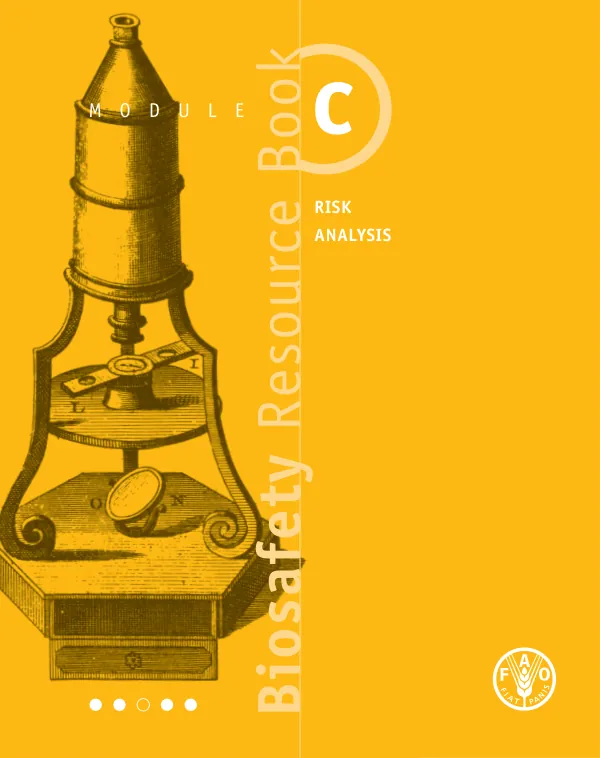
Biosafety Resource Book: Test and post-release monitoring of genetically modified organisms (GMOs)
Sign inFOOD AND AGRICULTURE ORGANIZATION OF THE UNITED NATIONS IN GEORGIA
Biosafety Resource Book: Test and post-release monitoring of genetically modified organisms (GMOs)
Genetically modified organisms (GMOs) are living organisms that interact with their environment in various ways, showing unanticipated effects, and following ecological and biological rules.
2011 · 130 pages
Sign in to readA free account is required to download.
Abstract
The behavior and attributes of a GMO, as well as its interaction with the environment, must be considered dynamic and subject to change over time. This requires careful assessment and evaluation of the potential risks posed by the release of a GMO. Biosafety requirements exist for each stage of a GMO operation, with biosafety defined as the avoidance of risk to human health and safety, and the conservation of the environment, as a result of the use for research and commerce of infectious or genetically modified organisms. A huge amount of information on the GMO needs to be gathered and evaluated, including detailed information to assess and predict the (agricultural) performance and benefits of the GMO, and the risks it poses to human health and environment. The evaluation and assessment procedure is a bottom-up, iterative process, starting with early research and development stages where no evidence regarding the behavior and performance of the engineered GMO is available. However, it might be possible to predict to a certain extent such information, including on potential risks, based on the characteristics of the non-modified, recipient organism and the traits encoded by the inserted transgene(s). Once the GMO has been obtained, it can be subjected to laboratory tests to gain information on its characteristics and behavior under controlled conditions. If the performance of the GMO under containment is promising and the potential risks it poses are found to be manageable, the testing can proceed to confined field trials. Here, the GMO is tested in the open environment, preferably under conditions that resemble its future area of use. However, stringent measures are put in place to confine the release, i.e. to prevent any escape of the GMO or the transgene into the environment and to prevent genetically modified (GM) material from entering human or animal food supplies. Once a GMO has passed all testing stages, the risk analysis has been performed with a positive outcome, and the approval from the responsible national or international authority has been granted, it may be placed upon the market and released into the environment. From this point on, no measures are put in place that limit the contact between the GMO and the receiving environment, even if specific risk management measures can be requested by the national biosafety authorities. However, it is essential to implement post-release monitoring procedures to monitor the risks identified in the risk assessment of the GMO, recognize possible new, unanticipated risks and adverse effects, and to quantify the performance and benefits of the GMO. The overall goal of a monitoring programme should be the protection of the productivity and ecological integrity of farming systems, the general environment, and human and animal health. The objectives and procedures, as well as the requirements (in terms of financial and organizational inputs, human capacity, infrastructure, and equipment) of the three stages can be very different, and a detailed understanding of the GMO's behavior and performance is necessary to ensure the safe release and use of the GMO. The monitoring of GMOs involves several key components, including the environmental risk assessment (ERA), the establishment of a monitoring plan, the monitoring strategy, the monitoring methodology, data analysis, reporting, and review. Critical considerations and problems that may arise during the monitoring process include the need for a robust and reliable monitoring system, the ability to detect and respond to potential risks and adverse effects, and the need for ongoing evaluation and improvement of the monitoring programme. In addition to post-release monitoring, GMO traceability and labelling are also essential components of a comprehensive biosafety framework. This involves the ability to track the movement and use of GMOs throughout the supply chain, from production to consumption, and to provide accurate and reliable information to consumers about the presence of GMOs in food products. The monitoring of GMO imports and transboundary movements is also critical to ensure that GMOs are safely and responsibly introduced into new environments. The biosafety resource book provides a comprehensive framework for the safe development, testing, and release of GMOs. It outlines the key principles and procedures for the evaluation and assessment of GMOs, including the use of containment, confined field trials, and post-release monitoring. The book also provides guidance on the implementation of biosafety measures, including the use of biosafety levels, good laboratory practice, and risk assessment parameters and procedures.