FOOD AND AGRICULTURE ORGANIZATION OF THE UNITED NATIONS IN GEORGIA
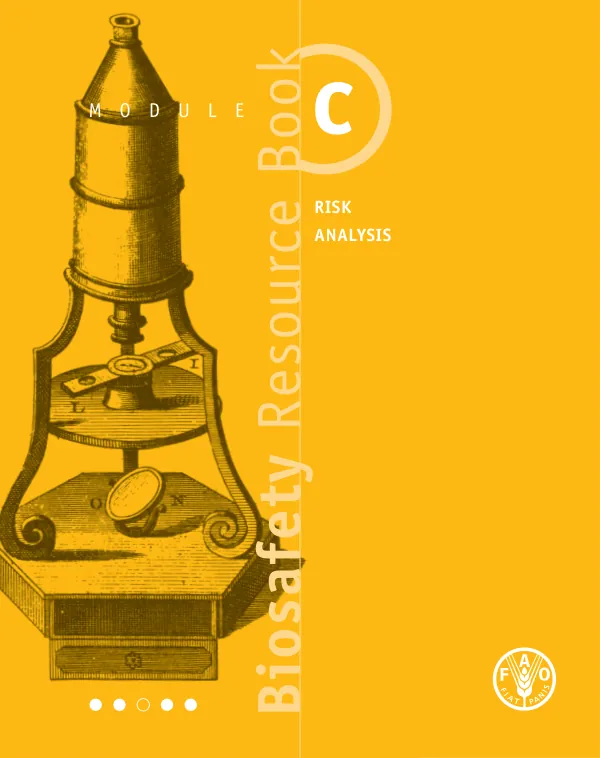
Biosafety Resource Book
Biological risks are associated with living organisms or materials derived from them that can potentially cause diseases in, or harm to, humans or the environment.
2011 · 90 pages
Sign in to readA free account is required to download.
Abstract
The objective of a biosafety system is to prevent, manage, minimize or eliminate hazards to human health and security and to protect the environment from biological agents and organisms used in research and trade. Biological agents can be described as living organisms, or materials derived from them, which can potentially cause diseases in, or harm to, humans or the environment. Biological hazards, or biohazards, are infectious agents or hazardous biological materials that present a risk, or potential risk, to the health of humans, animals or other organisms. The risk can be manifested directly through infection, or indirectly through damage to the environment. Unlike chemical hazards, infectious agents have the ability to reproduce and to give rise to large numbers of infectious organisms/particles, starting from a small amount of initially released material. Biological hazards are numerous and diverse, and can be categorized into different sectors, including food safety, zoonoses, animal health, plant health, and quarantine. In the context of plants and animals, a living modified organism (LMO) that possesses a novel combination of genetic material obtained through the use of modern biotechnology is considered a biosafety risk. In relation to food, a recombinant DNA organism directly affecting or remaining in a food product that could have an adverse effect on human health is also considered a biosafety risk. The risk associated with a biological agent or organism is the probability of the occurrence of a particular adverse event at a specific time and the magnitude of the consequent damage caused. This risk is a combination of two factors: the probability and the consequence of an adverse event. The risk can be expressed as follows: RISK = likelihood x consequence. Many aspects of risk analysis are generic and can be applied to all classes of risk. Biological risks can be manifested in various ways, including the transmission of diseases between humans and animals, the contamination of food and water, and the introduction of invasive alien species. The consequences of biological risks can be severe, including the loss of human life, the degradation of the environment, and the economic impacts on agriculture and trade. The management of biological risks requires a comprehensive approach that includes the identification of hazards, the assessment of risks, and the implementation of measures to prevent or mitigate the consequences of adverse events. This approach involves the use of various tools and techniques, including risk analysis, biosafety protocols, and emergency response plans. In the context of international trade, the management of biological risks is critical to ensuring the safe movement of goods and the protection of human health and the environment. The Cartagena Protocol on Biosafety, which is an international agreement aimed at regulating the trade of living modified organisms, provides a framework for the management of biological risks associated with the use of modern biotechnology. Overall, biological risks are a significant concern for human health and the environment, and require a comprehensive approach to management. This approach involves the identification of hazards, the assessment of risks, and the implementation of measures to prevent or mitigate the consequences of adverse events.