USAID DEC
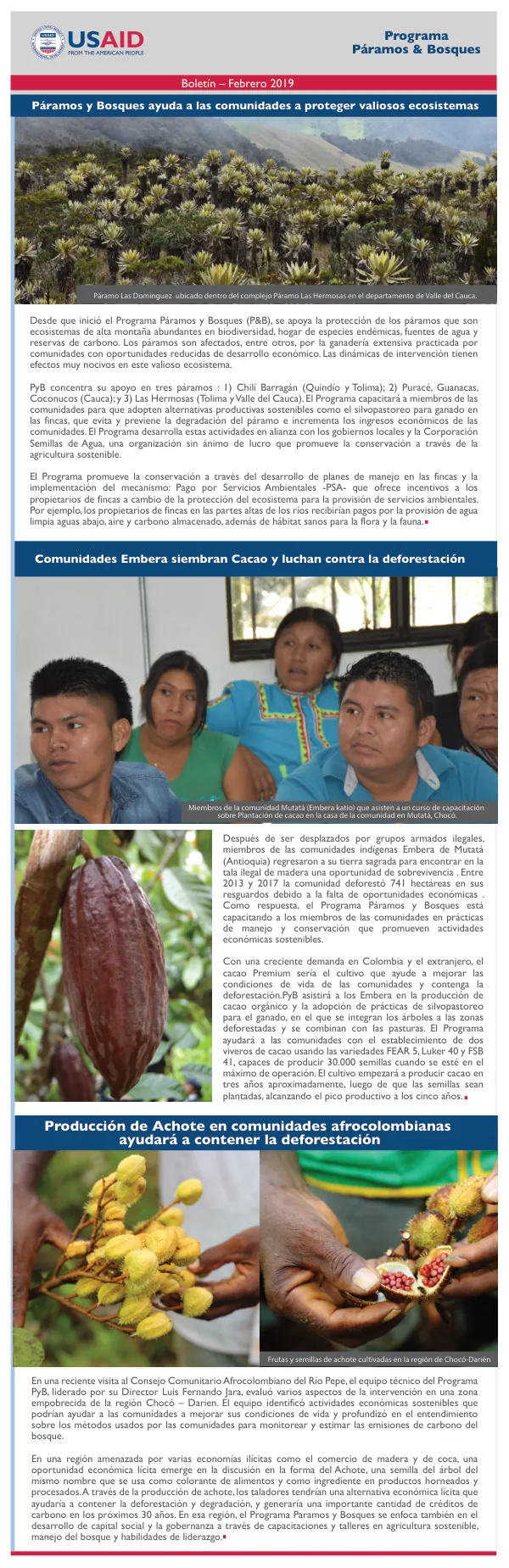
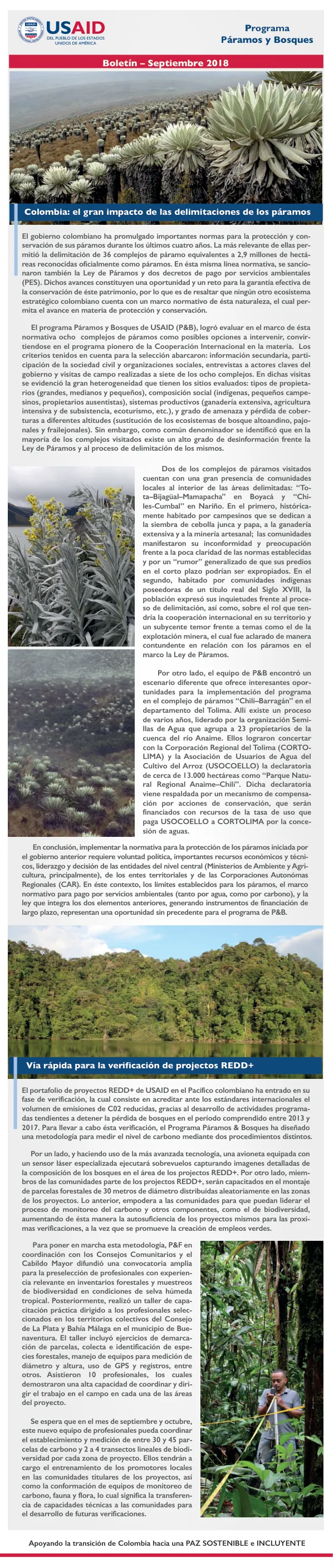
Boletín Julio - Agosto 2020: CAPACITACIÓN A CAMPESINOS DE PÁRAMOS EN TIEMPOS DE COVID19
Sign inUSAID
Boletín Julio - Agosto 2020: CAPACITACIÓN A CAMPESINOS DE PÁRAMOS EN TIEMPOS DE COVID19
The agricultural development initiative in the páramos and bosques of Colombia began with funding from USAID's Programa Páramos y Bosques (P&B).
2020 · 1 pages
Sign in to readA free account is required to download.
Abstract
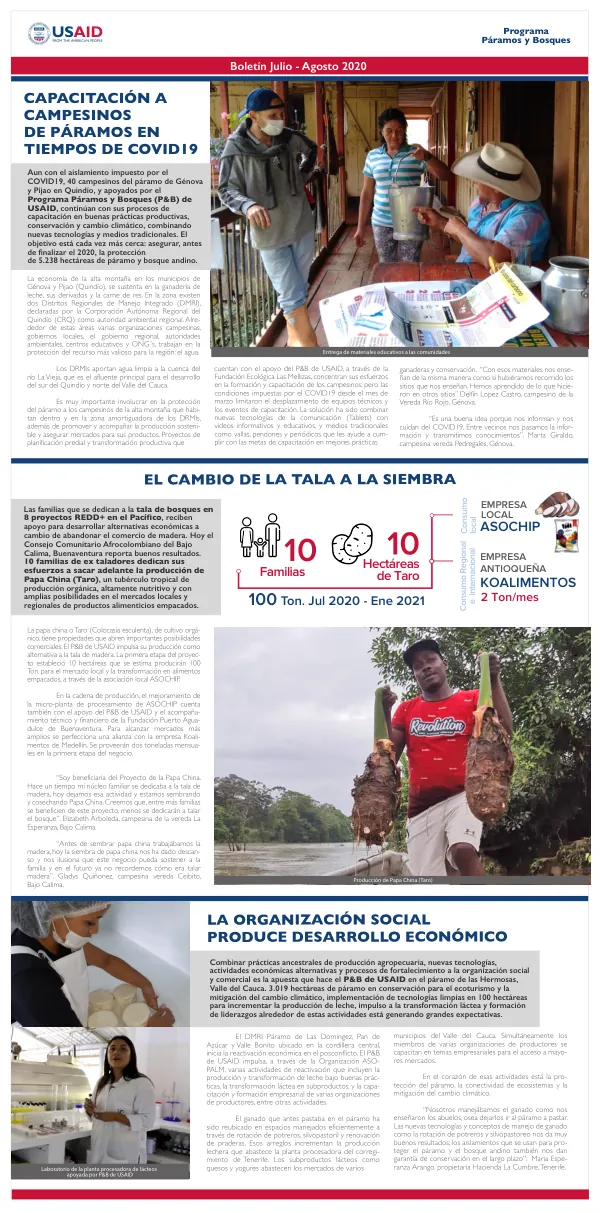
The program aimed to protect 5,238 hectares of páramo and bosque andino by the end of 2020. More than 40 campesinos from the páramo of Génova and Pijao in Quindío received training in sustainable agriculture techniques, combining new technologies and traditional methods. In the Pacific region, 8 projects REDD+ supported families who previously engaged in forest logging to develop alternative economic activities. The Consejo Comunitario Afrocolombiano del Bajo Calima, Buenaventura reported good results, with 10 families of ex-forest loggers dedicating their efforts to producing Papa China (Taro), a tropical tuber with high nutritional value and commercial potential. The program also supported the production of Taro in the páramo of Las Hermosas, Valle del Cauca, with 3,019 hectares of páramo in conservation for ecotourism and climate change mitigation. The implementation of clean technologies in 100 hectares increased the production of milk, and the transformation of milk into dairy products was promoted. The formation of leadership around these activities generated great expectations. In the DMRI Páramo de Las Domingez, Pan de Azúcar, and Valle Bonito, the program supported the reactivation of the economy in the post-conflict period. The production and transformation of milk under good practices, the transformation of milk into subproducts, and the training and formation of entrepreneurial skills of several producer organizations were promoted. The reorganization of the páramo has allowed for the relocation of the cattle to efficiently managed spaces through the rotation of pastures, silvopastoril, and the renovation of pastures. This has increased the production of milk that supplies the processing plant in the corregimiento of Tenerife. The subproducts of milk, such as cheeses and yogurts, supply the markets of several municipalities in the Valle del Cauca.