THE AMERICAN INSTITUTES FOR RESEARCH
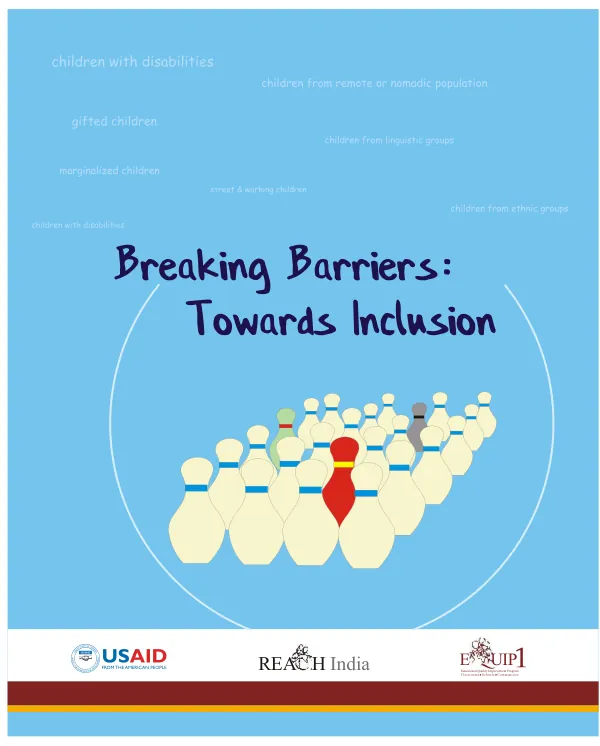
Breaking Barriers: Towards Inclusion
Inclusive Education: Breaking Barriers Inclusive education is a concept that has gained significant ground globally over the last decade.
36 pages
Sign in to readA free account is required to download.
Abstract
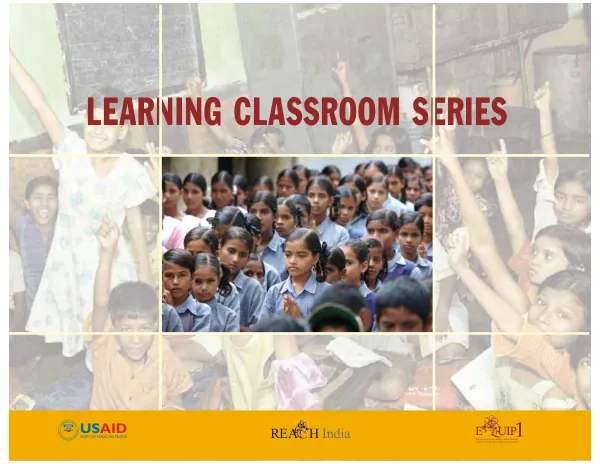
It is based on the belief that all children have different abilities and levels of intelligence and are competent to study under a single roof. According to the inclusive model, students will study in regular schools where children from all strata of society with different abilities, including children with disabilities, will receive their education alongside their non-disabled peers. The inclusive system accepts the fact that human differences are natural and contribute to the richness of every society. It insists that the school should be able to provide good education to all pupils irrespective of their varying learning abilities and ensure equal opportunities for all children to learn together. Inclusive education services allow children with disabilities to stay with their family and go to the nearest school, just like other children. This circumstance is of vital importance to their personal development. While inclusion as a theory is largely welcomed, there is a school of thought which expresses reservations as to whether the ordinary classroom can provide optimal quality education for children with disabilities. A decisive issue is how individual pupils can be ensured optimal education in accordance with their capabilities and needs. However, it is widely recognized that segregated education, which was largely followed worldwide during the eighties and early nineties, has not brought about the desired results. Isolation is a deterrent to inclusive education. Even in developed countries with less population pressures and adequate funds, various studies have shown that special education and special schools have not been able to reach out to children with disabilities, with two or three eligible children being left out for every child served. Moreover, it has been widely acknowledged that segregated education has led to segregation of people with disabilities throughout their life, with many of them reluctant to join the mainstream even if provided with opportunities. The concept of inclusive education has several key advantages. It is generally agreed that inclusive education can reach out to a large section of the population and have positive educational and social impacts on children. Inclusive education models are far less expensive to implement and operate than special education services. Inclusive education contributes significantly to the professional development of educators, the school environment, and an understanding society in general. Inclusive education services are politically and fiscally more sustainable than parallel systems of special education. Inclusion makes more political sense because the services are intended to benefit all students and not just a section. It makes it easier for governments to convince taxpayers, as these interventions would not be seen as 'add-ons'. From the monetary angle, inclusion is more fiscally sustainable as the money spent on individual children is more visible and would cost very much less than running parallel special schools, which are huge constraints on the overall education budget. Despite the advantages of inclusive education, there are several challenges facing policymakers. A key challenge is convincing various stakeholders to accept the inclusive approach as the preferred model. As is usually the case with all innovative approaches, the thought of inclusive education generates resistance from special educators, who view it as a threat to their jobs, while many mainstream teachers doubt and resent the possibility of having children with special needs among their midst. The parents of children with special needs are also averse to the idea of their child being exposed to a more competitive and 'hostile environment' from the secluded cocoon of care and welfare. However, it is essential to recognize the abilities of children with disabilities and emphasize their rights, equal opportunities, and participation. Inclusive education addresses a large diversity of children and involves differentiating each of their needs and responding to those needs. The REACH India project, which is being jointly carried out by the American Institutes for Research (AIR), Juarez and Associates, and World Education under the auspices of the Educational Quality Improvement Program (EQUIP 1), has been working towards promoting inclusive education in India. The project has been made possible by the generous support of the American people through the United States Agency for International Development (USAID). The content is the responsibility of REACH India and does not necessarily reflect the views of USAID or the United States Government. The REACH India project has been working with various partners, including NGOs, to promote inclusive education in India. The project has been documenting the activities and models of its partners, including Manovikas Kendra, UMMEED, Digdarshika, and AADI, which are working towards promoting inclusive education in different parts of the country. The project aims to share its broader perspective and views on inclusion and inclusive education with various stakeholders, including government agencies, educational institutions, international donors, NGOs, corporates, and other stakeholders who believe in taking the message of inclusion forward. The REACH India project has been conceptualized, written, and edited by K. C. Sreenath, a communication specialist with REACH India. The design, layout, and printing of the document have been done by VHAI Press. The project has been supported by the United States Agency for International Development (USAID) and has been made possible by the generous support of the American people. The REACH India project aims to promote inclusive education in India
Related documents