USAID DEC
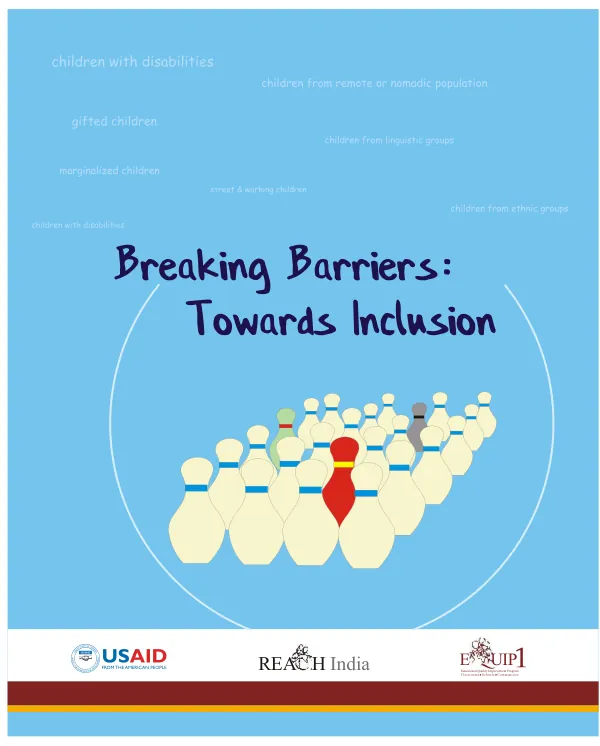
Learning Classroom Series Documentation of the Project & Learning Standards Framework Bridge & Remedial Courses
Sign inTHE AMERICAN INSTITUTES FOR RESEARCH
Learning Classroom Series Documentation of the Project & Learning Standards Framework Bridge & Remedial Courses
The REACH India project is a four and a half year initiative funded by the United States Agency for International Development (USAID) to improve access to basic quality education for vulnerable and at-risk children in India.
9 pages
Sign in to readA free account is required to download.
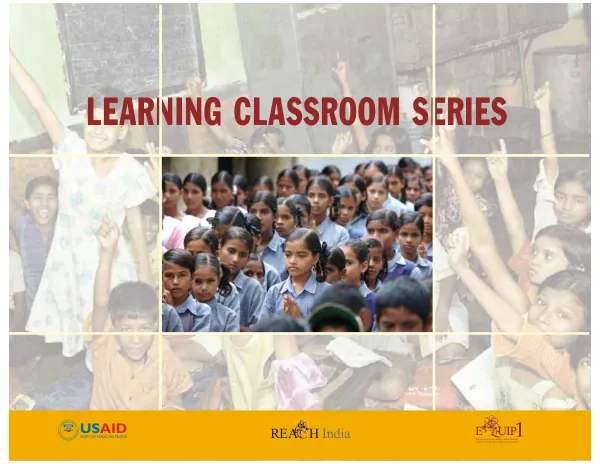
Abstract
Launched in September 2003, the project aims to reach out to more than 200,000 children through 101 nongovernmental organizations in six geographical areas of the country. The project's goal is to attract out-of-school children to classrooms and enhance the quality of basic education, providing a real and valuable incentive for vulnerable children to continue in school. The project adopts various strategies to enhance the quality of education in schools and learning centers. One of these strategies is the Quality of Education Assessment Tool (QEAT), a unique tool developed by REACH India for NGOs to assess the status of the quality of their interventions on critical parameters. Another strategy is the introduction of teaching-learning materials, where teachers are trained and encouraged to use simple, interactive, and interesting materials. The 'Learning Classroom Series' is a key quality education activity under REACH India initiatives, comprising a series of workshops on curriculum enrichment, improvement in teaching-learning strategies, and assessment procedures. The Learning Classroom Series (LCS) is an open learning method that focuses on improving the quality of education in the classroom. It comprises three training workshops, each lasting 14 days, which serve as a learning laboratory. The LCS has been well-received by various stakeholders, and REACH India has decided to document it in a book form and disseminate it as a valuable document for trainers and educational practitioners. The LCS aims to enhance the quality of education in schools and learning centers, particularly in areas where at-risk children are targeted. The LCS workshops focus on three broad areas of assistance: curriculum enrichment, improvement in teaching-learning strategies, and assessment procedures. The workshops are designed to accommodate the specific needs of at-risk children and promote the use of multi-grade teaching and learning strategies. The LCS has been developed into a source book for use by various educationists and practitioners, with the aim of improving quality education initiatives. The document is expected to be of great help in guiding, training, and capacity building of staff, as well as planning and monitoring quality education initiatives. The REACH India project has been jointly carried out by the American Institutes for Research (AIR), Juarez and Associates, and World Education under the auspices of the Educational Quality Improvement Program (EQUIP 1). The project has received generous support from the American people through USAID, and the content of the document does not necessarily reflect the views of USAID or the United States Government. The project's success is attributed to the commitment and support of grantee NGO partners, REACH India, and World Education, particularly David Kahler, James MacNeil, Bindu Sunny, Sangeeta Dey, Anjali Khushwaha, Savi Mull, Manjir Ghosh, Saloni Singh, and Nandini Prasad.