USAID DEC
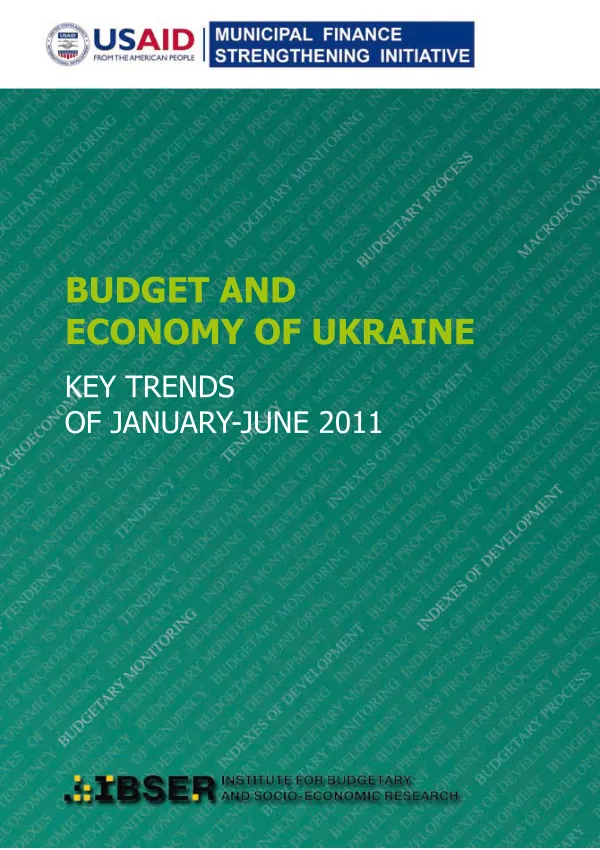
Budgetary Monitoring Indexes of Development
Budgetary Monitoring Indexes of Tendency are a crucial component of the macroeconomic framework used to track and analyze the performance of a country's economy.
2011 · 14 pages
Sign in to readA free account is required to download.
Abstract
These indexes are designed to provide a comprehensive overview of the economy's tendency to grow or contract, allowing policymakers to make informed decisions about budgetary allocations and economic interventions. The Budgetary Monitoring Indexes of Tendency are calculated using a combination of macroeconomic indicators, including GDP growth rate, inflation rate, unemployment rate, and trade balance. These indicators are selected based on their relevance to the economy's overall performance and their sensitivity to changes in economic conditions. The indexes are then weighted and aggregated to produce a single index that reflects the overall tendency of the economy. The Budgetary Monitoring Indexes of Tendency are used to identify areas of strength and weakness in the economy, allowing policymakers to target specific sectors or industries for support or intervention. For example, if the index indicates a tendency towards economic contraction, policymakers may implement fiscal or monetary policies to stimulate growth and prevent a recession. In addition to their use in macroeconomic analysis, the Budgetary Monitoring Indexes of Tendency are also used to evaluate the effectiveness of budgetary policies and programs. By tracking changes in the index over time, policymakers can assess the impact of their policies on the economy and make adjustments as needed. The Budgetary Monitoring Indexes of Tendency are an essential tool for policymakers, providing a comprehensive and objective assessment of the economy's tendency to grow or contract. By using these indexes, policymakers can make informed decisions about budgetary allocations and economic interventions, helping to promote economic stability and growth. The Budgetary Monitoring Indexes of Tendency are calculated on a quarterly basis, with the most recent data available reflecting the current economic conditions. The indexes are typically presented in a graphical format, allowing policymakers to easily visualize trends and patterns in the data. The Budgetary Monitoring Indexes of Tendency are used in conjunction with other macroeconomic indicators, such as the GDP growth rate and inflation rate, to provide a comprehensive picture of the economy's performance. By analyzing these indicators in combination, policymakers can gain a deeper understanding of the economy's tendency to grow or contract and make more informed decisions about budgetary allocations and economic interventions.