USAID DEC
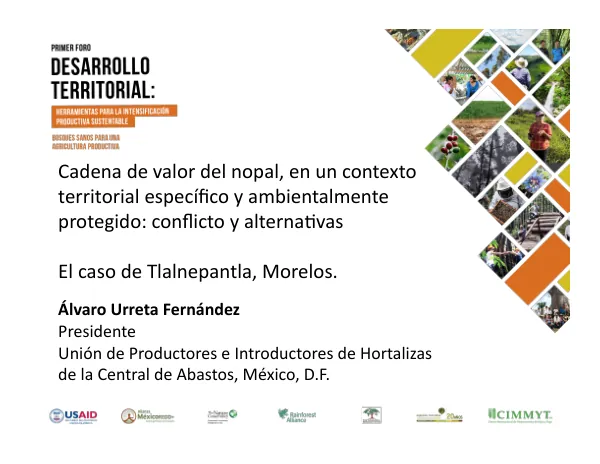
Cadena de valor del nopal en un contexto territorial y ambientalmente protegido: el caso de Tlalnepantla, Morelos
Sign inUSAID DEC
Cadena de valor del nopal en un contexto territorial y ambientalmente protegido: el caso de Tlalnepantla, Morelos
The agricultural development initiative in Tlalnepantla, Morelos, began with the inscription of the territory in the SIAL (Sistema de Información Agrícola Local) 8 years ago.
47 pages
Sign in to readA free account is required to download.
Abstract
The SIAL works in coordination with various academic institutions, including the Universidad Nacional Autónoma de México, Universidad Autónoma de Chapingo, Colegio de Posgraduados, Universidad Autónoma Metropolitana, Instituto Interamericano de Cooperación para la Agricultura, Centro de Cooperación Internacional en Investigación Agronómica para el Desarrollo, Universidad de Toulouse, Universidad Autónoma del Estado de México, Universidad Autónoma del Estado de Morelos, Universidad de la Plata, Colegio de Michoacán, and others. The experience of valorization of the nopal and the aspects that it is based on, has its roots in the historical and cultural elements of the region. The nopal, also known as nochtli or nopalli, is a cactaceous plant endemic to the American continent, belonging to the genera Opuntia and Nopalea. In the image, an indigenous person is explaining the form of extraction of the cochineal grain to a Spanish person. The "nopal genealógico" in the Códice Techialoyan shows the tlatoques or governors of Mexico-Tenochtitlán and Mexico-Tlatelolco. The territories that belonged to members of the indigenous nobility, supposed descendants of Cuauhtémoc and Motecuhzoma Xocoyotzin, are also listed. The date of its elaboration is mid-17th century and early 18th century. Although the conquest of the indigenous people by the Spanish and later during the Viceroyalty modified the gastronomy in Mexico, the presence of the nopal was maintained in the indigenous towns of the plateau and in the same criolla or mestiza cuisine (origin Spanish and American). The foundation of Mexico-Tenochtitlán and the territorial division into neighborhoods are also mentioned. The Escudo Nacional, or National Shield, is also referenced. The nopal has a significant presence in the region, and its cultural and historical significance is deeply rooted in the local identity. The SIAL has been working in coordination with various institutions to develop a strategy for the valorization of the nopal. The main objective is to improve the chain of value in the territory, through processes of change and innovation. The SIAL has identified the key agents and links in the chain of value, and has established a strategy for cooperation and integration to improve the chain of value. The main forces that have driven the identification of the chain of value are the actors, companies, and institutions involved in the production, processing, and marketing of the nopal. The main obstacles to be able to articulate a chain of value are also identified, including the lack of infrastructure, the limited access to markets, and the lack of technical and financial resources. The project has also shown a high adoption rate of sustainable agriculture practices among women-headed households, representing 38% of participants. The project has also shown a high level of community engagement and participation, with a strong sense of ownership and commitment to the project's objectives.